THE ADVENTURE COLLECTIVE® · Independent discovery and booking for outdoor travel

Leave Bali after dark, cross to East Java by ferry, and hike a steep pre-dawn trail to Ijen’s rim for turquoise crater views and, if conditions allow, the rare blue fire. This overnight transfer trek is short but demanding—expect a full day of travel and a high-altitude climb.
Leave Bali after dark, cross to East Java by ferry, and hike a steep pre-dawn trail to Ijen’s rim for turquoise crater views and, if conditions allow, the rare blue fire. This overnight transfer trek is short but demanding—expect a full day of travel and a high-altitude climb.
The van slips through late-night villages, the ferry's hull cutting a low, steady rhythm across the Bali Strait. By midnight you stand at the trailhead under high stars; the mountain air already colder, the crater lightless and waiting. The ascent is short but steep—headlamp cones carve the path, and the sulfur-scented wind seems to dare you onward.
Verified experiences and guided adventures in the surrounding area.
Operated by PT.WAHYU MANDIRI TOUR · Banyuwangi, East Java
The van slips through late-night villages, the ferry's hull cutting a low, steady rhythm across the Bali Strait. By midnight you stand at the trailhead under high stars; the mountain air already colder, the crater lightless and waiting. The ascent is short but steep—headlamp cones carve the path, and the sulfur-scented wind seems to dare you onward.
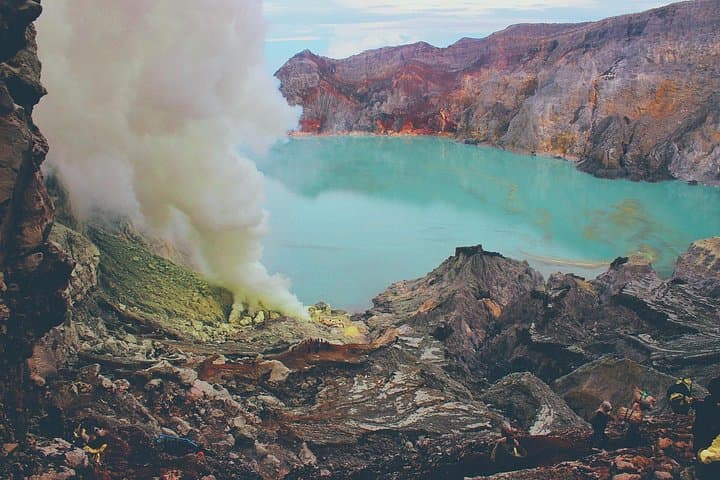
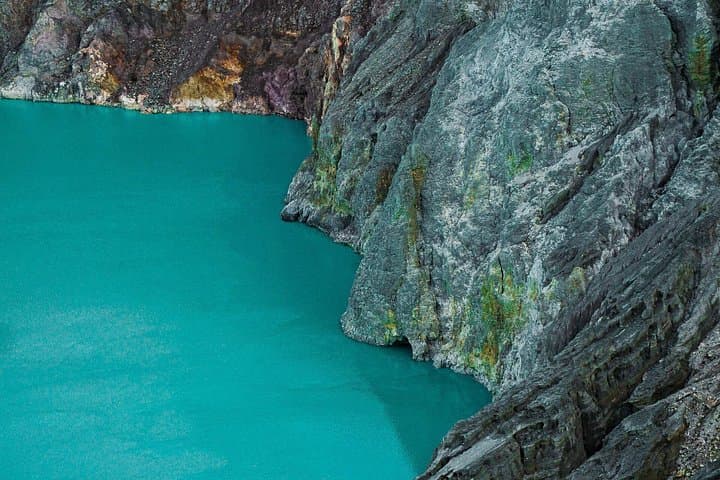
Geology here is blunt: Ijen is a stratovolcano with Java’s largest acidic crater lake, its water a vivid turquoise from dissolved minerals. For generations sulfur miners have worked the fumaroles, hauling bright yellow loads down crude paths; their presence is an unvarnished human layer on the volcanic story. Culturally, Banyuwangi communities around Ijen balance tourism with long-standing mining practices.
Expect 1–2 hours of steep trekking to the rim, followed by a pre-dawn panorama: sunrise light sliding over the crater wall, steam and sulfur gas drifting like living things. On clear nights the fumaroles can produce the famous blue fire—an eerie, transient glow from burning sulfur that rewards early, careful hikers.
Practical guidance: plan for an overnight transfer from Bali and a full 20–24 hour itinerary. Wear sturdy shoes, layered warm clothing, and carry a reliable headlamp and a filter mask; sulfur fumes are unpleasant and can be hazardous. Respect the 500‑meter no‑entry rule around the lake and keep distance from active fumaroles. Hydrate, move deliberately on loose rock, and factor in rough ferry schedules. With preparation, the Mount Ijen trek is a compact, high‑intensity experience that pairs dramatic geology with raw cultural encounters.
Blue fire appears at night from sulfur combustion in fumaroles; it’s visible under the right conditions and often before dawn—visibility depends on volcanic activity and weather, so it’s not guaranteed.
The route is roughly 3 km with steep sections—most people take 1–2 hours up; it’s short but physically demanding due to gradient, altitude, and loose terrain.
Access is restricted: visitors are usually allowed to a viewpoint and must stay a safe distance (around 500 m) from the acidic lake and active vents; follow guides and posted rules.
Carry ID for ferry and border checks between Bali and Java; operators advise healthy, fit participants and may request a recent medical certificate for high‑risk conditions.
PT.WAHYU MANDIRI TOUR operates guided outdoor trips and adventures with an emphasis on safety, stewardship, and memorable experiences.


The van slips through late-night villages, the ferry's hull cutting a low, steady rhythm across the Bali Strait. By midnight you stand at the trailhead under high stars; the mountain air already colder, the crater lightless and waiting. The ascent is short but steep—headlamp cones carve the path, and the sulfur-scented wind seems to dare you onward.
The van slips through late-night villages, the ferry's hull cutting a low, steady rhythm across the Bali Strait. By midnight you stand at the trailhead under high stars; the mountain air already colder, the crater lightless and waiting. The ascent is short but steep—headlamp cones carve the path, and the sulfur-scented wind seems to dare you onward.
Geology here is blunt: Ijen is a stratovolcano with Java’s largest acidic crater lake, its water a vivid turquoise from dissolved minerals. For generations sulfur miners have worked the fumaroles, hauling bright yellow loads down crude paths; their presence is an unvarnished human layer on the volcanic story. Culturally, Banyuwangi communities around Ijen balance tourism with long-standing mining practices.
Expect 1–2 hours of steep trekking to the rim, followed by a pre-dawn panorama: sunrise light sliding over the crater wall, steam and sulfur gas drifting like living things. On clear nights the fumaroles can produce the famous blue fire—an eerie, transient glow from burning sulfur that rewards early, careful hikers.
Practical guidance: plan for an overnight transfer from Bali and a full 20–24 hour itinerary. Wear sturdy shoes, layered warm clothing, and carry a reliable headlamp and a filter mask; sulfur fumes are unpleasant and can be hazardous. Respect the 500‑meter no‑entry rule around the lake and keep distance from active fumaroles. Hydrate, move deliberately on loose rock, and factor in rough ferry schedules. With preparation, the Mount Ijen trek is a compact, high‑intensity experience that pairs dramatic geology with raw cultural encounters.