THE ADVENTURE COLLECTIVE® · Independent discovery and booking for outdoor travel

Traverse Mount Kenya from cedar forest to summit in five days: Sirimon into high moorland, an acclimatization day at Shipton’s, a dawn push to Point Lenana, then a long descent into Chogoria. Expect changing vegetation, steep scree, and outstanding high-altitude views.
Traverse Mount Kenya from cedar forest to summit in five days: Sirimon into high moorland, an acclimatization day at Shipton’s, a dawn push to Point Lenana, then a long descent into Chogoria. Expect changing vegetation, steep scree, and outstanding high-altitude views.
Dawn slices through a cedar forest on Sirimon as packs tighten and boots find rhythm—this is the first step of a five-day traverse that moves from forested slopes into high moorland and alpine rock.
Verified experiences and guided adventures in the surrounding area.
Operated by Kilimanjaro Safaris · Nanyuki, Laikipia County
Dawn slices through a cedar forest on Sirimon as packs tighten and boots find rhythm—this is the first step of a five-day traverse that moves from forested slopes into high moorland and alpine rock.
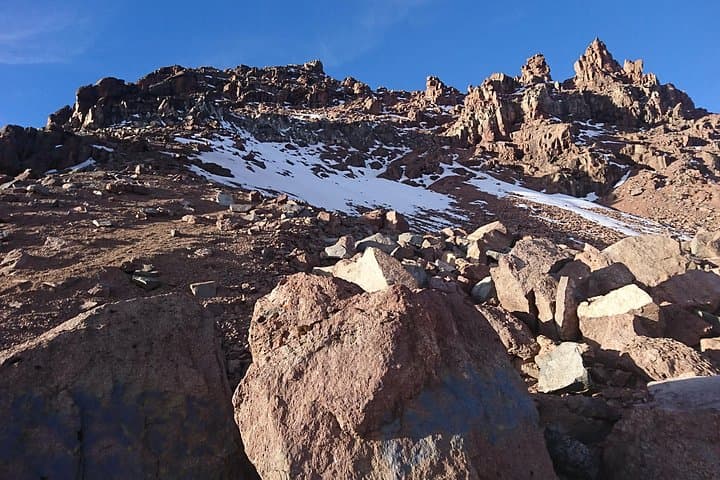
The route traces Mount Kenya’s ecological ladder: cedar gives way to bamboo, then heather moor and the rocky ridges around Shipton’s Camp. Geologically the massif is an eroded stratovolcano whose glaciers carved cirques and gorges; hikers cross moraines and sharp inclines to reach Point Lenana, the accessible summit sitting near 4,985 m. Culturally the mountain is central to the Kikuyu people and historically the park was established to protect water catchments that feed Kenya’s rivers.
Expect close encounters with mountain birds and, occasionally, buffalo in lower forests; porters and cooks keep camps efficient while guides manage routes and acclimatization. The itinerary builds in rest and a full acclimatization day at Shipton’s Camp before an early summit push and a long descent to Chogoria.
Practical edge: pace the ascent, drink often, and carry layers for rapid temperature swings—sun can burn at mid-day, freeze at dawn. Trails vary from packed dirt to rocky scree; basic navigation is covered by guides, but good boots and trekking poles make steep descents easier. Park permits and fees are standard; plan for early starts and variable weather. For hikers who want a concentrated, high-altitude trek that mixes ecological variety with a non-technical summit, this Sirimon-to-Chogoria crossing delivers both views and serious mileage.
No; Point Lenana is a non-technical trekking summit. Rope or mountaineering gear is not required for the standard Sirimon–Chogoria route.
Visitors need Mount Kenya National Park entry and camping permits; these are typically arranged by the operator and included in guided trips.
Expect daily gains of 600–1,000 meters on uphill days, with the summit day being the longest and most elevation-intensive.
Hikers should be in good cardiovascular shape and have experience with consecutive long days; poor cardiovascular health is not recommended.
Kilimanjaro Safaris operates guided outdoor trips and adventures with an emphasis on safety, stewardship, and memorable experiences.
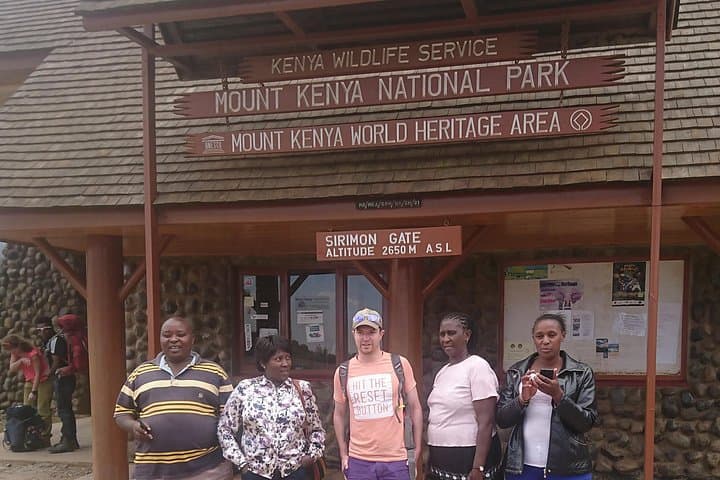


Dawn slices through a cedar forest on Sirimon as packs tighten and boots find rhythm—this is the first step of a five-day traverse that moves from forested slopes into high moorland and alpine rock.
Dawn slices through a cedar forest on Sirimon as packs tighten and boots find rhythm—this is the first step of a five-day traverse that moves from forested slopes into high moorland and alpine rock.
The route traces Mount Kenya’s ecological ladder: cedar gives way to bamboo, then heather moor and the rocky ridges around Shipton’s Camp. Geologically the massif is an eroded stratovolcano whose glaciers carved cirques and gorges; hikers cross moraines and sharp inclines to reach Point Lenana, the accessible summit sitting near 4,985 m. Culturally the mountain is central to the Kikuyu people and historically the park was established to protect water catchments that feed Kenya’s rivers.
Expect close encounters with mountain birds and, occasionally, buffalo in lower forests; porters and cooks keep camps efficient while guides manage routes and acclimatization. The itinerary builds in rest and a full acclimatization day at Shipton’s Camp before an early summit push and a long descent to Chogoria.
Practical edge: pace the ascent, drink often, and carry layers for rapid temperature swings—sun can burn at mid-day, freeze at dawn. Trails vary from packed dirt to rocky scree; basic navigation is covered by guides, but good boots and trekking poles make steep descents easier. Park permits and fees are standard; plan for early starts and variable weather. For hikers who want a concentrated, high-altitude trek that mixes ecological variety with a non-technical summit, this Sirimon-to-Chogoria crossing delivers both views and serious mileage.