THE ADVENTURE COLLECTIVE® · Independent discovery and booking for outdoor travel

Six days of high-elevation trekking from Sirimon Gate to Point Lenana, crossing rainforest, heath and alpine rock ledges. Expect long ascents, a pre-dawn summit push and guided camping at 3,300–4,200m.
Six days of high-elevation trekking from Sirimon Gate to Point Lenana, crossing rainforest, heath and alpine rock ledges. Expect long ascents, a pre-dawn summit push and guided camping at 3,300–4,200m.
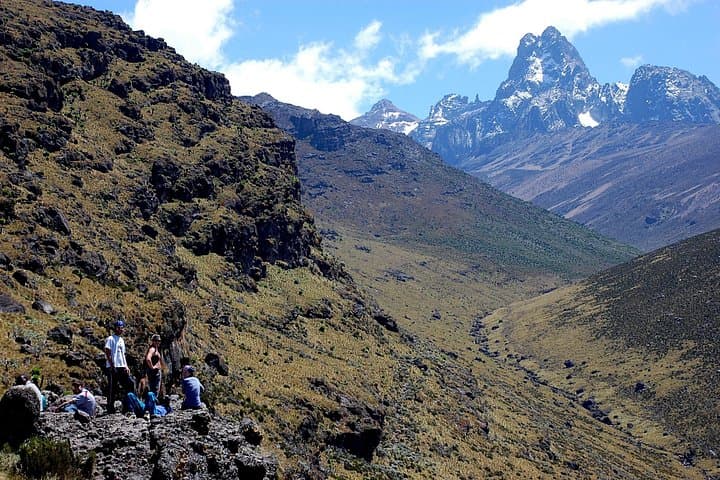
Dawn breaks on the forested flank of Mount Kenya and the jeep grinds up toward Sirimon Gate, leaving Nairobi’s heat behind. The track climbs from 2,440m through moss-draped rainforest into heathland, then through the famously treacherous vertical bog toward wide Teleki Valley and the Lewis Glacier far above. Wind and cloud take on moods here—some days the peaks push through the mist, other days the mountain keeps its distance.
Verified experiences and guided adventures in the surrounding area.
Operated by Shagami Kenya Tours and Safaris · Nanyuki, Laikipia County
Dawn breaks on the forested flank of Mount Kenya and the jeep grinds up toward Sirimon Gate, leaving Nairobi’s heat behind. The track climbs from 2,440m through moss-draped rainforest into heathland, then through the famously treacherous vertical bog toward wide Teleki Valley and the Lewis Glacier far above. Wind and cloud take on moods here—some days the peaks push through the mist, other days the mountain keeps its distance.
Mount Kenya is a young, extinct stratovolcano; its jagged summits—Batian and Nelion—are uplifted remnants of glacial sculpting and volcanic collapse. The Sirimon/Naro Moru corridors carry a layered human history: Kikuyu and Meru communities have long regarded the peaks as sacred, and colonial-era climbers carved the first tracks to Point Lenana (4,985m). Geology, culture and weather converge in the alpine tussock and rocky ledges you'll cross.
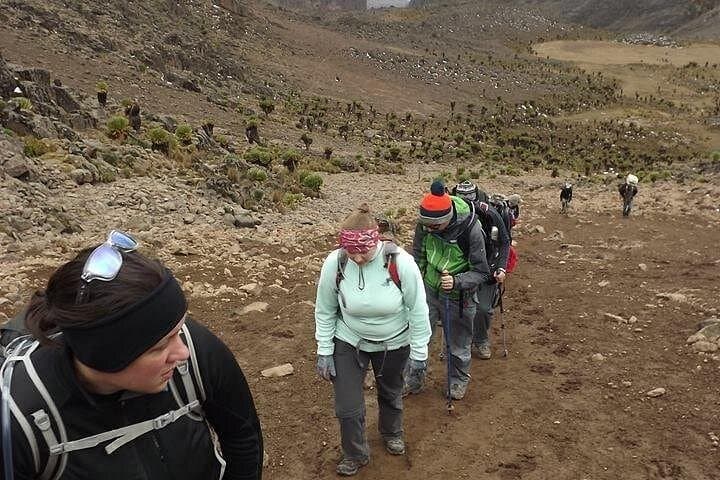
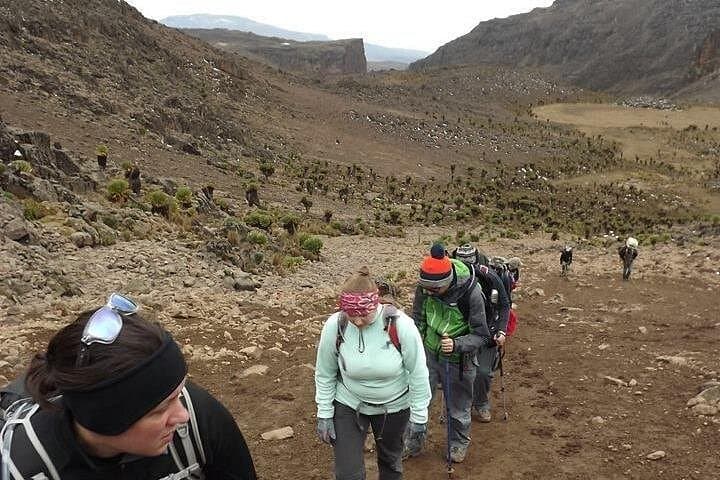
Practically, expect 6 days of steady, high-elevation trekking: day one 9km with ~860m ascent to Judmaier Camp (3,300m), progression to Liki/Shipton/Mackinders camps (3,900–4,200m), a very early 2:00am summit push to Point Lenana, then descent to Met Station and return. Terrain alternates forest paths, boggy heath, rock ledges and snow at high cols; trails can be wet and slippery.
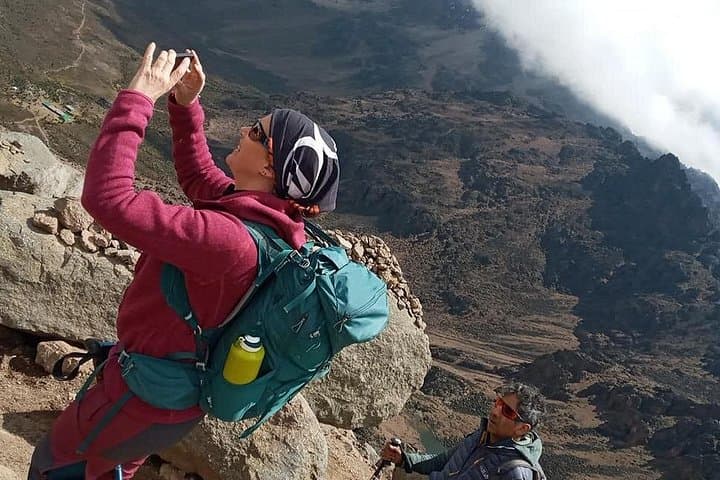
Acclimatize, hydrate, and layer for rapid temperature swings—summit attempts require early starts, headlamps and a steady pace. Guided parties supply transfers, park entry and meals; carry personal water, warm layers, good boots and a compact first-aid kit. When the mountain breathes, move with it: slow, steady, respectful.
No technical climbing is required for Point Lenana; reasonable fitness and previous multiday trekking experience are recommended.
The driest windows are January–February and July–October; expect more rain and muddy trails in long rains (March–May) and short rains (November).
Climbers pay park entry and camping fees to Mount Kenya National Park; guides typically arrange permits and certificates on completion.
Follow a conservative pace, hydrate, sleep low when possible, consider a rest day for acclimatization, and descend immediately if severe symptoms occur.
Shagami Kenya Tours and Safaris operates guided outdoor trips and adventures with an emphasis on safety, stewardship, and memorable experiences.
Dawn breaks on the forested flank of Mount Kenya and the jeep grinds up toward Sirimon Gate, leaving Nairobi’s heat behind. The track climbs from 2,440m through moss-draped rainforest into heathland, then through the famously treacherous vertical bog toward wide Teleki Valley and the Lewis Glacier far above. Wind and cloud take on moods here—some days the peaks push through the mist, other days the mountain keeps its distance.
Dawn breaks on the forested flank of Mount Kenya and the jeep grinds up toward Sirimon Gate, leaving Nairobi’s heat behind. The track climbs from 2,440m through moss-draped rainforest into heathland, then through the famously treacherous vertical bog toward wide Teleki Valley and the Lewis Glacier far above. Wind and cloud take on moods here—some days the peaks push through the mist, other days the mountain keeps its distance.
Mount Kenya is a young, extinct stratovolcano; its jagged summits—Batian and Nelion—are uplifted remnants of glacial sculpting and volcanic collapse. The Sirimon/Naro Moru corridors carry a layered human history: Kikuyu and Meru communities have long regarded the peaks as sacred, and colonial-era climbers carved the first tracks to Point Lenana (4,985m). Geology, culture and weather converge in the alpine tussock and rocky ledges you'll cross.
Practically, expect 6 days of steady, high-elevation trekking: day one 9km with ~860m ascent to Judmaier Camp (3,300m), progression to Liki/Shipton/Mackinders camps (3,900–4,200m), a very early 2:00am summit push to Point Lenana, then descent to Met Station and return. Terrain alternates forest paths, boggy heath, rock ledges and snow at high cols; trails can be wet and slippery.
Acclimatize, hydrate, and layer for rapid temperature swings—summit attempts require early starts, headlamps and a steady pace. Guided parties supply transfers, park entry and meals; carry personal water, warm layers, good boots and a compact first-aid kit. When the mountain breathes, move with it: slow, steady, respectful.