THE ADVENTURE COLLECTIVE® · Independent discovery and booking for outdoor travel

Traverse Mount Kenya from Sirimon to Chogoria on a five-day trek that combines dry western ridges, high moorland and a predawn ascent to Point Lenana. Expect varied terrain, huts or camping, and rewarding glacial views.
Traverse Mount Kenya from Sirimon to Chogoria on a five-day trek that combines dry western ridges, high moorland and a predawn ascent to Point Lenana. Expect varied terrain, huts or camping, and rewarding glacial views.
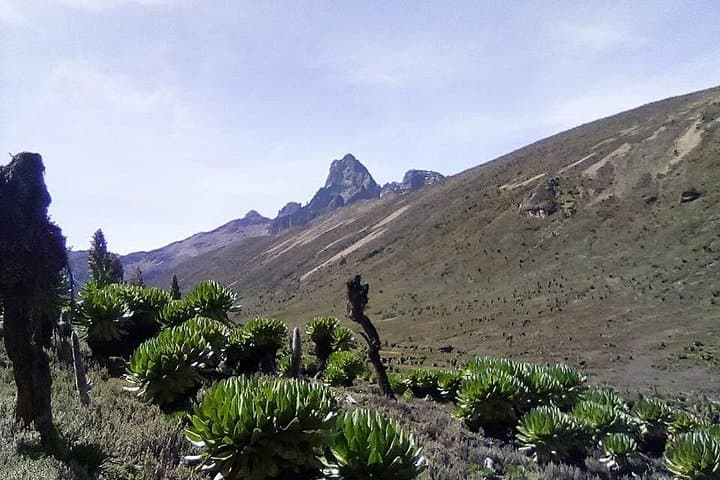
A low dawn light breaks across the high moor as trekkers shoulder packs at Sirimon Gate, the trail carving uphill through tall heather and ancient gymnosperms. The west face here is dry and rocky, its ridgelines sharp against an equatorial sky; by the time the route drops into Chogoria the air is cool and damp, bamboo whispering along the slopes.
Verified experiences and guided adventures in the surrounding area.
Operated by Gracepatt Safaris · Nanyuki, Laikipia County
A low dawn light breaks across the high moor as trekkers shoulder packs at Sirimon Gate, the trail carving uphill through tall heather and ancient gymnosperms. The west face here is dry and rocky, its ridgelines sharp against an equatorial sky; by the time the route drops into Chogoria the air is cool and damp, bamboo whispering along the slopes.
The Sirimon–Chogoria traverse links two historic approaches to Kenya’s central massif. Geology is raw and readable: glacial corries, volcanic basement rock and tarns carved by ice ages that once crowned the peaks. Culturally the mountain sits at the edge of Meru and Kikuyu communities, and paths were long-used for grazing and trade before park designation protected its glaciers and high-altitude flora like giant lobelia and senecio.
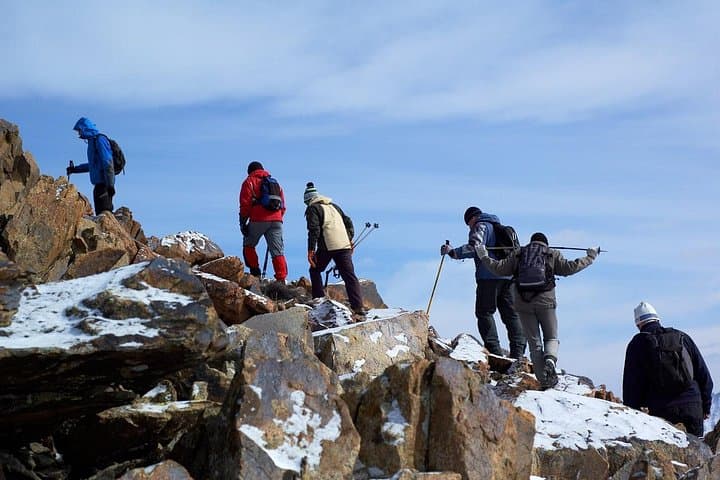
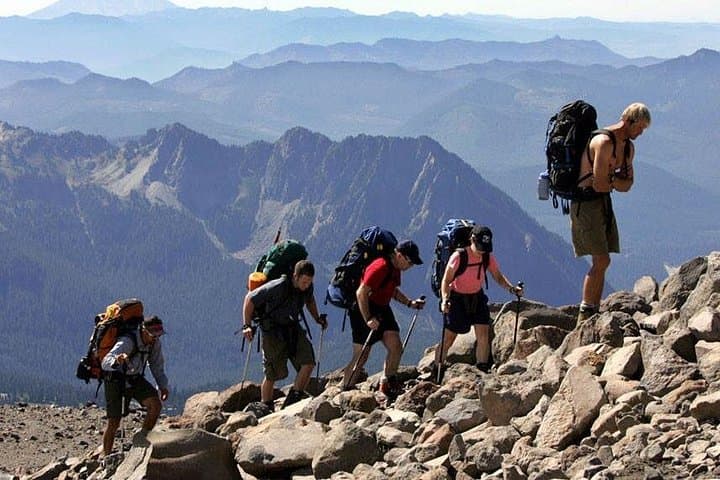
Expect varied terrain—forest tracks, moorland, steep stony quarries and a final predawn scramble to Point Lenana (approx. 4,985 m). Typical staged distances include 6 km pre-dawn ascent from Shipton to Lenana in ~3 hours, and multi-day legs of 8–20 km between camps. Wildlife can appear in the valleys; mountain huts provide basic shelter but camping is possible on every night.
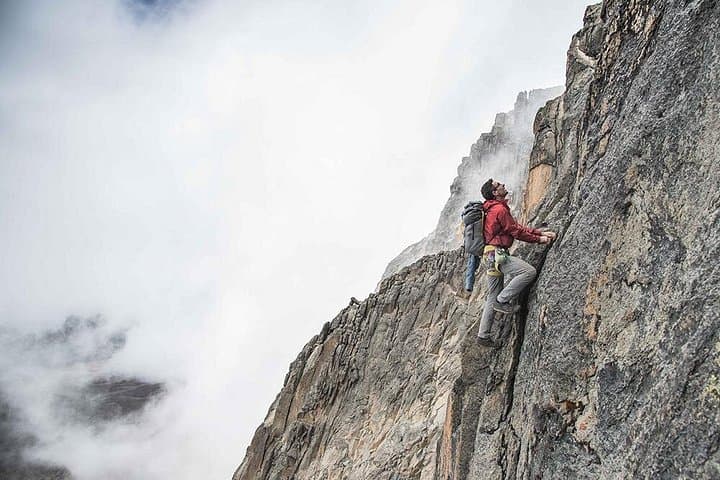
Practical guidance: build in an acclimatization day (Shipton/altitudes ~4,200 m), carry layered insulation for sub-zero summit nights, use a reliable headlamp for the 3 a.m. push, and confirm park permits and fees in advance. Hydrate, pace conservatively on the switchbacks, and budget extra time for river crossings and boggy sections on the Chogoria descent. This route rewards with dramatic glacial vistas and a true high-altitude trek without technical climbing.
Yes—Mount Kenya National Park requires park fees and many operators include a professional guide; independent travel should still arrange permits in advance.
The final 6 km from Shipton Camp to Point Lenana is steep and rocky, usually started around 3am; it’s non-technical but physically demanding due to altitude and loose footing.
Mountain huts are basic dormitory-style shelter with mattresses; camping is permitted on all nights if you prefer a tent and more privacy.
June–August and December–February are commonly recommended for lower precipitation and clearer summit windows, though each season has pros and cons.
Gracepatt Safaris operates guided outdoor trips and adventures with an emphasis on safety, stewardship, and memorable experiences.
A low dawn light breaks across the high moor as trekkers shoulder packs at Sirimon Gate, the trail carving uphill through tall heather and ancient gymnosperms. The west face here is dry and rocky, its ridgelines sharp against an equatorial sky; by the time the route drops into Chogoria the air is cool and damp, bamboo whispering along the slopes.
A low dawn light breaks across the high moor as trekkers shoulder packs at Sirimon Gate, the trail carving uphill through tall heather and ancient gymnosperms. The west face here is dry and rocky, its ridgelines sharp against an equatorial sky; by the time the route drops into Chogoria the air is cool and damp, bamboo whispering along the slopes.
The Sirimon–Chogoria traverse links two historic approaches to Kenya’s central massif. Geology is raw and readable: glacial corries, volcanic basement rock and tarns carved by ice ages that once crowned the peaks. Culturally the mountain sits at the edge of Meru and Kikuyu communities, and paths were long-used for grazing and trade before park designation protected its glaciers and high-altitude flora like giant lobelia and senecio.
Expect varied terrain—forest tracks, moorland, steep stony quarries and a final predawn scramble to Point Lenana (approx. 4,985 m). Typical staged distances include 6 km pre-dawn ascent from Shipton to Lenana in ~3 hours, and multi-day legs of 8–20 km between camps. Wildlife can appear in the valleys; mountain huts provide basic shelter but camping is possible on every night.
Practical guidance: build in an acclimatization day (Shipton/altitudes ~4,200 m), carry layered insulation for sub-zero summit nights, use a reliable headlamp for the 3 a.m. push, and confirm park permits and fees in advance. Hydrate, pace conservatively on the switchbacks, and budget extra time for river crossings and boggy sections on the Chogoria descent. This route rewards with dramatic glacial vistas and a true high-altitude trek without technical climbing.