THE ADVENTURE COLLECTIVE® · Independent discovery and booking for outdoor travel

The Lemosho 8-day route on Kilimanjaro stretches from rainforest to summit across diverse terrain, with an extra acclimatization day to boost success on summit night. This guided itinerary balances scenery and altitude strategy, offering a realistic path to Uhuru Peak.
The Lemosho 8-day route on Kilimanjaro stretches from rainforest to summit across diverse terrain, with an extra acclimatization day to boost success on summit night. This guided itinerary balances scenery and altitude strategy, offering a realistic path to Uhuru Peak.
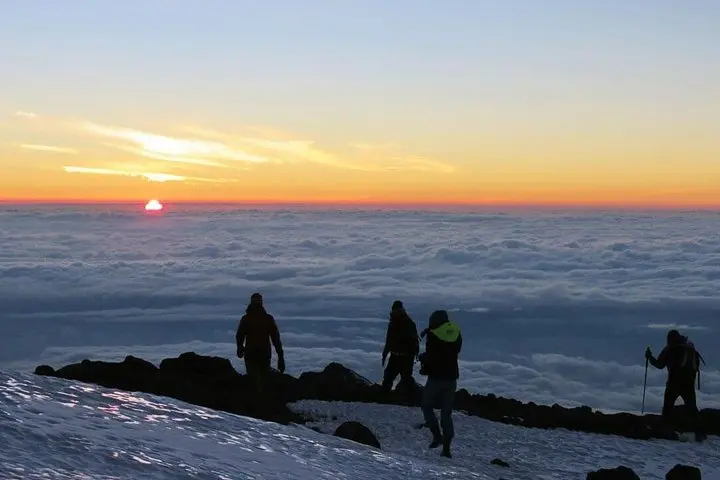
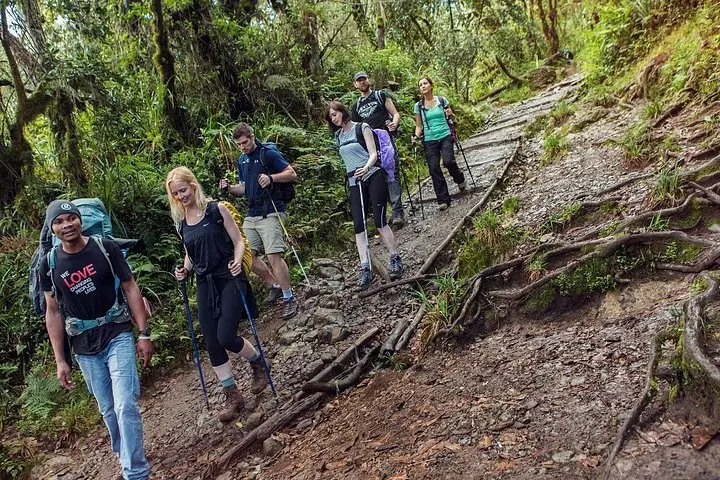
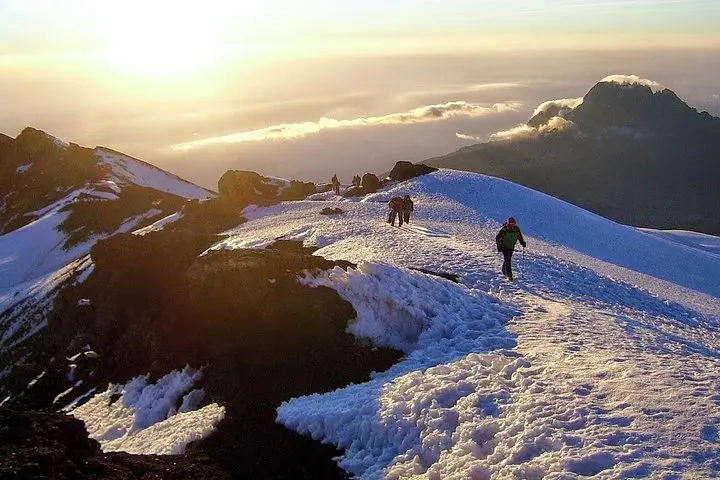
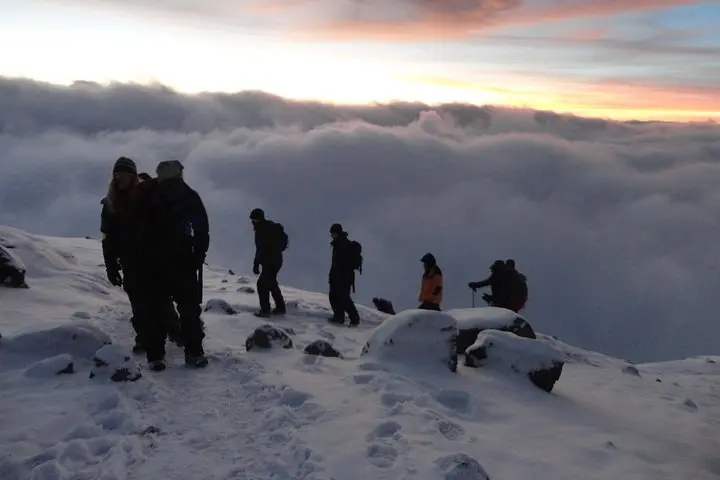
The trail begins in a green hush: an early transfer from Moshi drops climbers at the Londorosi gate and the rainforest swallows the sound of engines. On the Lemosho glades you walk beneath giant lobelias and moss-draped trees, porters’ bright jackets threading through shafts of light. The route opens across the Shira Plateau and, day by day, strips away vegetation until Barafu’s scree fields and the summit’s wind-cut crater reveal themselves in hard, blue air.
Verified experiences and guided adventures in the surrounding area.
Operated by Intrepid Explorer Tanzania · Moshi, Kilimanjaro Region
The trail begins in a green hush: an early transfer from Moshi drops climbers at the Londorosi gate and the rainforest swallows the sound of engines. On the Lemosho glades you walk beneath giant lobelias and moss-draped trees, porters’ bright jackets threading through shafts of light. The route opens across the Shira Plateau and, day by day, strips away vegetation until Barafu’s scree fields and the summit’s wind-cut crater reveal themselves in hard, blue air.
This 8-day Lemosho variation is designed for altitude—its extra day breaks the long push between Barranco and Barafu so climbers face summit night with fresher legs. The itinerary moves: Big Tree Camp (2,780 m) to Shira 1 (3,500 m), onward to Shira 2 (3,900 m), through the Lava Tower (4,640 m) descent to Barranco (3,960 m), over the Barranco Wall to Karanga, then up to Barafu (4,640 m) for the midnight start toward Stella Point and Uhuru Peak (5,895 m). The summit day stretches to 13–15 hours and the net elevation gain is brutal—over 1,200 m from Barafu to Uhuru—followed by a long, dusty descent to Mweka Gate.
Geology and history are stitched into every switchback: Kilimanjaro is a dormant stratovolcano made of three cones—Kibo, Mawenzi and Shira—whose glaciers and lava ridges tell of ancient eruptions and slow aridification. The first recorded ascent to the summit was made in 1889; today the mountain is governed by Kilimanjaro National Park, with guides and porters following strict park rules.
Culturally, Moshi is where the climb begins and ends: a town of coffee farms, Chagga villages and markets offering fresh bananas and handwoven belts. Porters and guides are more than logistics; they carry knowledge of routes, weather signs and high-altitude first aid.
Practical guidance: expect 4–7 hours on most trekking days, except summit day which is an all-night effort. Terrain varies—forest paths, moorland, loose scree and steep rock steps—so sturdy, well-broken-in boots and layered clothing are essential. Hydrate early and often; sip 2–3 liters daily and use an electrolyte mix. Follow the acclimatization plan: move slowly, join the afternoon acclimatization walks and communicate any headache, nausea or breathlessness. Summit night starts between 23:00–00:00; pack a headlamp, warm gloves and an emergency face covering. Respect the mountain: carry out trash, stick to designated trails and tip porters and guides fairly—their expertise makes the climb possible.
For travelers who want altitude without technical climbing, the Lemosho 8-day route balances scenery and safety, giving time to breathe, adapt and reach Africa’s roof with a clearer chance of success.
Summit day is the longest and toughest: expect 13–15 hours with steep scree sections and thin air; proper pacing and acclimatization are essential.
No technical gear or rope work is required—this is a non-technical trek—but good boots, warm clothing and basic high-altitude experience help.
Acute Mountain Sickness is possible at any elevation gain; the 8-day Lemosho route reduces risk via extra acclimatization but watch for symptoms and communicate with guides.
Basic pit toilets are available at camps and some huts, but facilities are primitive; carry hand sanitizer and toilet paper.
Yes—tips for guides, assistant guides and porters are customary and crucial to local livelihoods; budget accordingly.
Dry seasons—January–February and June–October—offer the most stable weather, though Kilimanjaro’s microclimate can change quickly.
Intrepid Explorer Tanzania operates guided outdoor trips and adventures with an emphasis on safety, stewardship, and memorable experiences.
The trail begins in a green hush: an early transfer from Moshi drops climbers at the Londorosi gate and the rainforest swallows the sound of engines. On the Lemosho glades you walk beneath giant lobelias and moss-draped trees, porters’ bright jackets threading through shafts of light. The route opens across the Shira Plateau and, day by day, strips away vegetation until Barafu’s scree fields and the summit’s wind-cut crater reveal themselves in hard, blue air.
The trail begins in a green hush: an early transfer from Moshi drops climbers at the Londorosi gate and the rainforest swallows the sound of engines. On the Lemosho glades you walk beneath giant lobelias and moss-draped trees, porters’ bright jackets threading through shafts of light. The route opens across the Shira Plateau and, day by day, strips away vegetation until Barafu’s scree fields and the summit’s wind-cut crater reveal themselves in hard, blue air.
This 8-day Lemosho variation is designed for altitude—its extra day breaks the long push between Barranco and Barafu so climbers face summit night with fresher legs. The itinerary moves: Big Tree Camp (2,780 m) to Shira 1 (3,500 m), onward to Shira 2 (3,900 m), through the Lava Tower (4,640 m) descent to Barranco (3,960 m), over the Barranco Wall to Karanga, then up to Barafu (4,640 m) for the midnight start toward Stella Point and Uhuru Peak (5,895 m). The summit day stretches to 13–15 hours and the net elevation gain is brutal—over 1,200 m from Barafu to Uhuru—followed by a long, dusty descent to Mweka Gate.
Geology and history are stitched into every switchback: Kilimanjaro is a dormant stratovolcano made of three cones—Kibo, Mawenzi and Shira—whose glaciers and lava ridges tell of ancient eruptions and slow aridification. The first recorded ascent to the summit was made in 1889; today the mountain is governed by Kilimanjaro National Park, with guides and porters following strict park rules.
Culturally, Moshi is where the climb begins and ends: a town of coffee farms, Chagga villages and markets offering fresh bananas and handwoven belts. Porters and guides are more than logistics; they carry knowledge of routes, weather signs and high-altitude first aid.
Practical guidance: expect 4–7 hours on most trekking days, except summit day which is an all-night effort. Terrain varies—forest paths, moorland, loose scree and steep rock steps—so sturdy, well-broken-in boots and layered clothing are essential. Hydrate early and often; sip 2–3 liters daily and use an electrolyte mix. Follow the acclimatization plan: move slowly, join the afternoon acclimatization walks and communicate any headache, nausea or breathlessness. Summit night starts between 23:00–00:00; pack a headlamp, warm gloves and an emergency face covering. Respect the mountain: carry out trash, stick to designated trails and tip porters and guides fairly—their expertise makes the climb possible.
For travelers who want altitude without technical climbing, the Lemosho 8-day route balances scenery and safety, giving time to breathe, adapt and reach Africa’s roof with a clearer chance of success.