THE ADVENTURE COLLECTIVE® · Independent discovery and booking for outdoor travel

A full-day introduction to Kilimanjaro without the summit push: a guided hike on the lower Marangu Route from Marangu Gate to Mandara Hut. Expect rainforest, monkeys, steady climbing and a picnic with a view — all in a 12–14 hour door-to-door outing from Arusha or Moshi.
A full-day introduction to Kilimanjaro without the summit push: a guided hike on the lower Marangu Route from Marangu Gate to Mandara Hut. Expect rainforest, monkeys, steady climbing and a picnic with a view — all in a 12–14 hour door-to-door outing from Arusha or Moshi.
You set out before sunrise in Arusha or Moshi, the van idling as the town blinks awake beneath Kilimanjaro’s mass. The road climbs and flattens, then narrows into farmland and coffee farms until the giant becomes a presence on the horizon: a swollen, glacier-capped dome pushing through clouds. After roughly three hours of drive-time you register at Marangu Gate and step into a rainforest that seems to breathe around you — ferns dripping, broad-leafed trees filtering the light, and the staccato calls of birds and monkeys filling the trail.
Verified experiences and guided adventures in the surrounding area.
Operated by Safaris Partners · Moshi, Kilimanjaro Region
You set out before sunrise in Arusha or Moshi, the van idling as the town blinks awake beneath Kilimanjaro’s mass. The road climbs and flattens, then narrows into farmland and coffee farms until the giant becomes a presence on the horizon: a swollen, glacier-capped dome pushing through clouds. After roughly three hours of drive-time you register at Marangu Gate and step into a rainforest that seems to breathe around you — ferns dripping, broad-leafed trees filtering the light, and the staccato calls of birds and monkeys filling the trail.
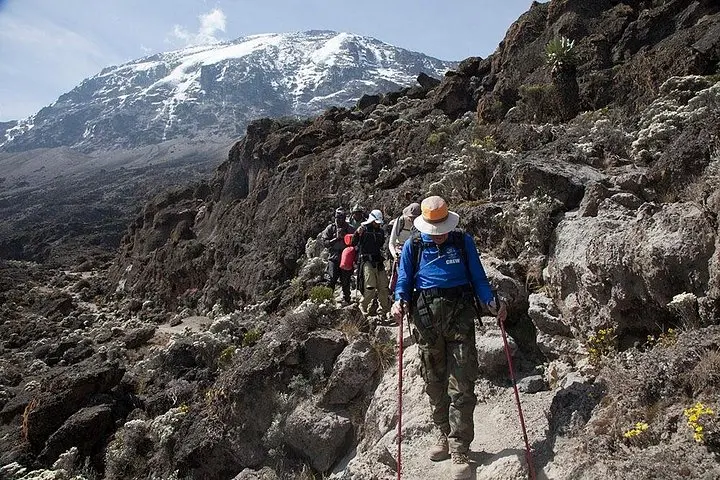
The day trip follows the lower leg of the Marangu Route, a historic approach used by early climbers and by local communities for generations. Geologically Kilimanjaro is a stratovolcano with three cones; here on the southeast flank volcanic soils feed dense montane forest that gives way to heath and moorland higher up. The hike to Mandara Hut climbs through this gradient, threading rooty, sometimes muddy singletrack that can be slick after rain and scattered with volcanic scree as the elevation rises.
Culture is present in small details: coffee plantations with drying beans, village homesteads near the park entrance, and guides whose knowledge of trail markers and altitude is as much practical wisdom as profession. Wildlife is conspicuous: vervet and blue monkeys that swing overhead and the occasional black-and-white colobus that moves like a living flag through the canopy. Birders will pick out turacos and sunbirds among the leaves.
Practically, this is a powered day out rather than a summit attempt. Expect about 5–6 hours of walking total with roughly 700–900 meters (2,300–3,000 ft) of cumulative elevation gain spread between the ascent to Mandara Hut and the descent. Trails are a mix of packed earth, exposed roots, and short rocky sections. Weather is changeable — warm and humid in the forest, cooler and windier near the hut — so layers matter.
Hydrate before you start, carry at least 2 liters of water, and plan for steady pacing: altitude comes on silently above 2,000–2,500 m and the walk back down can be hard on knees. The operator’s schedule includes a picnic lunch at or near Mandara Hut and time to rest before a relaxed descent. Pickup from hotels in Arusha or Moshi makes this a full 12–14 hour day including transport; you return in the evening with a clearer sense of Kilimanjaro’s scale and the confidence to consider a longer trek.
This hike is ideal as an introduction — it gives a real feel for Kilimanjaro’s ecosystems, offers wildlife encounters, and requires only moderate fitness and basic hiking gear. For photographers the light through the forest and the hut framed against upper ridgelines make memorable compositions if you time your stop for mid- to late afternoon light.
The hike reaches Mandara Hut at roughly 2,700–2,800 m depending on route variations, with total elevation gain from the gate of about 700–900 m.
Yes, if you have moderate fitness and can walk steadily for several hours; however it’s not recommended for people with serious heart or spinal issues or for pregnant travelers.
Expect blue monkeys, vervet monkeys, sometimes black-and-white colobus, and a variety of forest birds such as turacos and sunbirds.
You’ll need to register at Marangu Gate with Kilimanjaro National Park authorities; check routine travel vaccinations and consult health advice for Tanzania (e.g., yellow fever requirements) before travel.
About three hours each way depending on traffic and pickup points; the operator schedules early pickups to allow a relaxed hike.
You can receive a full refund if you cancel at least 24 hours before departure; tours may be cancelled for bad weather or insufficient participants.
Safaris Partners operates guided outdoor trips and adventures with an emphasis on safety, stewardship, and memorable experiences.
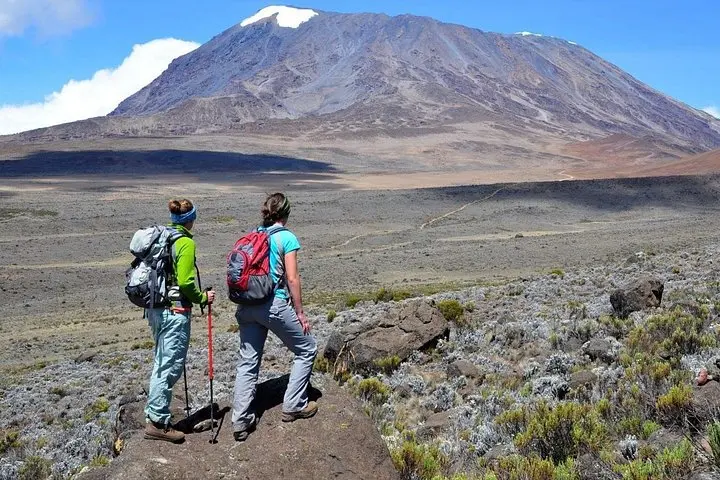
You set out before sunrise in Arusha or Moshi, the van idling as the town blinks awake beneath Kilimanjaro’s mass. The road climbs and flattens, then narrows into farmland and coffee farms until the giant becomes a presence on the horizon: a swollen, glacier-capped dome pushing through clouds. After roughly three hours of drive-time you register at Marangu Gate and step into a rainforest that seems to breathe around you — ferns dripping, broad-leafed trees filtering the light, and the staccato calls of birds and monkeys filling the trail.
You set out before sunrise in Arusha or Moshi, the van idling as the town blinks awake beneath Kilimanjaro’s mass. The road climbs and flattens, then narrows into farmland and coffee farms until the giant becomes a presence on the horizon: a swollen, glacier-capped dome pushing through clouds. After roughly three hours of drive-time you register at Marangu Gate and step into a rainforest that seems to breathe around you — ferns dripping, broad-leafed trees filtering the light, and the staccato calls of birds and monkeys filling the trail.
The day trip follows the lower leg of the Marangu Route, a historic approach used by early climbers and by local communities for generations. Geologically Kilimanjaro is a stratovolcano with three cones; here on the southeast flank volcanic soils feed dense montane forest that gives way to heath and moorland higher up. The hike to Mandara Hut climbs through this gradient, threading rooty, sometimes muddy singletrack that can be slick after rain and scattered with volcanic scree as the elevation rises.
Culture is present in small details: coffee plantations with drying beans, village homesteads near the park entrance, and guides whose knowledge of trail markers and altitude is as much practical wisdom as profession. Wildlife is conspicuous: vervet and blue monkeys that swing overhead and the occasional black-and-white colobus that moves like a living flag through the canopy. Birders will pick out turacos and sunbirds among the leaves.
Practically, this is a powered day out rather than a summit attempt. Expect about 5–6 hours of walking total with roughly 700–900 meters (2,300–3,000 ft) of cumulative elevation gain spread between the ascent to Mandara Hut and the descent. Trails are a mix of packed earth, exposed roots, and short rocky sections. Weather is changeable — warm and humid in the forest, cooler and windier near the hut — so layers matter.
Hydrate before you start, carry at least 2 liters of water, and plan for steady pacing: altitude comes on silently above 2,000–2,500 m and the walk back down can be hard on knees. The operator’s schedule includes a picnic lunch at or near Mandara Hut and time to rest before a relaxed descent. Pickup from hotels in Arusha or Moshi makes this a full 12–14 hour day including transport; you return in the evening with a clearer sense of Kilimanjaro’s scale and the confidence to consider a longer trek.
This hike is ideal as an introduction — it gives a real feel for Kilimanjaro’s ecosystems, offers wildlife encounters, and requires only moderate fitness and basic hiking gear. For photographers the light through the forest and the hut framed against upper ridgelines make memorable compositions if you time your stop for mid- to late afternoon light.