THE ADVENTURE COLLECTIVE® · Independent discovery and booking for outdoor travel

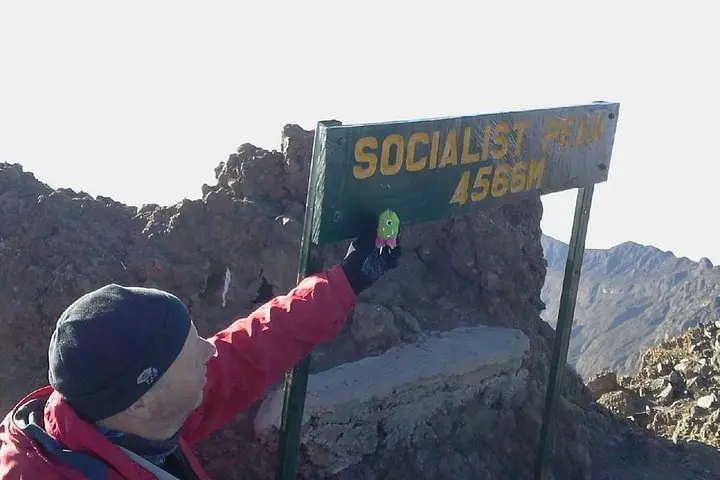
A four-day trek that blends alpine ridge walking with safari-style wildlife encounters, the Mount Meru route climbs from Momella Gate to a 4,566 m summit and returns through montane forest. Ideal as Kilimanjaro prep, this guided trip balances steep summit work with accessible hut-based nights.
A four-day trek that blends alpine ridge walking with safari-style wildlife encounters, the Mount Meru route climbs from Momella Gate to a 4,566 m summit and returns through montane forest. Ideal as Kilimanjaro prep, this guided trip balances steep summit work with accessible hut-based nights.
You wake before dawn to a sky gone gunmetal, breath visible as the porters tighten packs and the ranger checks his rifle. Headlamps pick out the wet leaves of montane forest; a distant elephant call rumbles across the hollows below. By the time the trail crests at Rhino Point, the sun has bled gold into the crater, and if the weather allows, Kilimanjaro’s peak pierces a sea of cloud beyond — a startling reminder that this 4-day trek is equal parts alpine climb and African safari.
Verified experiences and guided adventures in the surrounding area.
Operated by Kilimanjaro Safari Experience · Arusha, Arusha Region
You wake before dawn to a sky gone gunmetal, breath visible as the porters tighten packs and the ranger checks his rifle. Headlamps pick out the wet leaves of montane forest; a distant elephant call rumbles across the hollows below. By the time the trail crests at Rhino Point, the sun has bled gold into the crater, and if the weather allows, Kilimanjaro’s peak pierces a sea of cloud beyond — a startling reminder that this 4-day trek is equal parts alpine climb and African safari.
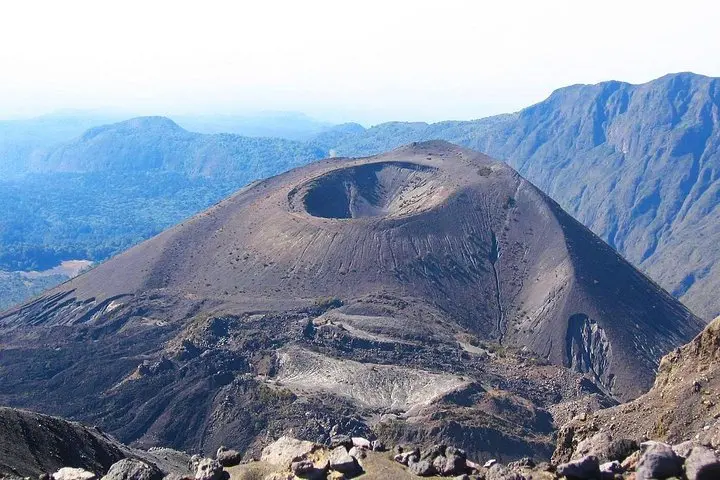
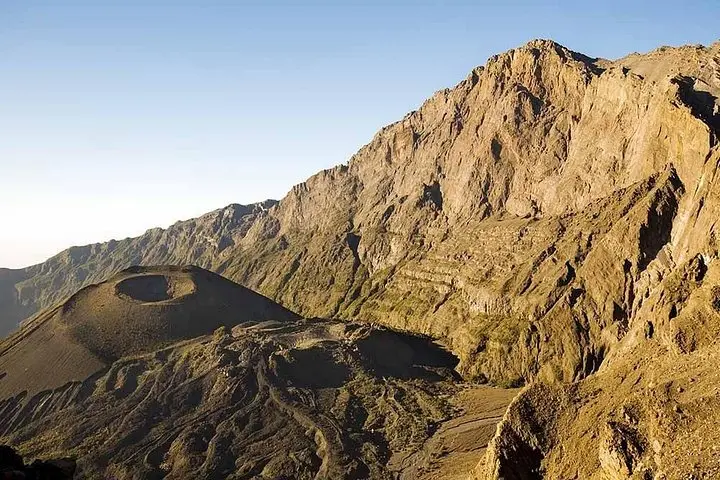
Mount Meru, Tanzania’s second-highest volcano, is a compact workshop in geology and ecology. Its 4,566-meter summit crowns an amphitheater of inner cliffs and an ash cone where lava once pooled; the route threads montane forest, swampy saddle, giant heather and exposed moorland. Historically Meru has been a landmark for Maasai and early European explorers; today it acts as high-altitude training for climbers aiming for Kilimanjaro, and as the spine of Arusha National Park’s dramatic landscape.
Wildlife is unusually present for a summit trek. In the low days you may pass giraffe browsing at the forest edge and hear baboons alarm-calling; buffalo sometimes graze even near the huts. The guided route includes an armed ranger to reduce close encounters and provide local knowledge — a reminder that you are hiking through a working ecosystem with active big-game territories.
Practicalities are straightforward: the itinerary covers roughly 36–40 km over four days with a summit push that starts around 1:30 a.m. Expect daily elevation changes from ~1,400 m at Momella Gate up to 4,565 m at the summit and back; the steepest day is the ascent from Saddle Hut to the ridge and summit (about 1,000 m gain over a few kilometers). Huts — the so-called Swiss huts — are basic but sturdy, and the operator provides filtered water, hot water for washing, and three meals daily.
Prepare for rapid weather shifts. Layers are essential: humid forest mornings can turn to biting wind and sun above 3,500 m. Hydrate and eat frequently to counter altitude fatigue; plan slow, steady steps on the summit ridge, and use trekking poles for the long descent to protect knees. Footwear should be sturdy, breathable and broken in — the lower trail is muddy, the upper flanks rocky and sometimes loose.
Logistics: transfers run from Arusha or Moshi to Momella Gate, and the trip is conducted with a guide, porters and ranger. Allow a rest day in town afterward to recover and swap gear. For many, Meru is as much an education as a summit — it conditions legs, tests layers and sharpens acclimatization ahead of bigger peaks, while delivering a rare combination of crater ridgeline and East African wildlife in one memorable four-day loop.
Expect a very early start (about 1:30 a.m.), steep sustained ascent to roughly 4,565 m and a long technical ridge; total moving time can be 10–12 hours including descent.
No technical climbing skills are required, but prior multi-day trekking and some high-altitude experience are strongly recommended.
Yes — the itinerary uses Miriakamba, Saddle and Meriakamba huts (basic but sturdy) with meals provided by the operator.
Wildlife is common; an armed ranger accompanies groups to reduce risk—maintain distance and follow guide instructions.
This 4-day itinerary is designed to help with acclimatization by gaining and descending altitude; add a rest day in Arusha or Moshi afterward for recovery.
Full refund if canceled at least 24 hours before departure; no refund within 24 hours per the operator's policy.
Kilimanjaro Safari Experience operates guided outdoor trips and adventures with an emphasis on safety, stewardship, and memorable experiences.
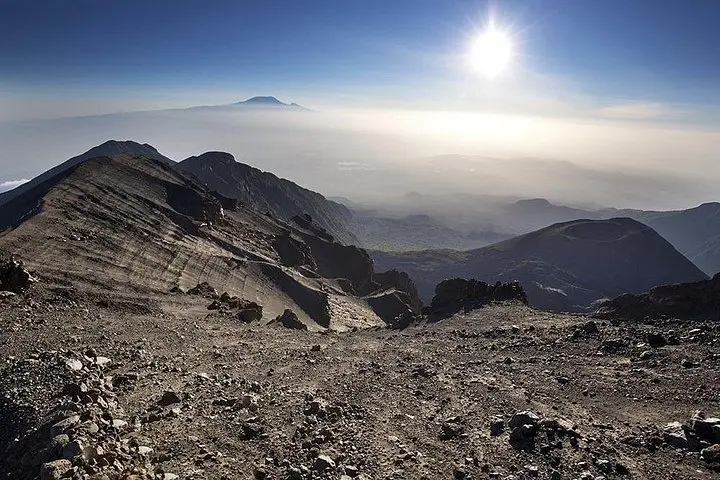
You wake before dawn to a sky gone gunmetal, breath visible as the porters tighten packs and the ranger checks his rifle. Headlamps pick out the wet leaves of montane forest; a distant elephant call rumbles across the hollows below. By the time the trail crests at Rhino Point, the sun has bled gold into the crater, and if the weather allows, Kilimanjaro’s peak pierces a sea of cloud beyond — a startling reminder that this 4-day trek is equal parts alpine climb and African safari.
You wake before dawn to a sky gone gunmetal, breath visible as the porters tighten packs and the ranger checks his rifle. Headlamps pick out the wet leaves of montane forest; a distant elephant call rumbles across the hollows below. By the time the trail crests at Rhino Point, the sun has bled gold into the crater, and if the weather allows, Kilimanjaro’s peak pierces a sea of cloud beyond — a startling reminder that this 4-day trek is equal parts alpine climb and African safari.
Mount Meru, Tanzania’s second-highest volcano, is a compact workshop in geology and ecology. Its 4,566-meter summit crowns an amphitheater of inner cliffs and an ash cone where lava once pooled; the route threads montane forest, swampy saddle, giant heather and exposed moorland. Historically Meru has been a landmark for Maasai and early European explorers; today it acts as high-altitude training for climbers aiming for Kilimanjaro, and as the spine of Arusha National Park’s dramatic landscape.
Wildlife is unusually present for a summit trek. In the low days you may pass giraffe browsing at the forest edge and hear baboons alarm-calling; buffalo sometimes graze even near the huts. The guided route includes an armed ranger to reduce close encounters and provide local knowledge — a reminder that you are hiking through a working ecosystem with active big-game territories.
Practicalities are straightforward: the itinerary covers roughly 36–40 km over four days with a summit push that starts around 1:30 a.m. Expect daily elevation changes from ~1,400 m at Momella Gate up to 4,565 m at the summit and back; the steepest day is the ascent from Saddle Hut to the ridge and summit (about 1,000 m gain over a few kilometers). Huts — the so-called Swiss huts — are basic but sturdy, and the operator provides filtered water, hot water for washing, and three meals daily.
Prepare for rapid weather shifts. Layers are essential: humid forest mornings can turn to biting wind and sun above 3,500 m. Hydrate and eat frequently to counter altitude fatigue; plan slow, steady steps on the summit ridge, and use trekking poles for the long descent to protect knees. Footwear should be sturdy, breathable and broken in — the lower trail is muddy, the upper flanks rocky and sometimes loose.
Logistics: transfers run from Arusha or Moshi to Momella Gate, and the trip is conducted with a guide, porters and ranger. Allow a rest day in town afterward to recover and swap gear. For many, Meru is as much an education as a summit — it conditions legs, tests layers and sharpens acclimatization ahead of bigger peaks, while delivering a rare combination of crater ridgeline and East African wildlife in one memorable four-day loop.