THE ADVENTURE COLLECTIVE® · Independent discovery and booking for outdoor travel

A deliberate, four-day ascent from Momela Gate to Socialist Peak (4,566m) that mixes rainforest, high ridges and a summit push designed for acclimatization and panoramic views of Arusha National Park and Kilimanjaro.
A deliberate, four-day ascent from Momela Gate to Socialist Peak (4,566m) that mixes rainforest, high ridges and a summit push designed for acclimatization and panoramic views of Arusha National Park and Kilimanjaro.
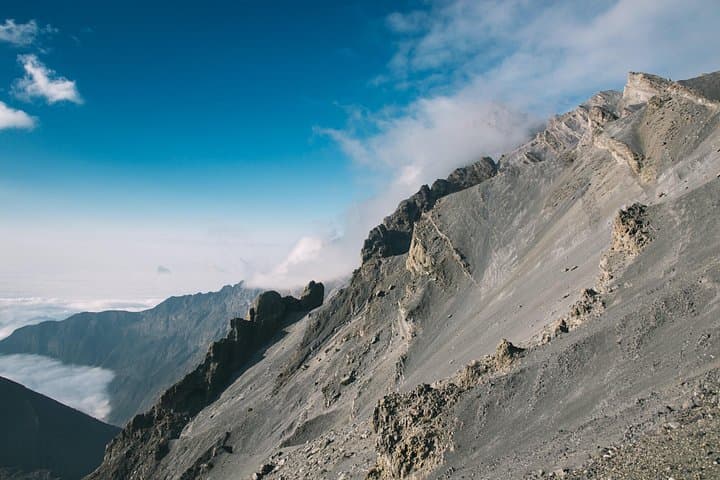
At dawn the forest breathes mist across the trail and the path glows with a damp, loamy hush. You leave Momela Gate under a canopy heavy with ferns; the rainforest reaches down to brush your shoulders as the trail climbs from 1,500m into cloud and scrub. By the time you reach Saddle Hut the air has thinned and the crater’s rim reveals long views across Arusha National Park and, on clear days, the distant white flanks of Kilimanjaro — a reminder that this mountain is both neighbor and teacher.
Verified experiences and guided adventures in the surrounding area.
Operated by Moana Tanzania · Arusha, Arusha Region
At dawn the forest breathes mist across the trail and the path glows with a damp, loamy hush. You leave Momela Gate under a canopy heavy with ferns; the rainforest reaches down to brush your shoulders as the trail climbs from 1,500m into cloud and scrub. By the time you reach Saddle Hut the air has thinned and the crater’s rim reveals long views across Arusha National Park and, on clear days, the distant white flanks of Kilimanjaro — a reminder that this mountain is both neighbor and teacher.
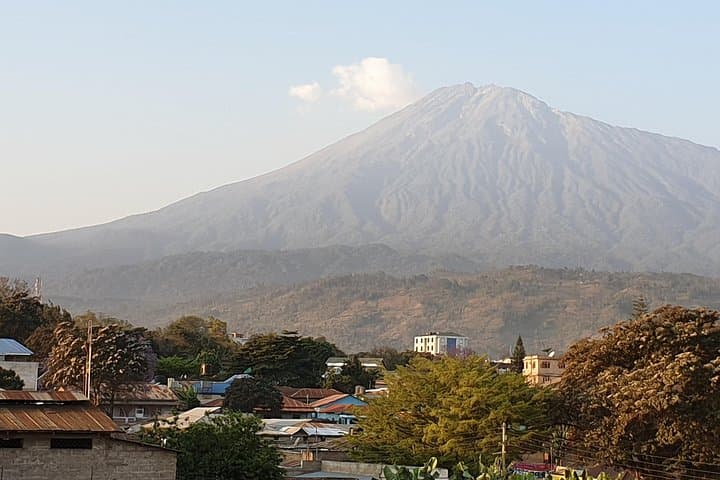
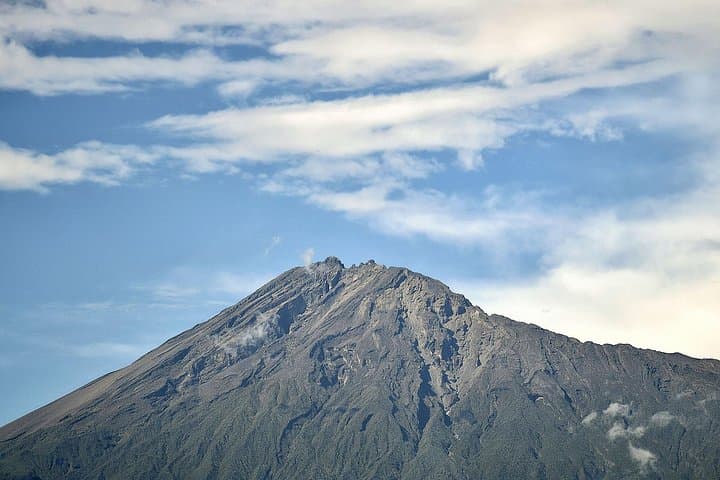
Mount Meru is a volcanic cone carved by erosion and ancient lava flows; at 4,566m Socialist Peak stands as the fifth-highest summit in Africa. The mountain’s geology explains its grades — dense, steep ridges, intermittent volcanic rock shelves and a saddle that funnels wind and weather. Human history here is quiet but present: Maasai and Chagga communities moved stock and cultivated lower slopes for generations, while modern conservation created Arusha National Park to protect the lakes, forest and wildlife that still use these corridors.
The route is straightforward in planning but demands respect. The standard 4-day itinerary moves deliberately for acclimatization: Day 1 climbs 1,500m to 2,500m (4–6 hours) through rainforest to Miriakamba Huts; Day 2 follows the saddle up to 3,550m (3–5 hours) and Saddle Huts; Day 3 is the summit push to Socialist Peak (4,566m) via Rhino and Cobra Points and back down to Miriakamba — expect 10–12 hours and significant elevation change; Day 4 is a relaxed descent to Momela Gate (2–3 hours).
Wildlife is an active character on the route — elephants sometimes cross the lower trails, giraffes and buffalo graze the park plains, and troops of monkeys chatter in the canopy. Guides provided by local operators read both the mountain and the animals; porters and cooks make the logistics feel seamless, and small comforts like hot washing water and a pulse oximeter are typically included.
Practical edge: train with long hikes and cumulative elevation gain, prioritise sleep and a steady pace on summit day. Hydrate early and often, use layered clothing for quick temperature swings, and probe the summit plan with your guide — weather can force an earlier or later push. Take time on the saddle for views and for your lungs to calibrate; if altitude symptoms appear, descent is the sure solution.
For many, Mount Meru is an ideal acclimatization climb before Kilimanjaro; for others it’s a rewarding standalone objective: shorter than Kilimanjaro but rawer in places, with a compact range of ecosystems, reliable mountain-sense and a summit that rewards effort with panoramic, high-altitude clarity.
Expect 10–12 hours with steep, sustained climbing from 3,550m to 4,566m and then a long descent — it’s the toughest day and requires pacing and good fitness.
No technical mountaineering experience is required, but previous multi-day trekking and high fitness improve comfort and safety.
Arusha National Park supports elephants, giraffes, buffalo, warthogs and several monkey species — sightings are common in lower and mid elevations.
Yes — the gradual ascent profile and overnight stays at varied elevations make Meru an effective acclimatization option before Kilimanjaro.
Meals (breakfast, lunch, dinner) and hut accommodation (Miriakamba and Saddle Huts) are included; cooks prepare hot meals and hot water is provided.
Cancellation policy varies by operator: a full refund typically requires cancellation at least 6 days before departure; closer cancellations may be partially or non-refundable.
Moana Tanzania operates guided outdoor trips and adventures with an emphasis on safety, stewardship, and memorable experiences.
At dawn the forest breathes mist across the trail and the path glows with a damp, loamy hush. You leave Momela Gate under a canopy heavy with ferns; the rainforest reaches down to brush your shoulders as the trail climbs from 1,500m into cloud and scrub. By the time you reach Saddle Hut the air has thinned and the crater’s rim reveals long views across Arusha National Park and, on clear days, the distant white flanks of Kilimanjaro — a reminder that this mountain is both neighbor and teacher.
At dawn the forest breathes mist across the trail and the path glows with a damp, loamy hush. You leave Momela Gate under a canopy heavy with ferns; the rainforest reaches down to brush your shoulders as the trail climbs from 1,500m into cloud and scrub. By the time you reach Saddle Hut the air has thinned and the crater’s rim reveals long views across Arusha National Park and, on clear days, the distant white flanks of Kilimanjaro — a reminder that this mountain is both neighbor and teacher.
Mount Meru is a volcanic cone carved by erosion and ancient lava flows; at 4,566m Socialist Peak stands as the fifth-highest summit in Africa. The mountain’s geology explains its grades — dense, steep ridges, intermittent volcanic rock shelves and a saddle that funnels wind and weather. Human history here is quiet but present: Maasai and Chagga communities moved stock and cultivated lower slopes for generations, while modern conservation created Arusha National Park to protect the lakes, forest and wildlife that still use these corridors.
The route is straightforward in planning but demands respect. The standard 4-day itinerary moves deliberately for acclimatization: Day 1 climbs 1,500m to 2,500m (4–6 hours) through rainforest to Miriakamba Huts; Day 2 follows the saddle up to 3,550m (3–5 hours) and Saddle Huts; Day 3 is the summit push to Socialist Peak (4,566m) via Rhino and Cobra Points and back down to Miriakamba — expect 10–12 hours and significant elevation change; Day 4 is a relaxed descent to Momela Gate (2–3 hours).
Wildlife is an active character on the route — elephants sometimes cross the lower trails, giraffes and buffalo graze the park plains, and troops of monkeys chatter in the canopy. Guides provided by local operators read both the mountain and the animals; porters and cooks make the logistics feel seamless, and small comforts like hot washing water and a pulse oximeter are typically included.
Practical edge: train with long hikes and cumulative elevation gain, prioritise sleep and a steady pace on summit day. Hydrate early and often, use layered clothing for quick temperature swings, and probe the summit plan with your guide — weather can force an earlier or later push. Take time on the saddle for views and for your lungs to calibrate; if altitude symptoms appear, descent is the sure solution.
For many, Mount Meru is an ideal acclimatization climb before Kilimanjaro; for others it’s a rewarding standalone objective: shorter than Kilimanjaro but rawer in places, with a compact range of ecosystems, reliable mountain-sense and a summit that rewards effort with panoramic, high-altitude clarity.