THE ADVENTURE COLLECTIVE® · Independent discovery and booking for outdoor travel

A rare four-day route that begins with a walking safari and ends above the clouds—Mount Meru’s compact summit delivers sunrise views of Kilimanjaro, close wildlife encounters, and a high-altitude climb suitable for fit trekkers.
A rare four-day route that begins with a walking safari and ends above the clouds—Mount Meru’s compact summit delivers sunrise views of Kilimanjaro, close wildlife encounters, and a high-altitude climb suitable for fit trekkers.
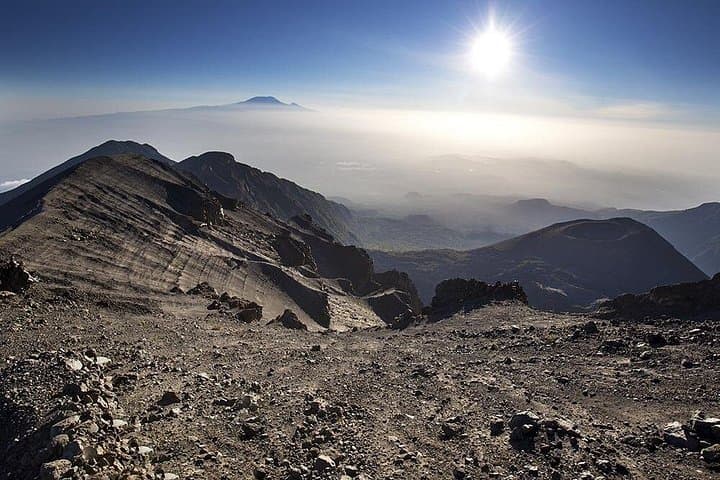
You step out of the vehicle at Momela Gate and the air changes—cooler, thinner, threaded with the distant scent of eucalyptus. Pelicans drift across Momela’s shallow lakes below while a lone giraffe browses the park’s acacia edge, unconcerned by your pack. This is not a safari that happens after a climb; it is a climb that begins inside a living park. For four days you move through forest, moorland and alpine scree, sharing the trail with zebras and colobus monkeys, and finishing above the clouds on Socialist Peak where Kilimanjaro flames at the horizon.
Verified experiences and guided adventures in the surrounding area.
Operated by PINNACLE ADVENTURES & SAFARIS LTD. · Arusha, Arusha Region
You step out of the vehicle at Momela Gate and the air changes—cooler, thinner, threaded with the distant scent of eucalyptus. Pelicans drift across Momela’s shallow lakes below while a lone giraffe browses the park’s acacia edge, unconcerned by your pack. This is not a safari that happens after a climb; it is a climb that begins inside a living park. For four days you move through forest, moorland and alpine scree, sharing the trail with zebras and colobus monkeys, and finishing above the clouds on Socialist Peak where Kilimanjaro flames at the horizon.
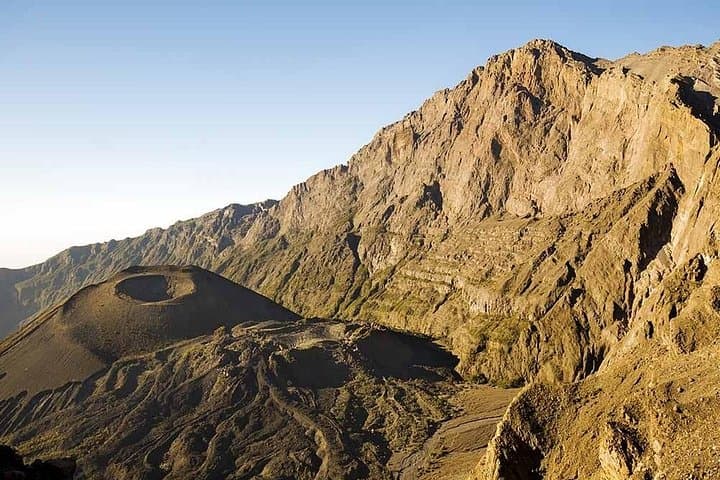
Mount Meru is a compact volcano—4,566 meters at its summit—carved by eruptions and erosion into a dramatic crater rim that frames the Rift Valley. Geologically younger than Kilimanjaro, Meru’s slopes hold rapid transitions in vegetation: savannah and lakes at low elevation, montane forest mid-slopes alive with birds, and alpine heather and giant lobelia nearer the summit. Culturally, the mountain sits in the shadow of Arusha town and the Maasai and Meru communities who have historically moved cattle and crops around its foothills; today the national park protects both wildlife and the water catchment crucial to local agriculture.
The itinerary is compact and purposeful: Day 1 moves from Momela Gate to Miriakamba Hut (≈10 km, 5–6 hours) with walking-safari encounters; Day 2 climbs to Saddle Hut (≈8 km, 3–4 hours) with an optional acclimatization loop to Little Meru; Day 3 is summit day (Saddle Hut → Socialist Peak → Miriakamba Hut, ≈18 km, 10–12 hours) with a pre-dawn start around 2 a.m.; Day 4 descends to Momela Gate (≈7 km, 3–4 hours) and returns to Arusha.
Practical advice: treat Meru as a high-altitude alpine climb. Hydrate early and often, carry layers for temperature swings, and expect loose scree on the upper slopes—trekking poles help with balance. The route is less trafficked than Kilimanjaro but still rigorous; sleep at huts and use acclimatization hikes to reduce altitude risk. Wildlife sightings are common on the lower days—stay quiet and give animals space.
Logistics and booking details: local guides handle permits, porters and hut arrangements; transfers from Arusha are standard and airport pickups can be arranged. Bring a headlamp for summit prep, and be prepared for early starts and long days on the third day.
In short, Mount Meru offers a rare combination: a true walking safari on day one and a technical, rewarding summit on day three. It’s an efficient, wildlife-rich mountain experience for fit trekkers who want both animal encounters and alpine exposure in a single, four-day loop.
This is a challenging, high-altitude trek requiring good fitness; expect long days and steep gains, especially on summit day.
No technical climbing skills are required, but prior multi-day hiking experience and comfort with altitude are important.
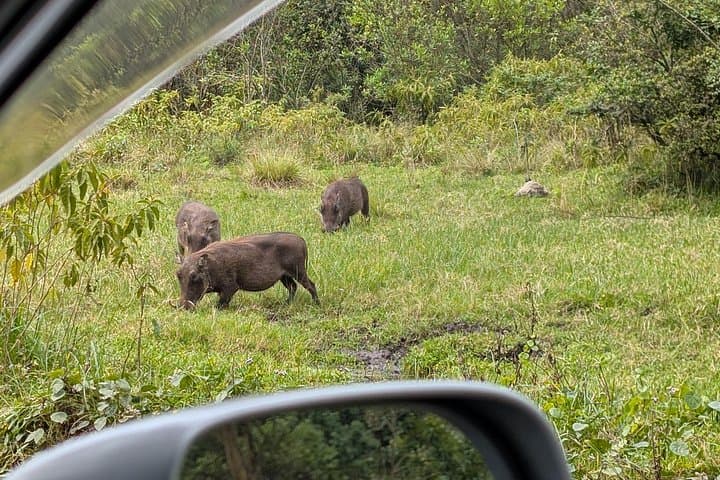
Giraffes, buffalo, zebras, warthogs and colobus monkeys are common in Arusha National Park on the lower sections of the route.
Local guides, permits and hut arrangements are provided; the operator handles registration and permits at park formalities.
Dry months (June–October and January–February) offer the most reliable trekking conditions; expect more mud during long rains.
Yes—take acclimatization walks, stay hydrated, and communicate symptoms early to your guide. The itinerary includes a lower-risk profile but remains high enough for AMS to be possible.
PINNACLE ADVENTURES & SAFARIS LTD. operates guided outdoor trips and adventures with an emphasis on safety, stewardship, and memorable experiences.
You step out of the vehicle at Momela Gate and the air changes—cooler, thinner, threaded with the distant scent of eucalyptus. Pelicans drift across Momela’s shallow lakes below while a lone giraffe browses the park’s acacia edge, unconcerned by your pack. This is not a safari that happens after a climb; it is a climb that begins inside a living park. For four days you move through forest, moorland and alpine scree, sharing the trail with zebras and colobus monkeys, and finishing above the clouds on Socialist Peak where Kilimanjaro flames at the horizon.
You step out of the vehicle at Momela Gate and the air changes—cooler, thinner, threaded with the distant scent of eucalyptus. Pelicans drift across Momela’s shallow lakes below while a lone giraffe browses the park’s acacia edge, unconcerned by your pack. This is not a safari that happens after a climb; it is a climb that begins inside a living park. For four days you move through forest, moorland and alpine scree, sharing the trail with zebras and colobus monkeys, and finishing above the clouds on Socialist Peak where Kilimanjaro flames at the horizon.
Mount Meru is a compact volcano—4,566 meters at its summit—carved by eruptions and erosion into a dramatic crater rim that frames the Rift Valley. Geologically younger than Kilimanjaro, Meru’s slopes hold rapid transitions in vegetation: savannah and lakes at low elevation, montane forest mid-slopes alive with birds, and alpine heather and giant lobelia nearer the summit. Culturally, the mountain sits in the shadow of Arusha town and the Maasai and Meru communities who have historically moved cattle and crops around its foothills; today the national park protects both wildlife and the water catchment crucial to local agriculture.
The itinerary is compact and purposeful: Day 1 moves from Momela Gate to Miriakamba Hut (≈10 km, 5–6 hours) with walking-safari encounters; Day 2 climbs to Saddle Hut (≈8 km, 3–4 hours) with an optional acclimatization loop to Little Meru; Day 3 is summit day (Saddle Hut → Socialist Peak → Miriakamba Hut, ≈18 km, 10–12 hours) with a pre-dawn start around 2 a.m.; Day 4 descends to Momela Gate (≈7 km, 3–4 hours) and returns to Arusha.
Practical advice: treat Meru as a high-altitude alpine climb. Hydrate early and often, carry layers for temperature swings, and expect loose scree on the upper slopes—trekking poles help with balance. The route is less trafficked than Kilimanjaro but still rigorous; sleep at huts and use acclimatization hikes to reduce altitude risk. Wildlife sightings are common on the lower days—stay quiet and give animals space.
Logistics and booking details: local guides handle permits, porters and hut arrangements; transfers from Arusha are standard and airport pickups can be arranged. Bring a headlamp for summit prep, and be prepared for early starts and long days on the third day.
In short, Mount Meru offers a rare combination: a true walking safari on day one and a technical, rewarding summit on day three. It’s an efficient, wildlife-rich mountain experience for fit trekkers who want both animal encounters and alpine exposure in a single, four-day loop.