THE ADVENTURE COLLECTIVE® · Independent discovery and booking for outdoor travel

A classic Northwest climb: 5.5 miles and 2,400 feet of gain deliver sweeping views of the Cascades and Puget Sound from a 1921 fire lookout. This guide covers what to expect on trail, the history you’ll pass, and practical tips to prepare for a half-day adventure.
A classic Northwest climb: 5.5 miles and 2,400 feet of gain deliver sweeping views of the Cascades and Puget Sound from a 1921 fire lookout. This guide covers what to expect on trail, the history you’ll pass, and practical tips to prepare for a half-day adventure.
The trail breathes evergreen and granite as you climb—cedars and firs leaning over a steep switchback that steadily reveals the shape of the Cascades. With each step the understory thins, boulder fields appear, and the air opens to a jagged horizon where Mount Baker and Mount Rainier rise like weathered guardians. At the summit a 1921 fire lookout perches on the rock, its timber ribs and metal fittings threaded into the mountain’s story.
Verified experiences and guided adventures in the surrounding area.
Operated by Adventures In Seattle · Granite Falls, Washington
The trail breathes evergreen and granite as you climb—cedars and firs leaning over a steep switchback that steadily reveals the shape of the Cascades. With each step the understory thins, boulder fields appear, and the air opens to a jagged horizon where Mount Baker and Mount Rainier rise like weathered guardians. At the summit a 1921 fire lookout perches on the rock, its timber ribs and metal fittings threaded into the mountain’s story.
Pilchuck’s geology is simple and honest: hard granite sculpted by glaciers, leaving exposed slabs and rounded talus that test balance and attention. The lookout’s history is tangible—the remains of an old supply cable and timbers from a long-closed lodge remind you this was once a working landscape of fire spotting and summer recreation. Local hiking culture treats Pilchuck as a classic Northwest half-day challenge: steep, rewarding, and busy on clear weekends.
Practical guidance is straightforward. The trail is about 5.5 miles round-trip with roughly 2,400 feet of elevation gain to a high point near 5,344 feet. Expect steep switchbacks, rock steps, and exposed sections at the top; allow 6–8 hours for a guided outing that includes transport, breaks, and a summit lunch. Start early to avoid parking congestion and afternoon weather changes, carry 2 liters of water or more, and layer for wind and sun at the exposed summit. Follow Leave No Trace—fragile subalpine plants and boot-weary trails recover slowly, so stick to the path and pack out what you carry in.
The trail is about 5.5 miles round-trip with roughly 2,400 feet of elevation gain, reaching about 5,344 feet at the high point.
There’s no special permit required for day hiking, though some parking areas may charge fees; guided trips often include parking fees.
Late spring through early fall offers the most stable conditions; summer provides the clearest views while spring may still have lingering snow above treeline.
Children who can handle steep climbs are fine; pets are generally allowed on leash but check current local regulations and trail conditions before you go.
Adventures In Seattle operates guided outdoor trips and adventures with an emphasis on safety, stewardship, and memorable experiences.
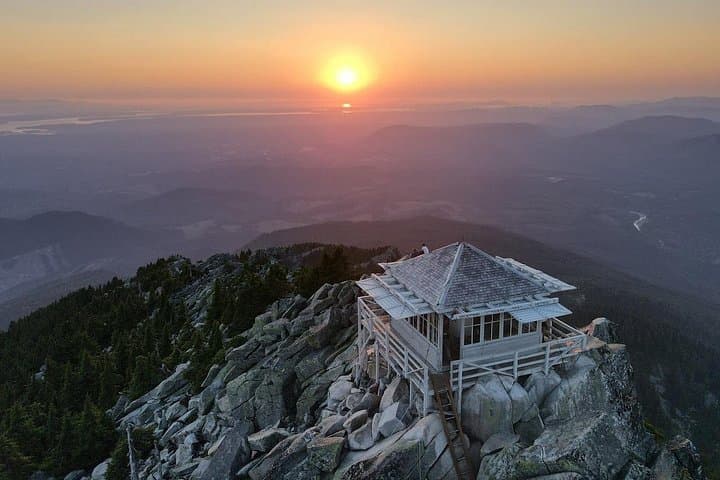


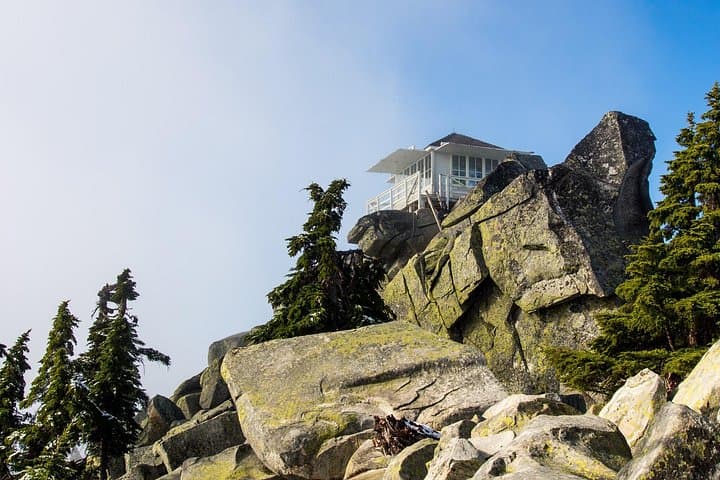
The trail breathes evergreen and granite as you climb—cedars and firs leaning over a steep switchback that steadily reveals the shape of the Cascades. With each step the understory thins, boulder fields appear, and the air opens to a jagged horizon where Mount Baker and Mount Rainier rise like weathered guardians. At the summit a 1921 fire lookout perches on the rock, its timber ribs and metal fittings threaded into the mountain’s story.
The trail breathes evergreen and granite as you climb—cedars and firs leaning over a steep switchback that steadily reveals the shape of the Cascades. With each step the understory thins, boulder fields appear, and the air opens to a jagged horizon where Mount Baker and Mount Rainier rise like weathered guardians. At the summit a 1921 fire lookout perches on the rock, its timber ribs and metal fittings threaded into the mountain’s story.
Pilchuck’s geology is simple and honest: hard granite sculpted by glaciers, leaving exposed slabs and rounded talus that test balance and attention. The lookout’s history is tangible—the remains of an old supply cable and timbers from a long-closed lodge remind you this was once a working landscape of fire spotting and summer recreation. Local hiking culture treats Pilchuck as a classic Northwest half-day challenge: steep, rewarding, and busy on clear weekends.
Practical guidance is straightforward. The trail is about 5.5 miles round-trip with roughly 2,400 feet of elevation gain to a high point near 5,344 feet. Expect steep switchbacks, rock steps, and exposed sections at the top; allow 6–8 hours for a guided outing that includes transport, breaks, and a summit lunch. Start early to avoid parking congestion and afternoon weather changes, carry 2 liters of water or more, and layer for wind and sun at the exposed summit. Follow Leave No Trace—fragile subalpine plants and boot-weary trails recover slowly, so stick to the path and pack out what you carry in.