THE ADVENTURE COLLECTIVE® · Independent discovery and booking for outdoor travel

Spend a day outside Chengdu exploring Taoist Mount Qingcheng’s temple trails and the millennia-old Dujiangyan irrigation works. This guided trip blends a short mountain hike, cable car ascent, boated lake view and a close-up look at one of China’s most ingenious hydraulic systems.
Spend a day outside Chengdu exploring Taoist Mount Qingcheng’s temple trails and the millennia-old Dujiangyan irrigation works. This guided trip blends a short mountain hike, cable car ascent, boated lake view and a close-up look at one of China’s most ingenious hydraulic systems.
Early morning fog lifts off the Chengdu plain as your guide collects you and the road leans into the foothills. Trees press close to the highway; villages whisper stories of the 2008 quake and the slow, deliberate work of rebuilding. By the time you reach Mount Qingcheng, the mountain is already breathing — pine-scented air and the steady hush of the forest put distance between city and temple.
Verified experiences and guided adventures in the surrounding area.
Operated by China Exploration · Dujiangyan, Sichuan
Early morning fog lifts off the Chengdu plain as your guide collects you and the road leans into the foothills. Trees press close to the highway; villages whisper stories of the 2008 quake and the slow, deliberate work of rebuilding. By the time you reach Mount Qingcheng, the mountain is already breathing — pine-scented air and the steady hush of the forest put distance between city and temple.
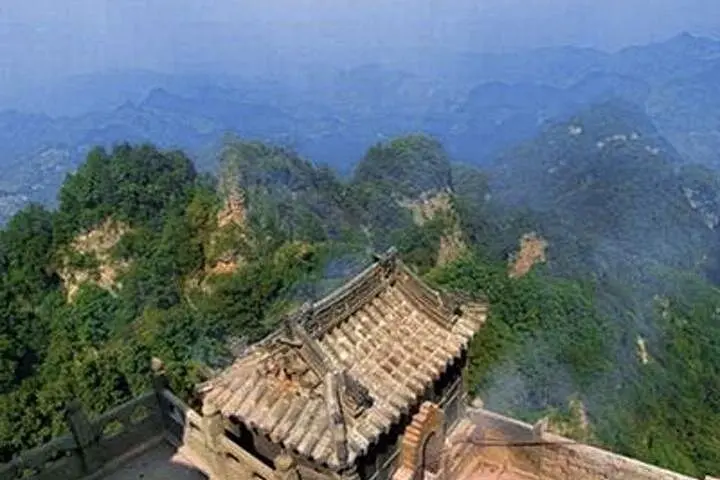
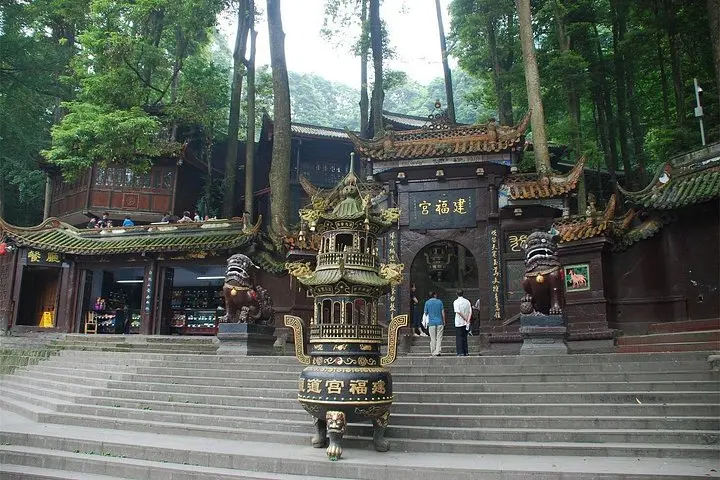
Qingchengshan is one of Taoism’s most important mountains, its stone steps and temple eaves tracing centuries of practice. Geologically the range is low and rounded, carved from Sichuan’s ancient folds and softened by dense vegetation; you’ll rise quickly by cable car then hike a 30-minute climb to Shangqinggong for a wide, mist-pocketed view. On the inner trails, the Heaven Master Cave and a venerable ginkgo connect myth to measurable history: this landscape shaped local culture as much as people shaped it.
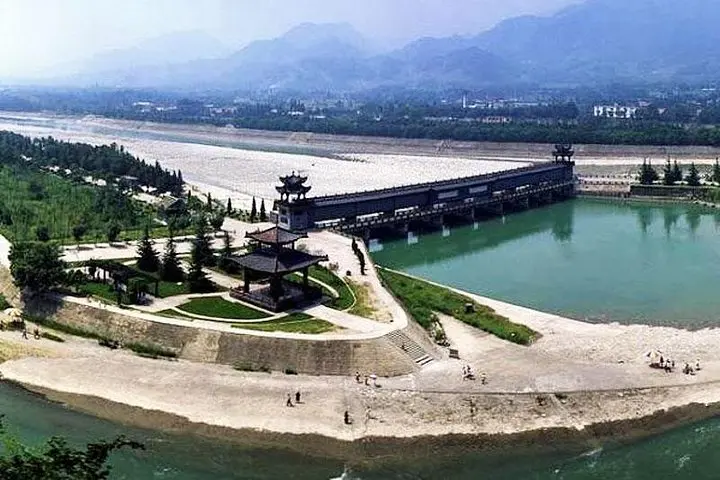
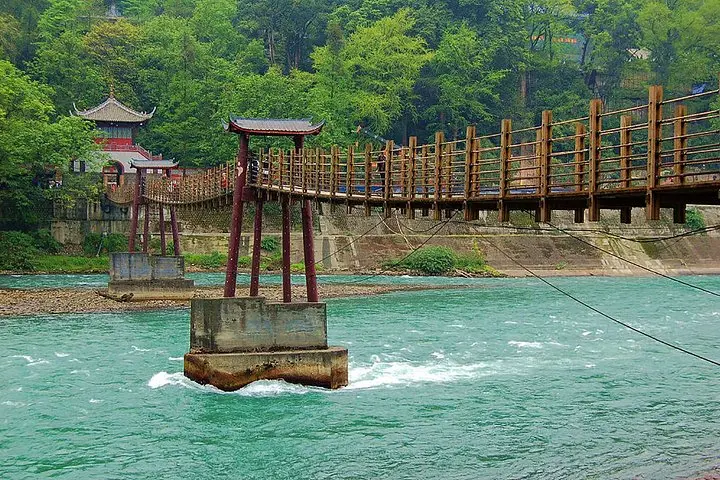
After lunch in a temple restaurant, the tour shifts from sacred slopes to human engineering at Dujiangyan. Built in 256 BC by Li Bing, the irrigation system still channels the Min River without a traditional dam wall — clever channels, spillways and weirs that read like applied geology. A short sightseeing-bus loop explains how ancient choices control flood and farmland to this day.
Practicalities: expect an 8–10 hour day with moderate walking, many stone steps and some paved paths. Wear grippy shoes, carry water and a light waterproof layer, and plan for variable mountain weather; the cable car shortens the steepest sections. Aim for early pickup to avoid afternoon crowds at Dujiangyan and allow time to linger at temple overlooks.
The transfer is roughly 1–1.5 hours each way depending on traffic; the tour includes all transfers by air-conditioned vehicle.
No — the itinerary uses a cable car and a short 30-minute ascent to the summit viewpoint; there are stone steps and descents but it’s suitable for most fitness levels.
Yes — the tour includes entrance tickets for Qingchengshan and Dujiangyan, Yuecheng Lake boat ticket, cable car, sightseeing bus, and transfers.
A current valid passport is required on the day of travel for ticketing and entrance verification.
China Exploration operates guided outdoor trips and adventures with an emphasis on safety, stewardship, and memorable experiences.
Early morning fog lifts off the Chengdu plain as your guide collects you and the road leans into the foothills. Trees press close to the highway; villages whisper stories of the 2008 quake and the slow, deliberate work of rebuilding. By the time you reach Mount Qingcheng, the mountain is already breathing — pine-scented air and the steady hush of the forest put distance between city and temple.
Early morning fog lifts off the Chengdu plain as your guide collects you and the road leans into the foothills. Trees press close to the highway; villages whisper stories of the 2008 quake and the slow, deliberate work of rebuilding. By the time you reach Mount Qingcheng, the mountain is already breathing — pine-scented air and the steady hush of the forest put distance between city and temple.
Qingchengshan is one of Taoism’s most important mountains, its stone steps and temple eaves tracing centuries of practice. Geologically the range is low and rounded, carved from Sichuan’s ancient folds and softened by dense vegetation; you’ll rise quickly by cable car then hike a 30-minute climb to Shangqinggong for a wide, mist-pocketed view. On the inner trails, the Heaven Master Cave and a venerable ginkgo connect myth to measurable history: this landscape shaped local culture as much as people shaped it.
After lunch in a temple restaurant, the tour shifts from sacred slopes to human engineering at Dujiangyan. Built in 256 BC by Li Bing, the irrigation system still channels the Min River without a traditional dam wall — clever channels, spillways and weirs that read like applied geology. A short sightseeing-bus loop explains how ancient choices control flood and farmland to this day.
Practicalities: expect an 8–10 hour day with moderate walking, many stone steps and some paved paths. Wear grippy shoes, carry water and a light waterproof layer, and plan for variable mountain weather; the cable car shortens the steepest sections. Aim for early pickup to avoid afternoon crowds at Dujiangyan and allow time to linger at temple overlooks.