THE ADVENTURE COLLECTIVE® · Independent discovery and booking for outdoor travel

Catch sunrise from Mount Sibayak’s crater rim, then soak in the Lau Sidebukdebuk hot springs. This accessible volcano trek from Berastagi blends dramatic geothermal features with local Karo culture.
Catch sunrise from Mount Sibayak’s crater rim, then soak in the Lau Sidebukdebuk hot springs. This accessible volcano trek from Berastagi blends dramatic geothermal features with local Karo culture.
Before the sun clears the rim, you climb through a thin, cold air that smells faintly of sulfur and wet earth. Headlamps blink like slow fireflies along the trail as Mount Sibayak’s crater edges begin to silhouette against a pale sky. By the time the first light slices over the Karo Highlands, valleys and distant peaks reveal themselves in hard, clear detail — rice terraces, small villages, and the smoking vents of neighboring cones.
Verified experiences and guided adventures in the surrounding area.
Operated by Sibayak Guide Berastagi. · Berastagi, North Sumatra
Before the sun clears the rim, you climb through a thin, cold air that smells faintly of sulfur and wet earth. Headlamps blink like slow fireflies along the trail as Mount Sibayak’s crater edges begin to silhouette against a pale sky. By the time the first light slices over the Karo Highlands, valleys and distant peaks reveal themselves in hard, clear detail — rice terraces, small villages, and the smoking vents of neighboring cones.
Sibayak is a young stratovolcano shaped by recent lava flows and geothermal seams; steam and fumaroles are visible even from the trail. The Karo people of Berastagi have farmed these slopes for generations, and the village culture and markets around the trailhead are as much a part of the visit as the topography. After the ascent, Lau Sidebukdebuk hot springs sit at the mountain’s foot — sulfuric pools that the volcano still feeds, used historically for cleansing and community gatherings.
Practically, expect a steep but relatively short volcanic trail of loose ash, volcanic rock and packed dirt; basic navigation is straightforward and a local guide usually leads the way. Aim for a pre-dawn start to catch sunrise and cooler temperatures. Wear supportive footwear with good grip, carry water and a wind layer, and give fumaroles a respectful distance — gases can be strong.
This trek pairs accessible adventure with tangible geology and local life: a sunrise that rewards early wake-ups, a rugged crater to explore, and a hot spring soak to close the loop. Ideal for first-time volcano hikers who want a compact, high-reward outing from Berastagi.
The ascent is typically 1–2 hours depending on pace and fitness; plan for 3–4 hours round-trip on the trail with time at the summit.
Yes—Lau Sidebukdebuk is a developed natural spring used by locals, but avoid areas with strong sulfur fumes and check temperature before entering.
A guide is recommended for sunrise timing, trail conditions, and local knowledge; many tours include hotel pick-up from Berastagi.
The trail is accessible for many ages if participants are steady on uneven ground, but it's not recommended for those with serious heart or mobility issues due to steep sections.
Sibayak Guide Berastagi. operates guided outdoor trips and adventures with an emphasis on safety, stewardship, and memorable experiences.
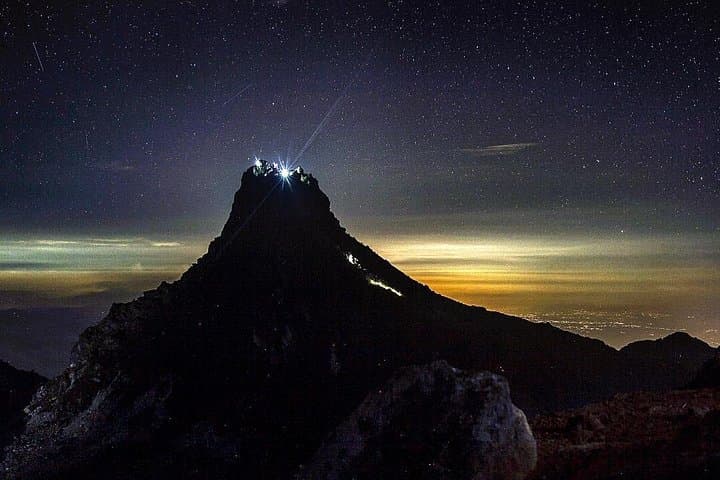
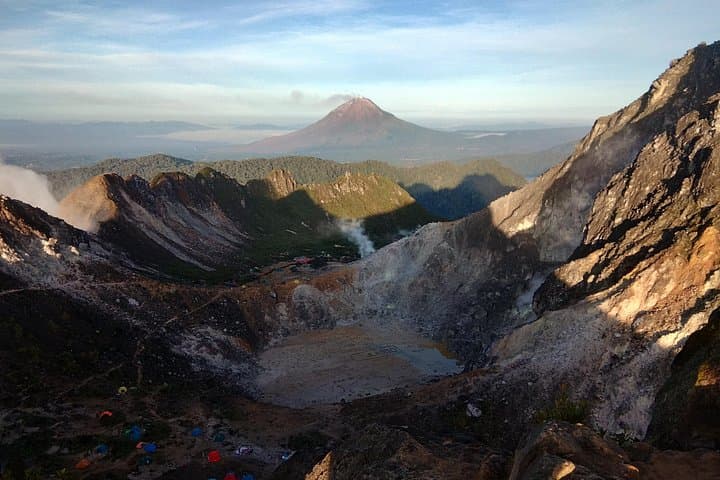
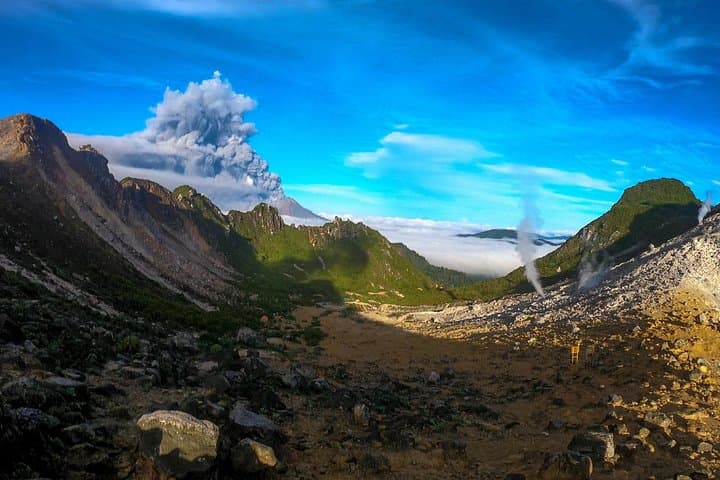

Before the sun clears the rim, you climb through a thin, cold air that smells faintly of sulfur and wet earth. Headlamps blink like slow fireflies along the trail as Mount Sibayak’s crater edges begin to silhouette against a pale sky. By the time the first light slices over the Karo Highlands, valleys and distant peaks reveal themselves in hard, clear detail — rice terraces, small villages, and the smoking vents of neighboring cones.
Before the sun clears the rim, you climb through a thin, cold air that smells faintly of sulfur and wet earth. Headlamps blink like slow fireflies along the trail as Mount Sibayak’s crater edges begin to silhouette against a pale sky. By the time the first light slices over the Karo Highlands, valleys and distant peaks reveal themselves in hard, clear detail — rice terraces, small villages, and the smoking vents of neighboring cones.
Sibayak is a young stratovolcano shaped by recent lava flows and geothermal seams; steam and fumaroles are visible even from the trail. The Karo people of Berastagi have farmed these slopes for generations, and the village culture and markets around the trailhead are as much a part of the visit as the topography. After the ascent, Lau Sidebukdebuk hot springs sit at the mountain’s foot — sulfuric pools that the volcano still feeds, used historically for cleansing and community gatherings.
Practically, expect a steep but relatively short volcanic trail of loose ash, volcanic rock and packed dirt; basic navigation is straightforward and a local guide usually leads the way. Aim for a pre-dawn start to catch sunrise and cooler temperatures. Wear supportive footwear with good grip, carry water and a wind layer, and give fumaroles a respectful distance — gases can be strong.
This trek pairs accessible adventure with tangible geology and local life: a sunrise that rewards early wake-ups, a rugged crater to explore, and a hot spring soak to close the loop. Ideal for first-time volcano hikers who want a compact, high-reward outing from Berastagi.