THE ADVENTURE COLLECTIVE® · Independent discovery and booking for outdoor travel

Leave Sharm el Sheikh overnight for a pre-dawn climb up Mount Sinai, time the 700 steps for sunrise, and follow with a guided visit to ancient St. Catherine’s Monastery. Expect long transfers, steep sections, and unforgettable alpine-desert light.
Leave Sharm el Sheikh overnight for a pre-dawn climb up Mount Sinai, time the 700 steps for sunrise, and follow with a guided visit to ancient St. Catherine’s Monastery. Expect long transfers, steep sections, and unforgettable alpine-desert light.
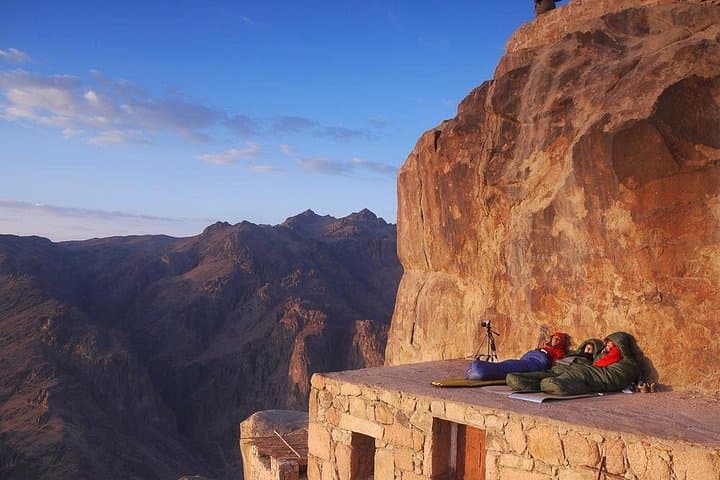
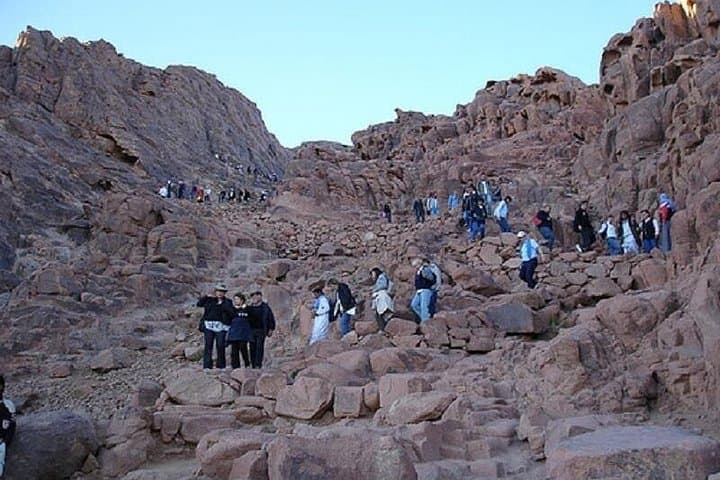
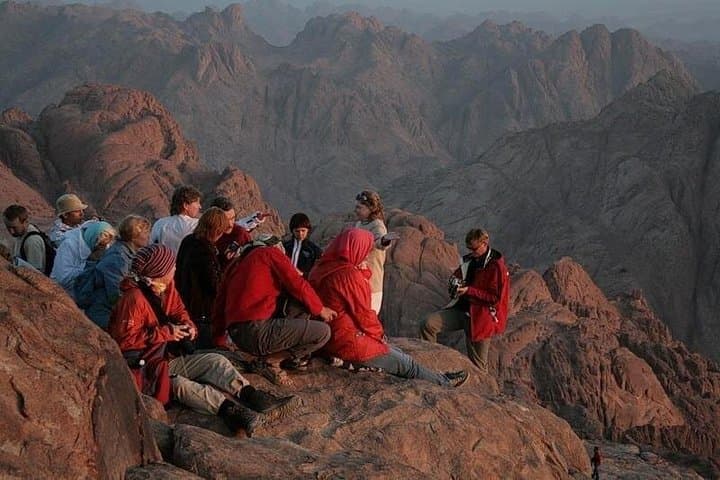
You leave Sharm el Sheikh in the hush before midnight: a minibus threading the high desert, headlights cutting a ribbon across stone and sand. By 2:00 a.m. the group gathers at the base and the climb begins — headlamps bobbing along a stony track that eventually turns to the famous 700 carved steps. The air is thin, dry and cold; the summit’s silhouette resolves against a horizon that will promise one of the region’s most patient sunrises.
Verified experiences and guided adventures in the surrounding area.
Operated by Egypt Tours Club · St. Catherine, South Sinai
You leave Sharm el Sheikh in the hush before midnight: a minibus threading the high desert, headlights cutting a ribbon across stone and sand. By 2:00 a.m. the group gathers at the base and the climb begins — headlamps bobbing along a stony track that eventually turns to the famous 700 carved steps. The air is thin, dry and cold; the summit’s silhouette resolves against a horizon that will promise one of the region’s most patient sunrises.
This route ascends Jebel Musa (Mount Sinai), a granite massif rising to about 2,285 m, a place layered with Biblical history and monastic tradition. Below the peak sits St. Catherine’s Monastery, founded in the 6th century and holding ancient manuscripts and icons. Geologically, the mountain is part of a Precambrian crystalline complex — worn into ridges and amphitheaters that catch light dramatically at dawn.
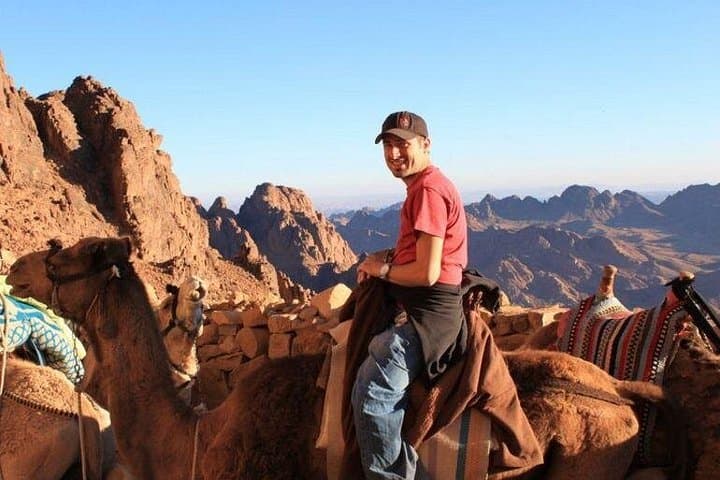
Expect Bedouin guides, simple stone paths, and a steady, sometimes steep grade on loose rock. Many tours include a camel option to the 700-step approach and a guided visit to the monastery grounds (permit fees typically covered). Culturally, tipping (baksheesh) is customary; guides are local and rely on small notes.
Practical tips: start late to reach the summit for sunrise, carry 2–3 liters of water, use a warm layer for the summit and a headlamp for the approach, and wear stiff-soled boots for traction on scree and steps. Allow 14–16 hours for round-trip transfers and stops. If you have respiratory or spinal conditions, this climb is not recommended. The payoff is clear: a sunrise that turns arid stone into sudden color and a walk through one of the oldest continuous monastic sites in the world.
Expect approximately 2.5–3 hours ascending via the 700-step path for an average hiker; descent takes a similar or slightly shorter time.
Yes—camels are available to the start of the 700 steps for those who prefer to avoid part of the approach, though the final section still requires walking.
St. Catherine’s Monastery is generally open but hours can vary; guided tours usually include entrance and a look at the church and ancient library when permitted.
Mount Sinai’s summit is about 2,285 m; most travelers manage fine but those sensitive to altitude should monitor symptoms and descend if they feel unwell.
Egypt Tours Club operates guided outdoor trips and adventures with an emphasis on safety, stewardship, and memorable experiences.
You leave Sharm el Sheikh in the hush before midnight: a minibus threading the high desert, headlights cutting a ribbon across stone and sand. By 2:00 a.m. the group gathers at the base and the climb begins — headlamps bobbing along a stony track that eventually turns to the famous 700 carved steps. The air is thin, dry and cold; the summit’s silhouette resolves against a horizon that will promise one of the region’s most patient sunrises.
You leave Sharm el Sheikh in the hush before midnight: a minibus threading the high desert, headlights cutting a ribbon across stone and sand. By 2:00 a.m. the group gathers at the base and the climb begins — headlamps bobbing along a stony track that eventually turns to the famous 700 carved steps. The air is thin, dry and cold; the summit’s silhouette resolves against a horizon that will promise one of the region’s most patient sunrises.
This route ascends Jebel Musa (Mount Sinai), a granite massif rising to about 2,285 m, a place layered with Biblical history and monastic tradition. Below the peak sits St. Catherine’s Monastery, founded in the 6th century and holding ancient manuscripts and icons. Geologically, the mountain is part of a Precambrian crystalline complex — worn into ridges and amphitheaters that catch light dramatically at dawn.
Expect Bedouin guides, simple stone paths, and a steady, sometimes steep grade on loose rock. Many tours include a camel option to the 700-step approach and a guided visit to the monastery grounds (permit fees typically covered). Culturally, tipping (baksheesh) is customary; guides are local and rely on small notes.
Practical tips: start late to reach the summit for sunrise, carry 2–3 liters of water, use a warm layer for the summit and a headlamp for the approach, and wear stiff-soled boots for traction on scree and steps. Allow 14–16 hours for round-trip transfers and stops. If you have respiratory or spinal conditions, this climb is not recommended. The payoff is clear: a sunrise that turns arid stone into sudden color and a walk through one of the oldest continuous monastic sites in the world.