THE ADVENTURE COLLECTIVE® · Independent discovery and booking for outdoor travel

Climb Mount Sinai for a sunrise that illuminates a hundred shades of desert rock, then walk through the 6th-century St Catherine Monastery to see ancient icons and manuscripts. This long day trip from Sharm el Sheikh combines strenuous hiking with deep cultural history.
Climb Mount Sinai for a sunrise that illuminates a hundred shades of desert rock, then walk through the 6th-century St Catherine Monastery to see ancient icons and manuscripts. This long day trip from Sharm el Sheikh combines strenuous hiking with deep cultural history.
Before dawn the desert pulls tight like a held breath: headlamps puncture black, the road out of Sharm el Sheikh unspools through low, wind-swept plateaus, and granite ridges resolve into the silhouette of Mount Sinai. The climb begins on stone steps and loose scree; as the sky brightens, the ridgeline opens to sweep of ochre and basalt, and the monastery at the mountain’s foot looks like an island of white stone in an amphitheater of rock.
Verified experiences and guided adventures in the surrounding area.
Operated by Gazef · St. Catherine, South Sinai Governorate
Before dawn the desert pulls tight like a held breath: headlamps puncture black, the road out of Sharm el Sheikh unspools through low, wind-swept plateaus, and granite ridges resolve into the silhouette of Mount Sinai. The climb begins on stone steps and loose scree; as the sky brightens, the ridgeline opens to sweep of ochre and basalt, and the monastery at the mountain’s foot looks like an island of white stone in an amphitheater of rock.
The monastery itself dates to the 6th century under Emperor Justinian and is one of the world’s oldest continuously operating Christian monasteries, housing ancient icons and manuscripts. Geologically the range is Precambrian granite and gneiss—hard, fractured rock that creates steep gullies and sudden viewpoints. Culturally, the tour often includes local Bedouin guides whose knowledge of trails and seasonal weather shapes the route and pacing.
Practical guidance: expect a roughly 3-hour drive each way from Sharm, and a full 12–15 hour day in total. The ascent involves several thousand stone steps if you take the main path—good footwear, layered clothing, and 2–3 liters of water are non-negotiable. Start times are frequently before midnight or very early to reach the summit for sunrise; bring a headlamp and plan for cold on exposed ridgelines. Respect dress codes and quiet in the monastery (it can be closed on Fridays and Sundays), carry cash for tips and small purchases, and allow extra time for road transfers. The route rewards steady, careful hikers with expansive desert light, church frescoes, and the human scale of a site that’s remained active for 1,500 years.
The ascent typically takes 2–3 hours depending on pace and route; expect 1.5–3 hours to descend, and add transfer time for a full-day schedule.
The monastery is historic and generally open, but it can be closed on Fridays and Sundays—check with your operator before booking.
Yes—many operators offer pickup from Dahab and Nuweiba, though transfer times will add to the day’s length; confirm pickup details when you book.
The climb involves many steps and steep sections and is not recommended for travelers with significant back, heart, or pregnancy-related conditions; children should be experienced hikers and closely supervised.
Gazef operates guided outdoor trips and adventures with an emphasis on safety, stewardship, and memorable experiences.


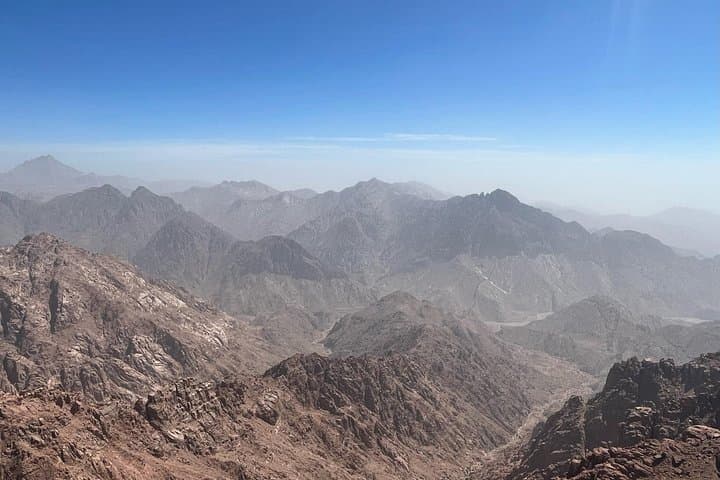

Before dawn the desert pulls tight like a held breath: headlamps puncture black, the road out of Sharm el Sheikh unspools through low, wind-swept plateaus, and granite ridges resolve into the silhouette of Mount Sinai. The climb begins on stone steps and loose scree; as the sky brightens, the ridgeline opens to sweep of ochre and basalt, and the monastery at the mountain’s foot looks like an island of white stone in an amphitheater of rock.
Before dawn the desert pulls tight like a held breath: headlamps puncture black, the road out of Sharm el Sheikh unspools through low, wind-swept plateaus, and granite ridges resolve into the silhouette of Mount Sinai. The climb begins on stone steps and loose scree; as the sky brightens, the ridgeline opens to sweep of ochre and basalt, and the monastery at the mountain’s foot looks like an island of white stone in an amphitheater of rock.
The monastery itself dates to the 6th century under Emperor Justinian and is one of the world’s oldest continuously operating Christian monasteries, housing ancient icons and manuscripts. Geologically the range is Precambrian granite and gneiss—hard, fractured rock that creates steep gullies and sudden viewpoints. Culturally, the tour often includes local Bedouin guides whose knowledge of trails and seasonal weather shapes the route and pacing.
Practical guidance: expect a roughly 3-hour drive each way from Sharm, and a full 12–15 hour day in total. The ascent involves several thousand stone steps if you take the main path—good footwear, layered clothing, and 2–3 liters of water are non-negotiable. Start times are frequently before midnight or very early to reach the summit for sunrise; bring a headlamp and plan for cold on exposed ridgelines. Respect dress codes and quiet in the monastery (it can be closed on Fridays and Sundays), carry cash for tips and small purchases, and allow extra time for road transfers. The route rewards steady, careful hikers with expansive desert light, church frescoes, and the human scale of a site that’s remained active for 1,500 years.