THE ADVENTURE COLLECTIVE® · Independent discovery and booking for outdoor travel

A demanding 14 km loop to Mount Tobbio’s Madonna di Caravaggio sanctuary with 900 m of climb, sweeping views and wartime history. Ideal for hikers who want raw Apennine ridgelines, guided local insight and a full-day mountain outing.
A demanding 14 km loop to Mount Tobbio’s Madonna di Caravaggio sanctuary with 900 m of climb, sweeping views and wartime history. Ideal for hikers who want raw Apennine ridgelines, guided local insight and a full-day mountain outing.
You leave Voltaggio before the road thins and the map becomes contour lines. The trail climbs through open scrub and stands of beech and chestnut, the wind along the ridge seeming to push you onward, daring you to keep pace. At the summit the Sanctuary of the Madonna di Caravaggio sits at 1,092 m — a compact stone refuge that rewards the effort with a true 360-degree sweep of the Ligurian Apennines.
Verified experiences and guided adventures in the surrounding area.
Operated by Escursì - experience sardinia · Voltaggio, Piedmont
You leave Voltaggio before the road thins and the map becomes contour lines. The trail climbs through open scrub and stands of beech and chestnut, the wind along the ridge seeming to push you onward, daring you to keep pace. At the summit the Sanctuary of the Madonna di Caravaggio sits at 1,092 m — a compact stone refuge that rewards the effort with a true 360-degree sweep of the Ligurian Apennines.
Geology here is honest: folded limestone and gritty flysch that formed the spine between the Po plain and the Ligurian Sea. The park preserves a history of upland life and wartime resistance; local guides often point out partisan routes and shepherding terraces that shaped the landscape. Culture shows in simple stone chapels and in the villages you pass: food is rustic, based on polenta, mushrooms and mountain cheeses.
Practically, expect a loop of about 14 km with roughly 900 m of ascent. Trail is exposed in places, with rocky sections and steady climbs — classified locally as E (hiking) and described as physically demanding. The route is best attempted with firm hiking boots, 1.5 L+ water, sun protection and layered windproof clothing. Start early in summer for cooler conditions, and allow 5–6.5 hours including breaks.
Guided hikes add local context — geology, wartime stories and natural history — and improve safety on exposed ridgelines. Leave no trace: the park’s fragile meadows recover slowly, so pack out all waste and stick to marked tracks.
The loop is about 14 km with approximately 900 m of cumulative elevation gain, typically taking 5–6.5 hours depending on pace and stops.
A guide is not strictly required but recommended: they provide safety on exposed sections and share local history and naturalist insights.
Pets are allowed on leash, but the terrain and duration can be strenuous—ensure your dog is fit for a long mountain hike.
Hiking boots are mandatory for participation due to steep, rocky sections; trainers or sandals are not acceptable.
Escursì - experience sardinia operates guided outdoor trips and adventures with an emphasis on safety, stewardship, and memorable experiences.
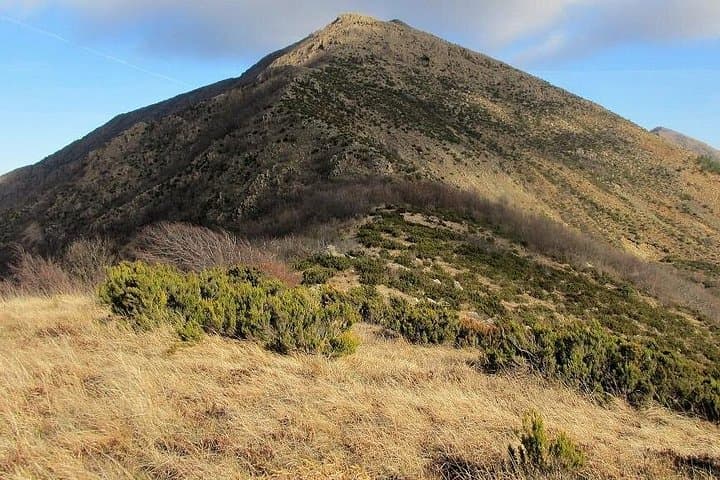


You leave Voltaggio before the road thins and the map becomes contour lines. The trail climbs through open scrub and stands of beech and chestnut, the wind along the ridge seeming to push you onward, daring you to keep pace. At the summit the Sanctuary of the Madonna di Caravaggio sits at 1,092 m — a compact stone refuge that rewards the effort with a true 360-degree sweep of the Ligurian Apennines.
You leave Voltaggio before the road thins and the map becomes contour lines. The trail climbs through open scrub and stands of beech and chestnut, the wind along the ridge seeming to push you onward, daring you to keep pace. At the summit the Sanctuary of the Madonna di Caravaggio sits at 1,092 m — a compact stone refuge that rewards the effort with a true 360-degree sweep of the Ligurian Apennines.
Geology here is honest: folded limestone and gritty flysch that formed the spine between the Po plain and the Ligurian Sea. The park preserves a history of upland life and wartime resistance; local guides often point out partisan routes and shepherding terraces that shaped the landscape. Culture shows in simple stone chapels and in the villages you pass: food is rustic, based on polenta, mushrooms and mountain cheeses.
Practically, expect a loop of about 14 km with roughly 900 m of ascent. Trail is exposed in places, with rocky sections and steady climbs — classified locally as E (hiking) and described as physically demanding. The route is best attempted with firm hiking boots, 1.5 L+ water, sun protection and layered windproof clothing. Start early in summer for cooler conditions, and allow 5–6.5 hours including breaks.
Guided hikes add local context — geology, wartime stories and natural history — and improve safety on exposed ridgelines. Leave no trace: the park’s fragile meadows recover slowly, so pack out all waste and stick to marked tracks.