THE ADVENTURE COLLECTIVE® · Independent discovery and booking for outdoor travel

Tour the multicolored hills around Tilcara by bike and trade paved streets for gravel tracks, rural homesteads, and high-valley views. This two-hour guided ride blends geology, local culture, and accessible singletrack for beginners and seasoned riders alike.
Tour the multicolored hills around Tilcara by bike and trade paved streets for gravel tracks, rural homesteads, and high-valley views. This two-hour guided ride blends geology, local culture, and accessible singletrack for beginners and seasoned riders alike.
You set off one block from Tilcara’s main square, pedals clicking as the high valley air pushes at your face. The town slips behind — adobe houses and bright textiles — and the trail opens onto gravel roads that thread through multicolored hills. Winds here have a habit of testing will and balance; the landscape answers with sudden views of stepped terraces and distant arid ridges.
Verified experiences and guided adventures in the surrounding area.
Operated by Jujuy en Bici · Tilcara, Jujuy
You set off one block from Tilcara’s main square, pedals clicking as the high valley air pushes at your face. The town slips behind — adobe houses and bright textiles — and the trail opens onto gravel roads that thread through multicolored hills. Winds here have a habit of testing will and balance; the landscape answers with sudden views of stepped terraces and distant arid ridges.
This ride moves through the southern reaches of the Quebrada de Humahuaca, a UNESCO-recognized corridor carved by tectonic uplift and millennia of erosion. Archaeological remains like the nearby Pucará de Tilcara speak to pre-Columbian communities who farmed these slopes; today, campesino homesteads and seasonal crops punctuate the route and add cultural texture to the geology’s bands of ochre and rust.
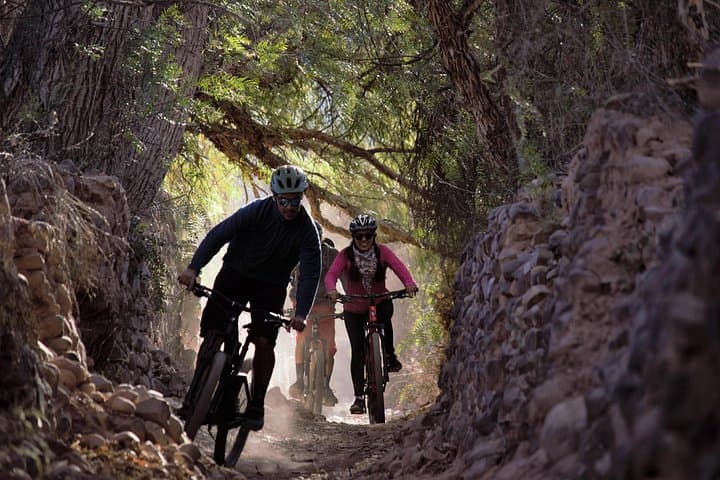
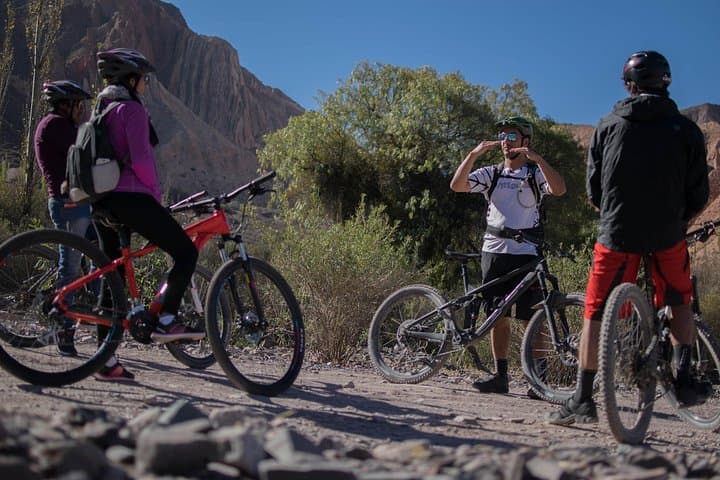
Expect two hours of mostly gravel and packed-earth trails with short, smooth climbs and descents suitable for recreational cyclists. The guide points out local farming practices, old ruins, and a handful of viewpoints where llamas or wild viscachas may graze. The ride finishes back in town.
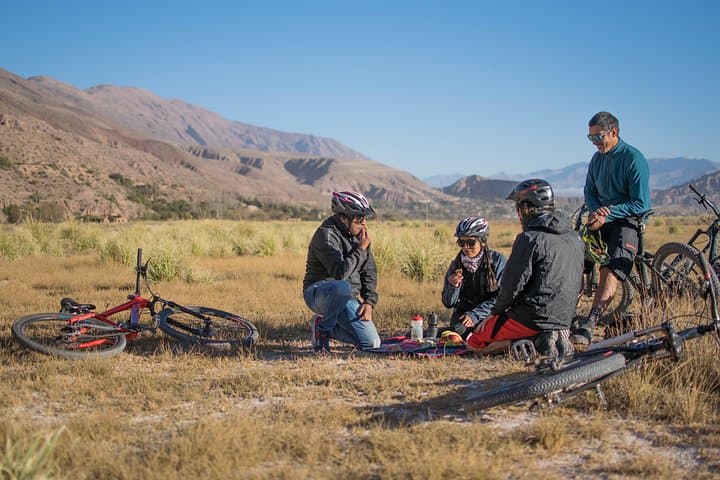
Practical notes: helmets and bikes are provided but carry a small daypack with water, sun protection, and an extra layer—the valley sits around 2,400–2,500 m (about 8,000 ft). Shoes with grippy soles and confidence on loose surfaces make the outing more enjoyable. Start mid-morning to avoid the hottest sun and allow time to acclimate if you’ve just arrived. Follow your guide, stay on designated tracks to protect fragile soils, and bring cash for a market stop on your return.
No; the route is rated easy with short, manageable climbs and mostly gravel tracks—basic bike handling is sufficient.
Yes—bicycles and helmets are included in the tour price; guests should bring personal gloves and shoes if preferred.
Tilcara sits around 2,400–2,500 m; take it steady, hydrate before the ride, and avoid overexertion if you’ve just arrived.
The group meets one block from Tilcara’s main square; the loop returns to town for time to explore markets or cafés.
Jujuy en Bici operates guided outdoor trips and adventures with an emphasis on safety, stewardship, and memorable experiences.
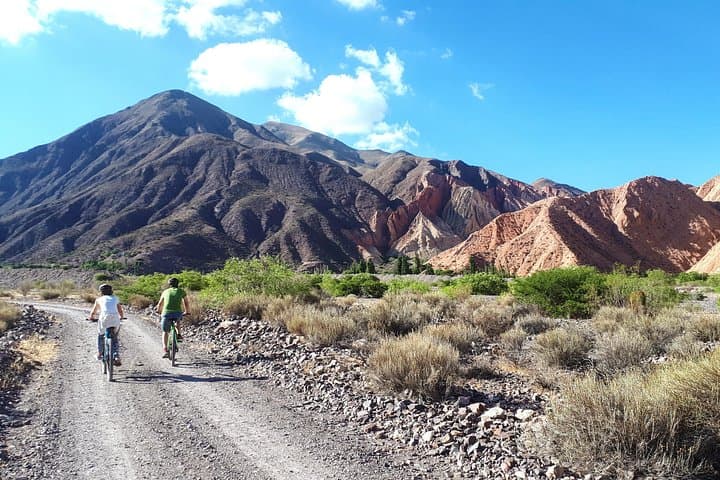
You set off one block from Tilcara’s main square, pedals clicking as the high valley air pushes at your face. The town slips behind — adobe houses and bright textiles — and the trail opens onto gravel roads that thread through multicolored hills. Winds here have a habit of testing will and balance; the landscape answers with sudden views of stepped terraces and distant arid ridges.
You set off one block from Tilcara’s main square, pedals clicking as the high valley air pushes at your face. The town slips behind — adobe houses and bright textiles — and the trail opens onto gravel roads that thread through multicolored hills. Winds here have a habit of testing will and balance; the landscape answers with sudden views of stepped terraces and distant arid ridges.
This ride moves through the southern reaches of the Quebrada de Humahuaca, a UNESCO-recognized corridor carved by tectonic uplift and millennia of erosion. Archaeological remains like the nearby Pucará de Tilcara speak to pre-Columbian communities who farmed these slopes; today, campesino homesteads and seasonal crops punctuate the route and add cultural texture to the geology’s bands of ochre and rust.
Expect two hours of mostly gravel and packed-earth trails with short, smooth climbs and descents suitable for recreational cyclists. The guide points out local farming practices, old ruins, and a handful of viewpoints where llamas or wild viscachas may graze. The ride finishes back in town.
Practical notes: helmets and bikes are provided but carry a small daypack with water, sun protection, and an extra layer—the valley sits around 2,400–2,500 m (about 8,000 ft). Shoes with grippy soles and confidence on loose surfaces make the outing more enjoyable. Start mid-morning to avoid the hottest sun and allow time to acclimate if you’ve just arrived. Follow your guide, stay on designated tracks to protect fragile soils, and bring cash for a market stop on your return.