THE ADVENTURE COLLECTIVE® · Independent discovery and booking for outdoor travel

Ride Tijuca’s forested ridges from Vista China to Ipanema on a six-hour guided mountain bike loop. Expect steep climbs, fast descents, city panoramas and close encounters with toucans and monkeys.
Ride Tijuca’s forested ridges from Vista China to Ipanema on a six-hour guided mountain bike loop. Expect steep climbs, fast descents, city panoramas and close encounters with toucans and monkeys.
A cool mist rides down the granite ribs of Rio's coastal mountains as your tires find rhythm on root-laced singletrack. You push through a tunnel of green—ferns, bromeliads and tall Atlantic Forest trees—then crest to a view: the curved ribbon of Rodrigo de Freitas Lagoon, Copacabana and the sweep of Ipanema beyond. The ride moves from dense forest climbs to fast descents and stretches that touch the old Rio 2016 Olympic cycling circuit.
Verified experiences and guided adventures in the surrounding area.
Operated by Nattrip - Tourism, Ecotourism and Adventure in Rio de Janeiro · Rio de Janeiro, Rio de Janeiro
A cool mist rides down the granite ribs of Rio's coastal mountains as your tires find rhythm on root-laced singletrack. You push through a tunnel of green—ferns, bromeliads and tall Atlantic Forest trees—then crest to a view: the curved ribbon of Rodrigo de Freitas Lagoon, Copacabana and the sweep of Ipanema beyond. The ride moves from dense forest climbs to fast descents and stretches that touch the old Rio 2016 Olympic cycling circuit.
Tijuca National Park is one of the largest urban forests in the world and, crucially, a replanted landscape: mid-19th-century reforestation under Emperor Dom Pedro II reversed earlier clearing. The geology here is coastal granite and gneiss sculpted into steep domes and ridges; trails alternate between packed soil, exposed roots and rocky shelf sections.
Culture in these hills is urban and informal—guides point out relics of coffee farms and the Emperor’s Table (Mesa do Imperador), while neighbors hike and run on weekends. Expect to hear loud toucan calls, see capuchin monkeys and occasionally a slow-moving sloth in the canopy.
Practical side: the tour runs about six hours and includes a support van and provided mountain bikes. Terrain is mixed—several sustained climbs and technical descents—so carry hydration, a spare tube and wear grippy shoes. Start early to avoid midday heat, respect wildlife, and be ready to walk short pitches. For riders who relish varied singletrack, panoramic viewpoints, and a direct link from rainforest to city beaches, this route delivers both effort and spectacular payoff.
Yes—the tour provides mountain bikes (brands like Giant, Trek, KHS or Kona), helmets and gloves as listed in the inclusions.
The route mixes non-technical fire roads with short technical descents and rooty singletrack; riders should be comfortable dismounting on steeper pitches.
Not ideal for complete beginners—participants should have moderate fitness and prior off-road experience; a support van is available for rest or withdrawal.
Expect birds like toucans and tanagers, capuchin and howler monkeys, and occasionally sloths—always observe but do not feed wildlife.
Nattrip - Tourism, Ecotourism and Adventure in Rio de Janeiro operates guided outdoor trips and adventures with an emphasis on safety, stewardship, and memorable experiences.
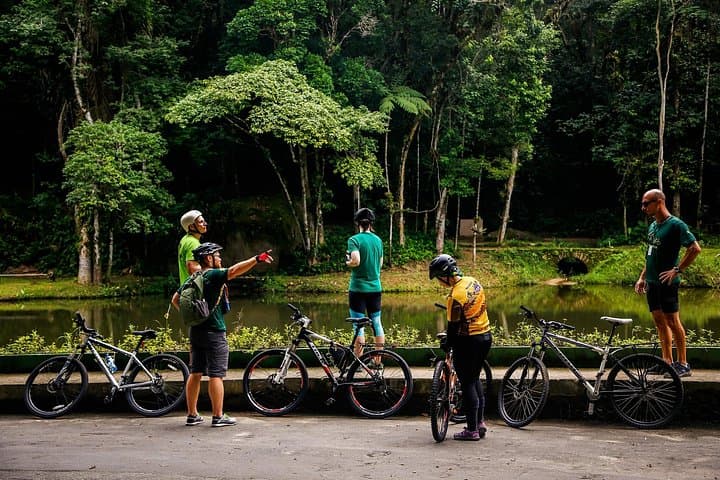

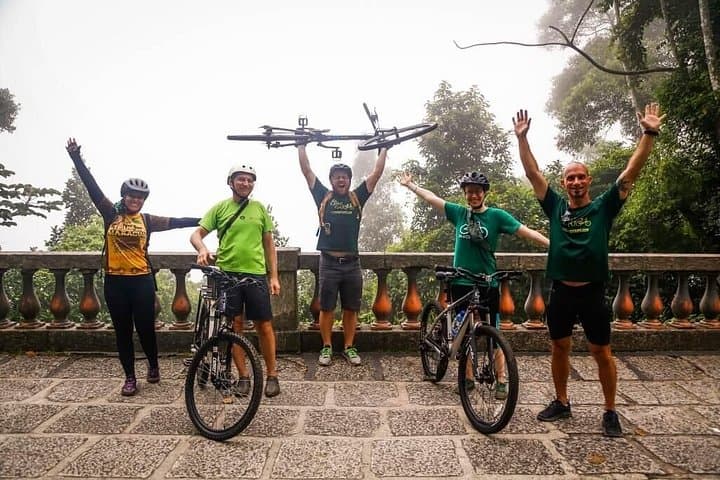
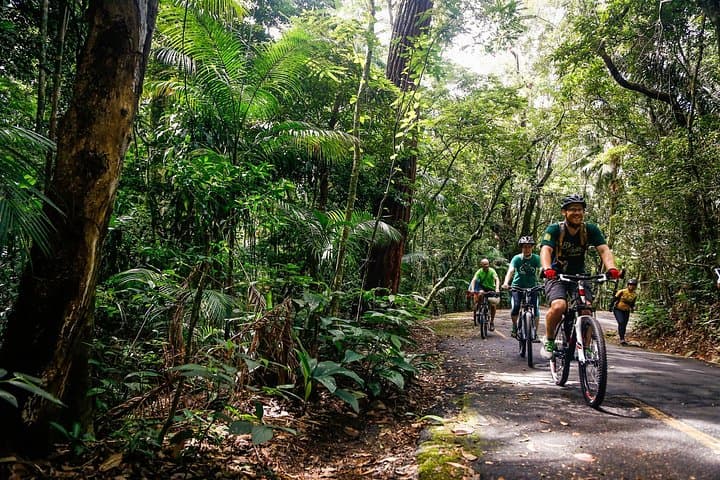
A cool mist rides down the granite ribs of Rio's coastal mountains as your tires find rhythm on root-laced singletrack. You push through a tunnel of green—ferns, bromeliads and tall Atlantic Forest trees—then crest to a view: the curved ribbon of Rodrigo de Freitas Lagoon, Copacabana and the sweep of Ipanema beyond. The ride moves from dense forest climbs to fast descents and stretches that touch the old Rio 2016 Olympic cycling circuit.
A cool mist rides down the granite ribs of Rio's coastal mountains as your tires find rhythm on root-laced singletrack. You push through a tunnel of green—ferns, bromeliads and tall Atlantic Forest trees—then crest to a view: the curved ribbon of Rodrigo de Freitas Lagoon, Copacabana and the sweep of Ipanema beyond. The ride moves from dense forest climbs to fast descents and stretches that touch the old Rio 2016 Olympic cycling circuit.
Tijuca National Park is one of the largest urban forests in the world and, crucially, a replanted landscape: mid-19th-century reforestation under Emperor Dom Pedro II reversed earlier clearing. The geology here is coastal granite and gneiss sculpted into steep domes and ridges; trails alternate between packed soil, exposed roots and rocky shelf sections.
Culture in these hills is urban and informal—guides point out relics of coffee farms and the Emperor’s Table (Mesa do Imperador), while neighbors hike and run on weekends. Expect to hear loud toucan calls, see capuchin monkeys and occasionally a slow-moving sloth in the canopy.
Practical side: the tour runs about six hours and includes a support van and provided mountain bikes. Terrain is mixed—several sustained climbs and technical descents—so carry hydration, a spare tube and wear grippy shoes. Start early to avoid midday heat, respect wildlife, and be ready to walk short pitches. For riders who relish varied singletrack, panoramic viewpoints, and a direct link from rainforest to city beaches, this route delivers both effort and spectacular payoff.