THE ADVENTURE COLLECTIVE® · Independent discovery and booking for outdoor travel

Spend a day exploring the Fuji Five Lakes with a licensed guide and private vehicle. See Chureito Pagoda, Narusawa Ice Cave, Kawaguchiko views and sample regional noodles and wine on a customizable day trip from Tokyo.
Spend a day exploring the Fuji Five Lakes with a licensed guide and private vehicle. See Chureito Pagoda, Narusawa Ice Cave, Kawaguchiko views and sample regional noodles and wine on a customizable day trip from Tokyo.
Morning light slices across Kawaguchiko, turning the lake into a sheet of glass and the silhouette of Mount Fuji into a hard-edged promise. A private vehicle eases out of Tokyo and the guide outlines the day: temples and pagodas, lava caves that hold year-round ice, village ponds fed by snowmelt — each stop a different way to read Fuji’s story.
Verified experiences and guided adventures in the surrounding area.
Operated by Japan Guide Agency · Fujikawaguchiko, Yamanashi
Morning light slices across Kawaguchiko, turning the lake into a sheet of glass and the silhouette of Mount Fuji into a hard-edged promise. A private vehicle eases out of Tokyo and the guide outlines the day: temples and pagodas, lava caves that hold year-round ice, village ponds fed by snowmelt — each stop a different way to read Fuji’s story.
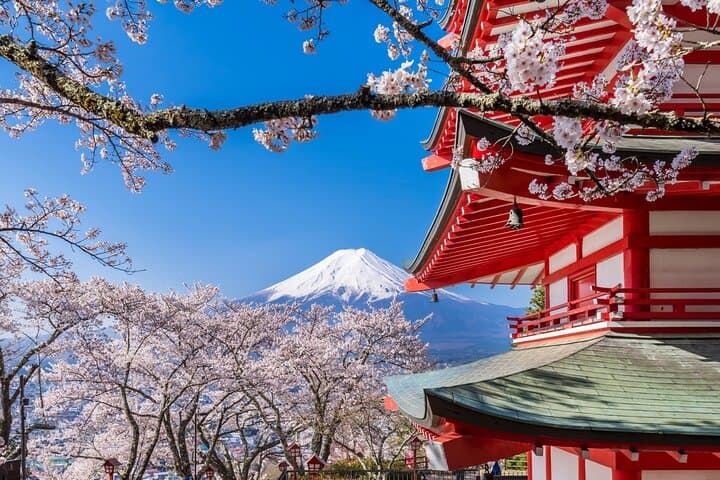
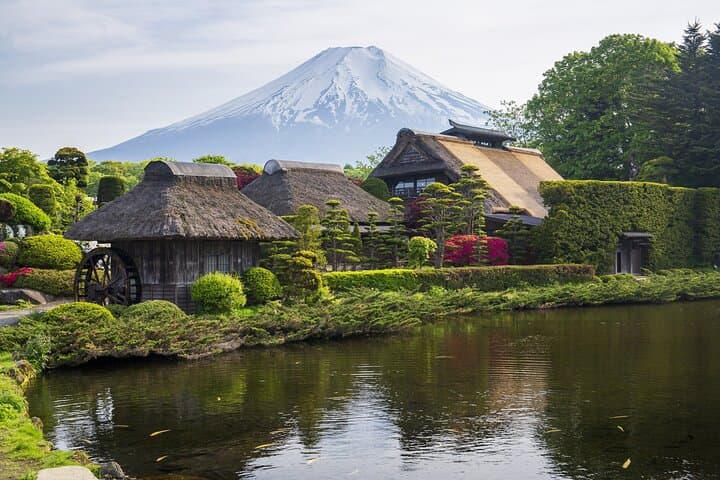
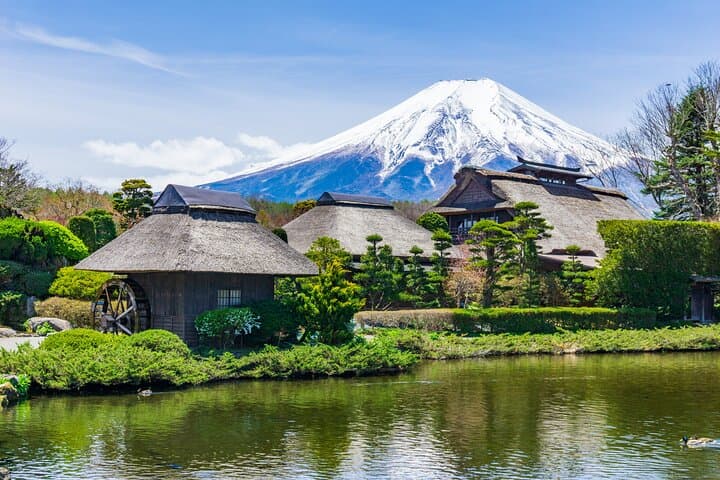
Geology here is visible: Mount Fuji is a stratovolcano shaped by repeated eruptions, the last major one in 1707 (the Hōei eruption). The Five Lakes — Kawaguchiko, Yamanakako, Saiko, Motosuko and Shoji — sit at the mountain’s northern and eastern flanks where lava flows and lava-formed basins collect runoff. Cultural notes appear in quick succession: Chureito Pagoda’s red tiers (the modern structure dates to the 1960s) framing seasonal cherry blossom views, and Oshino Hakkai’s clear ponds fed by glacier-melt filtered through volcanic rock.
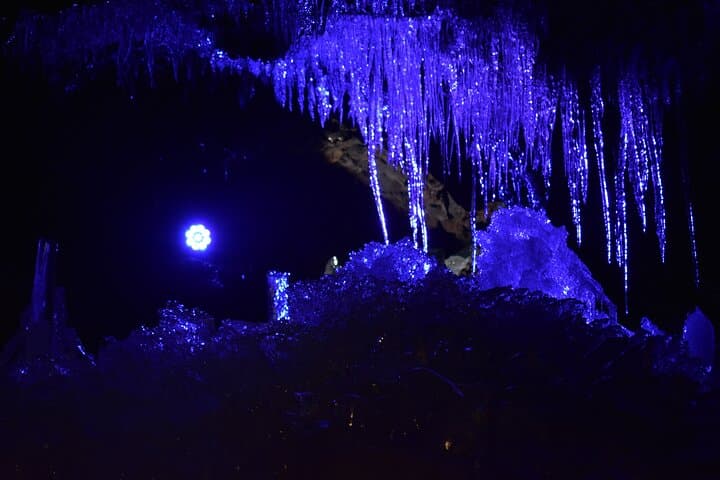
Practical realities: the full day runs roughly nine hours with 3–4 customizable stops, travel time from central Tokyo is about 2–2.5 hours each way depending on traffic, and elevations range from lakes near 800–900 m to the Fuji Subaru Line 5th Station at ~2,305 m. Expect brief walks, stairs at viewpoints, and cool, humid air inside Narusawa Ice Cave (a 153 m lava tube).
Bring layered clothing, sturdy shoes, and a camera; mornings give the best chance for clear views of Fuji. The privately guided format means pacing, stops for local houtou noodles or a winery tasting, and flexibility to swap in seasonal highlights such as cherry blossom viewing in April or autumn color in October–November.
The private tour is approximately nine hours; pickup and drop-off are provided from your Tokyo hotel as arranged with the licensed guide.
Most visits are sightseeing stops and do not include admissions; the itinerary notes when entry fees apply (for example some museums or ropeway tickets).
The tour is family-friendly and transportation is wheelchair accessible, but some sites have steps or uneven ground — contact the operator ahead for car-seat availability and specific accessibility needs.
Clear morning views are most likely in late autumn and winter; spring offers cherry blossoms (early–mid April) and summer can be hazy with more cloud cover.
Japan Guide Agency operates guided outdoor trips and adventures with an emphasis on safety, stewardship, and memorable experiences.
Morning light slices across Kawaguchiko, turning the lake into a sheet of glass and the silhouette of Mount Fuji into a hard-edged promise. A private vehicle eases out of Tokyo and the guide outlines the day: temples and pagodas, lava caves that hold year-round ice, village ponds fed by snowmelt — each stop a different way to read Fuji’s story.
Morning light slices across Kawaguchiko, turning the lake into a sheet of glass and the silhouette of Mount Fuji into a hard-edged promise. A private vehicle eases out of Tokyo and the guide outlines the day: temples and pagodas, lava caves that hold year-round ice, village ponds fed by snowmelt — each stop a different way to read Fuji’s story.
Geology here is visible: Mount Fuji is a stratovolcano shaped by repeated eruptions, the last major one in 1707 (the Hōei eruption). The Five Lakes — Kawaguchiko, Yamanakako, Saiko, Motosuko and Shoji — sit at the mountain’s northern and eastern flanks where lava flows and lava-formed basins collect runoff. Cultural notes appear in quick succession: Chureito Pagoda’s red tiers (the modern structure dates to the 1960s) framing seasonal cherry blossom views, and Oshino Hakkai’s clear ponds fed by glacier-melt filtered through volcanic rock.
Practical realities: the full day runs roughly nine hours with 3–4 customizable stops, travel time from central Tokyo is about 2–2.5 hours each way depending on traffic, and elevations range from lakes near 800–900 m to the Fuji Subaru Line 5th Station at ~2,305 m. Expect brief walks, stairs at viewpoints, and cool, humid air inside Narusawa Ice Cave (a 153 m lava tube).
Bring layered clothing, sturdy shoes, and a camera; mornings give the best chance for clear views of Fuji. The privately guided format means pacing, stops for local houtou noodles or a winery tasting, and flexibility to swap in seasonal highlights such as cherry blossom viewing in April or autumn color in October–November.