THE ADVENTURE COLLECTIVE® · Independent discovery and booking for outdoor travel

A full-day circuit of Mt. Fuji’s most photographed viewpoints: Chureito Pagoda, the spring ponds of Oshino Hakkai, lakeside flower fields at Oishi Park, and the restored thatched village at Saiko Iyashi-no-Sato. Perfect for travelers who want cultural meaning with iconic views.
A full-day circuit of Mt. Fuji’s most photographed viewpoints: Chureito Pagoda, the spring ponds of Oshino Hakkai, lakeside flower fields at Oishi Park, and the restored thatched village at Saiko Iyashi-no-Sato. Perfect for travelers who want cultural meaning with iconic views.
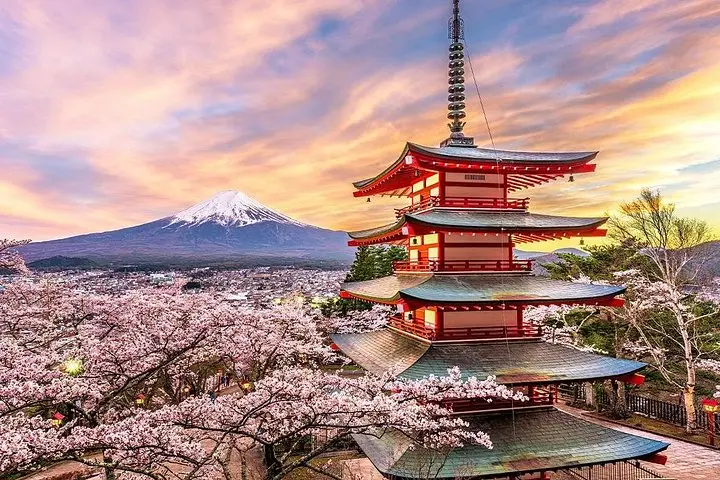
You step off the minibus into a cool, crisp air and the mountain greets you: Mt. Fuji’s cone rising above cedar and tile roofs, its summit often caught in a shifting halo of cloud. The day begins at Arakurayama Sengen Park — a short climb of a few hundred stone steps to the Chureito Pagoda viewpoint — where the pagoda frames Fuji in a single classic composition. The light here changes fast; photographers and quiet observers gather in equal measure.
Verified experiences and guided adventures in the surrounding area.
Operated by TrevoTour Travels · Fujikawaguchiko, Yamanashi
You step off the minibus into a cool, crisp air and the mountain greets you: Mt. Fuji’s cone rising above cedar and tile roofs, its summit often caught in a shifting halo of cloud. The day begins at Arakurayama Sengen Park — a short climb of a few hundred stone steps to the Chureito Pagoda viewpoint — where the pagoda frames Fuji in a single classic composition. The light here changes fast; photographers and quiet observers gather in equal measure.
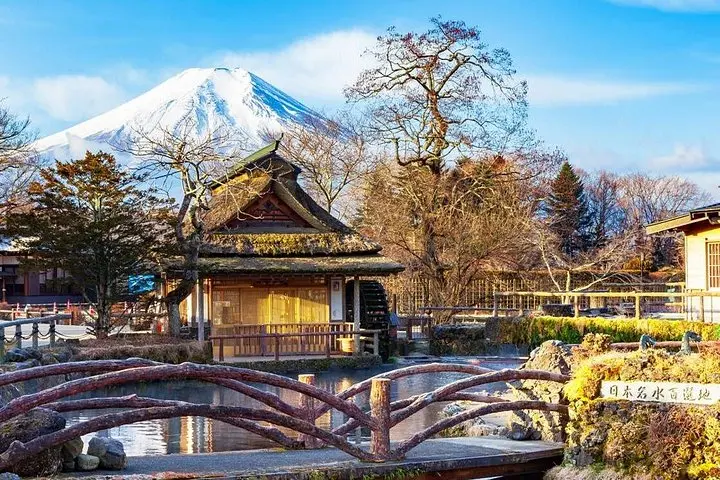
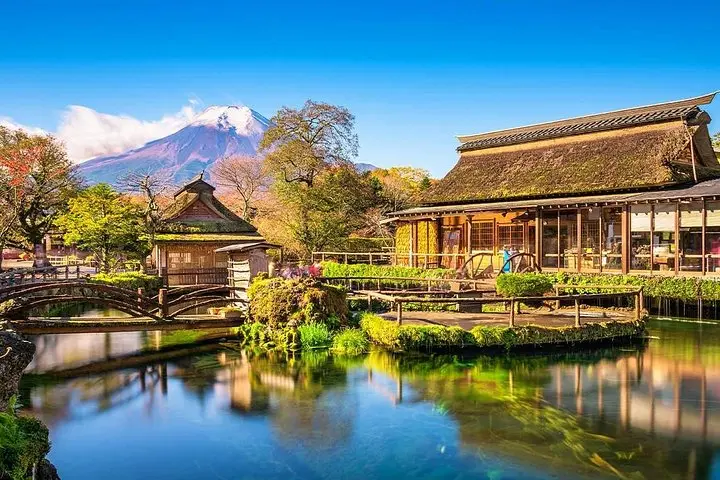
From there the tour slips into slower rhythms at Oshino Hakkai, a cluster of eight spring-fed ponds whose clarity comes from snowmelt filtered through volcanic rock. Traditional thatched houses and wooden mills remind you this landscape supported agrarian life for centuries. At Oishi Park on Lake Kawaguchi the focus shifts to seasonal flower beds — lavender in summer, kochia in autumn — and broad shorelines that push your view straight to the mountain. The day closes in Saiko Iyashi-no-Sato Nenba, a reconstructed thatched village where craftsmen demonstrate pottery and indigo dyeing, connecting modern visitors with Edo-period rural skills.
Geology and culture sit side by side here: Fuji’s volcanic history supplies the water and fertile soils, while centuries of Shinto and local farming traditions shaped settlement patterns. Practically, expect paved paths, short stair climbs, and several opportunities for photos, snacks, and craft workshops. Bring layered clothing, a modest fitness level for short climbs, and an early start to catch the clearest vistas. The route is wheelchair-accessible in parts, but some viewpoints require stairs.
The tour runs about 9–10 hours (including round-trip transfers from the meetup point), with time allocated at each stop for sightseeing and short walks.
Visibility depends on weather — mornings in spring and winter often offer the clearest views, while summer can bring haze and cloud; clear days are not guaranteed.
Portions are wheelchair-accessible and transportation is provided, but several viewpoints (Chureito Pagoda) require climbing stairs and may be inaccessible to some guests.
Meals are not included, but there are snack stalls, cafes, and small restaurants at Oishi Park and Saiko Iyashi-no-Sato; carrying some snacks is advised.
TrevoTour Travels operates guided outdoor trips and adventures with an emphasis on safety, stewardship, and memorable experiences.
You step off the minibus into a cool, crisp air and the mountain greets you: Mt. Fuji’s cone rising above cedar and tile roofs, its summit often caught in a shifting halo of cloud. The day begins at Arakurayama Sengen Park — a short climb of a few hundred stone steps to the Chureito Pagoda viewpoint — where the pagoda frames Fuji in a single classic composition. The light here changes fast; photographers and quiet observers gather in equal measure.
You step off the minibus into a cool, crisp air and the mountain greets you: Mt. Fuji’s cone rising above cedar and tile roofs, its summit often caught in a shifting halo of cloud. The day begins at Arakurayama Sengen Park — a short climb of a few hundred stone steps to the Chureito Pagoda viewpoint — where the pagoda frames Fuji in a single classic composition. The light here changes fast; photographers and quiet observers gather in equal measure.
From there the tour slips into slower rhythms at Oshino Hakkai, a cluster of eight spring-fed ponds whose clarity comes from snowmelt filtered through volcanic rock. Traditional thatched houses and wooden mills remind you this landscape supported agrarian life for centuries. At Oishi Park on Lake Kawaguchi the focus shifts to seasonal flower beds — lavender in summer, kochia in autumn — and broad shorelines that push your view straight to the mountain. The day closes in Saiko Iyashi-no-Sato Nenba, a reconstructed thatched village where craftsmen demonstrate pottery and indigo dyeing, connecting modern visitors with Edo-period rural skills.
Geology and culture sit side by side here: Fuji’s volcanic history supplies the water and fertile soils, while centuries of Shinto and local farming traditions shaped settlement patterns. Practically, expect paved paths, short stair climbs, and several opportunities for photos, snacks, and craft workshops. Bring layered clothing, a modest fitness level for short climbs, and an early start to catch the clearest vistas. The route is wheelchair-accessible in parts, but some viewpoints require stairs.