THE ADVENTURE COLLECTIVE® · Independent discovery and booking for outdoor travel

The Machame Route is a six-day, guided ascent of Mount Kilimanjaro that moves from rainforest to alpine desert and ultimately Uhuru Peak (5,895 m). Expect muddy lower trails, high-altitude scree, and crucial acclimatization stops like Lava Tower.
The Machame Route is a six-day, guided ascent of Mount Kilimanjaro that moves from rainforest to alpine desert and ultimately Uhuru Peak (5,895 m). Expect muddy lower trails, high-altitude scree, and crucial acclimatization stops like Lava Tower.
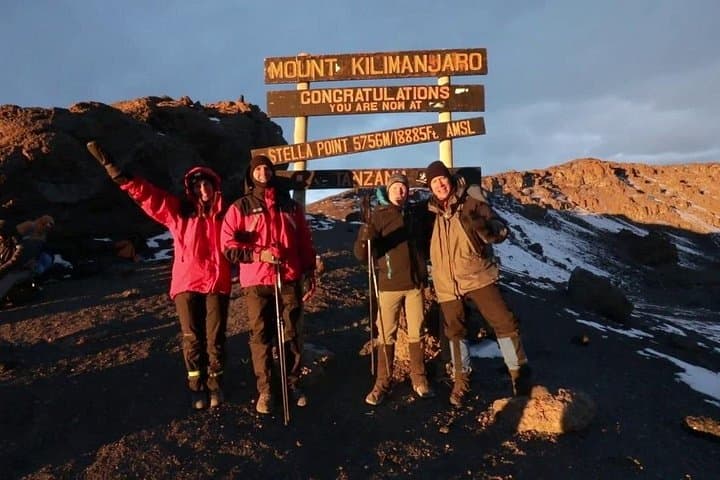
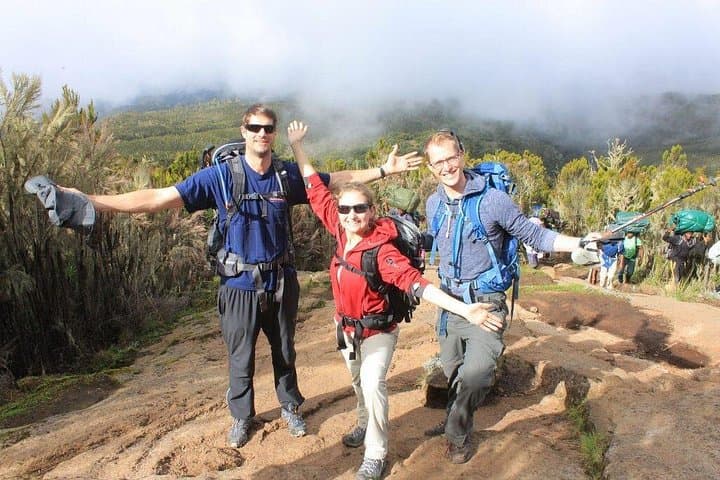
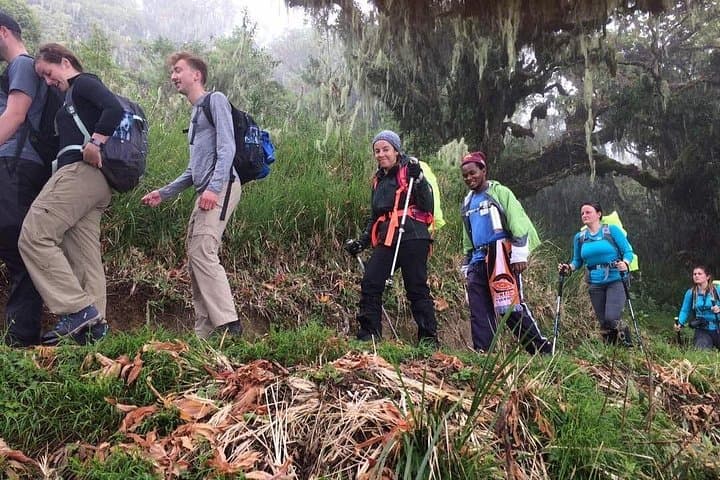
A thin blue light gives way to the silhouette of Kibo as the group gathers at Barafu Camp — breaths visible, ropes and poles in hand. The Machame Route climbs from dense rainforest into moorland, then rocks and alpine desert, before the final, lunar ascent to Uhuru Peak (5,895 m). On day one the trail winds 11 km through dripping forest to Machame Camp; later days move across 5–10 km segments as the air thins and the landscape hardens.
Verified experiences and guided adventures in the surrounding area.
Operated by Kilimanjaro Safari Experience · Moshi, Kilimanjaro Region
A thin blue light gives way to the silhouette of Kibo as the group gathers at Barafu Camp — breaths visible, ropes and poles in hand. The Machame Route climbs from dense rainforest into moorland, then rocks and alpine desert, before the final, lunar ascent to Uhuru Peak (5,895 m). On day one the trail winds 11 km through dripping forest to Machame Camp; later days move across 5–10 km segments as the air thins and the landscape hardens.
The mountain is a stratovolcano made of three cones—Kibo, Mawenzi and Shira—shaped by ice and fire over millennia. The slopes are home to the Chagga people, whose farms ring the lower forests, and to early explorers like Hans Meyer who first recorded a summit in 1889. Glaciers that once crowned Kibo have retreated dramatically, leaving crevassed icefields and exposed rock that make the summit day more demanding.
Practical guidance is straightforward: expect muddy trails early, scree and short scrambles around Barranco and Karanga, and a predawn 5 km push from Barafu to Stella Point then Uhuru. Lava Tower (≈4,600 m) is a key acclimatization checkpoint. Hydrate frequently, pace deliberately, and carry layers for rapid temperature swings — nights at camp drop well below freezing while daytime can be strong sun.
Guides and porters are essential for logistics and safety; bring a warm sleeping bag rated to -10°C or colder, sturdy waterproof boots, gaiters, trekking poles and a small personal first-aid kit. With proper preparation the Machame Route rewards climbers with changing ecosystems, dramatic ridgelines and a summit that makes the effort palpable.
Machame is steeper and more remote than Marangu, offering better acclimatization profiles but fewer hut-style comforts; it's generally more physically demanding due to longer uphill sections.
For the standard Machame route no technical climbing gear is required, though an ice axe or ski pole can help on occasional snowy sections near the rim.
Altitude sickness is common above 3,000 m; proper acclimatization, hydration, a slow pace and following guide advice reduce risk but do not eliminate it.
Camps use portable pit toilets and basic washing stations; facilities are rudimentary so bring hand sanitizer and biodegradable wipes for personal comfort.
Kilimanjaro Safari Experience operates guided outdoor trips and adventures with an emphasis on safety, stewardship, and memorable experiences.

A thin blue light gives way to the silhouette of Kibo as the group gathers at Barafu Camp — breaths visible, ropes and poles in hand. The Machame Route climbs from dense rainforest into moorland, then rocks and alpine desert, before the final, lunar ascent to Uhuru Peak (5,895 m). On day one the trail winds 11 km through dripping forest to Machame Camp; later days move across 5–10 km segments as the air thins and the landscape hardens.
A thin blue light gives way to the silhouette of Kibo as the group gathers at Barafu Camp — breaths visible, ropes and poles in hand. The Machame Route climbs from dense rainforest into moorland, then rocks and alpine desert, before the final, lunar ascent to Uhuru Peak (5,895 m). On day one the trail winds 11 km through dripping forest to Machame Camp; later days move across 5–10 km segments as the air thins and the landscape hardens.
The mountain is a stratovolcano made of three cones—Kibo, Mawenzi and Shira—shaped by ice and fire over millennia. The slopes are home to the Chagga people, whose farms ring the lower forests, and to early explorers like Hans Meyer who first recorded a summit in 1889. Glaciers that once crowned Kibo have retreated dramatically, leaving crevassed icefields and exposed rock that make the summit day more demanding.
Practical guidance is straightforward: expect muddy trails early, scree and short scrambles around Barranco and Karanga, and a predawn 5 km push from Barafu to Stella Point then Uhuru. Lava Tower (≈4,600 m) is a key acclimatization checkpoint. Hydrate frequently, pace deliberately, and carry layers for rapid temperature swings — nights at camp drop well below freezing while daytime can be strong sun.
Guides and porters are essential for logistics and safety; bring a warm sleeping bag rated to -10°C or colder, sturdy waterproof boots, gaiters, trekking poles and a small personal first-aid kit. With proper preparation the Machame Route rewards climbers with changing ecosystems, dramatic ridgelines and a summit that makes the effort palpable.