THE ADVENTURE COLLECTIVE® · Independent discovery and booking for outdoor travel

Walk the cedar-shadowed approaches of Koyasan with a government-licensed guide on this customizable six-hour private tour. Visit Okunoin, Danjo Garan, Kongobu-ji and the Reihokan while learning the history, rituals and practicalities of one of Japan’s most sacred sites.
Walk the cedar-shadowed approaches of Koyasan with a government-licensed guide on this customizable six-hour private tour. Visit Okunoin, Danjo Garan, Kongobu-ji and the Reihokan while learning the history, rituals and practicalities of one of Japan’s most sacred sites.
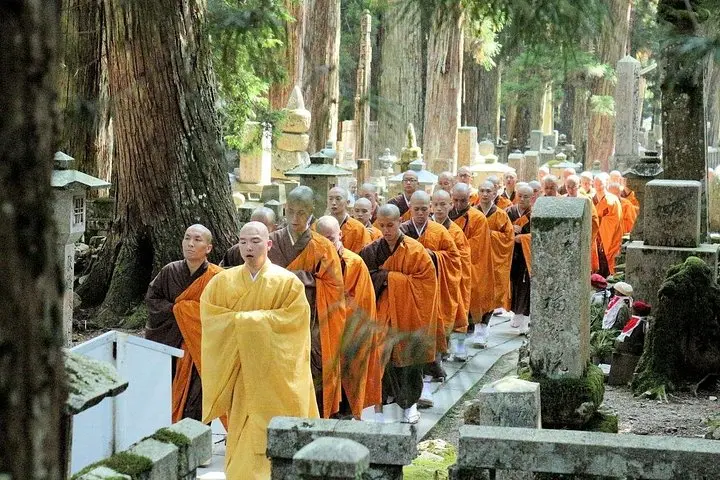
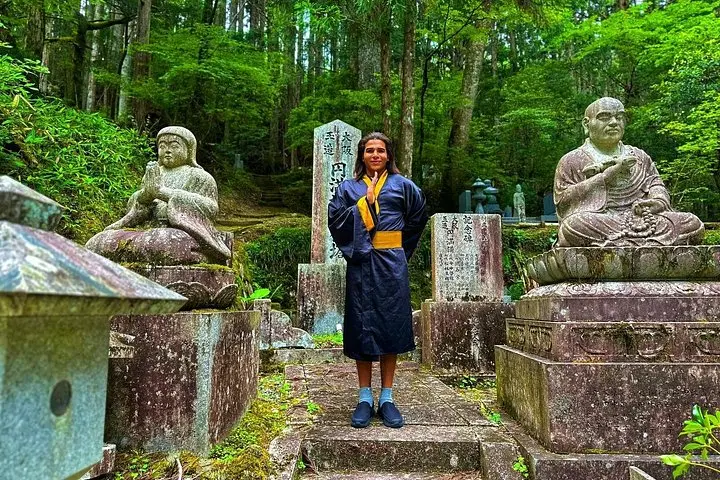
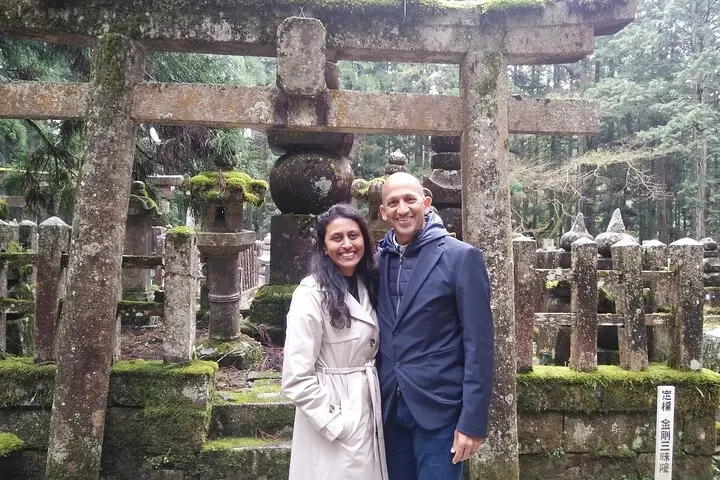
A thin light threads through cedar trunks as you step off the tram at Koyasan Station and into a town whose streets still move at temple-time. The first footsteps on the stone approaches feel like an act of entering a different calendar — graveled lanes, moss-dark lanterns, and the hush of Okunoin’s avenue drawing you toward Kobo Daishi’s mausoleum.
Verified experiences and guided adventures in the surrounding area.
Operated by Japan Guide Agency · Koyasan, Wakayama Prefecture
A thin light threads through cedar trunks as you step off the tram at Koyasan Station and into a town whose streets still move at temple-time. The first footsteps on the stone approaches feel like an act of entering a different calendar — graveled lanes, moss-dark lanterns, and the hush of Okunoin’s avenue drawing you toward Kobo Daishi’s mausoleum.
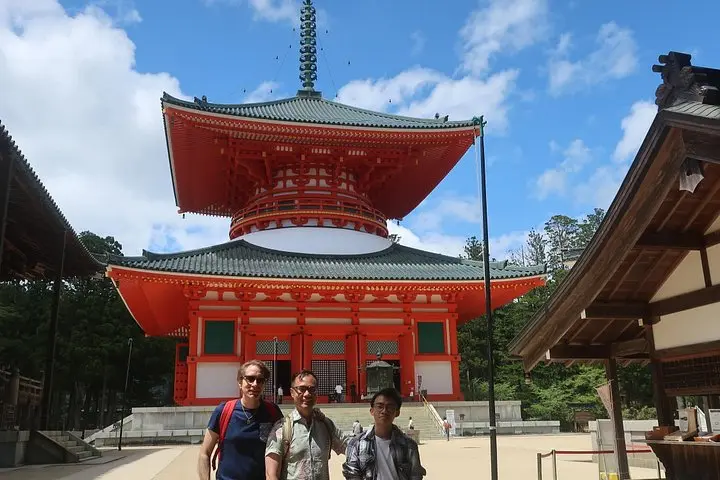
Koyasan was founded in the early 9th century by Kukai (Kobo Daishi) as the center of Shingon Buddhism. The high plateau is volcanic in origin; its bowl-like basin collects cloud and rain, feeding dense cedar stands that have stood for centuries. Cultural layers are visible in every compound: the lacquer and gold of Tokugawa mausoleums, the austere inkbrush strokes in Konpon Daito, and the ritual smoke that still rises from goma hearths.
This private, six-hour walking tour typically covers 3–4 sites chosen beforehand — Okunoin, Danjo Garan, Kongobu-ji and the Reihokan Museum are common picks — guided by a government-licensed English-speaking guide who links architecture, iconography and local lore.
Practical guidance: wear supportive walking shoes and layered clothing for cool forest microclimates; plan for stairs and narrow approaches; carry cash for small shrine fees and temple offerings. Aim for morning light to avoid crowds and to catch temple rituals.
Accessibility is straightforward at many major sites, but some historic structures require steps. Respect photography rules inside temple halls, keep voices low, and follow your guide’s lead — the best access here is both about where you stand and how quietly you move.
Very customizable—guests choose 3–4 sites from the provided list and the guide tailors pacing and themes to interests.
Many main sites have accessible routes, but historic halls often have steps—notify the operator in advance to plan accessible options.
The tour description notes a walking itinerary and guide; small temple fees or museum admissions are usually paid on-site—bring cash.
Yes; the tour is led by a government-licensed English-speaking guide, and multilingual guides are available in some cases.
Japan Guide Agency operates guided outdoor trips and adventures with an emphasis on safety, stewardship, and memorable experiences.
A thin light threads through cedar trunks as you step off the tram at Koyasan Station and into a town whose streets still move at temple-time. The first footsteps on the stone approaches feel like an act of entering a different calendar — graveled lanes, moss-dark lanterns, and the hush of Okunoin’s avenue drawing you toward Kobo Daishi’s mausoleum.
A thin light threads through cedar trunks as you step off the tram at Koyasan Station and into a town whose streets still move at temple-time. The first footsteps on the stone approaches feel like an act of entering a different calendar — graveled lanes, moss-dark lanterns, and the hush of Okunoin’s avenue drawing you toward Kobo Daishi’s mausoleum.
Koyasan was founded in the early 9th century by Kukai (Kobo Daishi) as the center of Shingon Buddhism. The high plateau is volcanic in origin; its bowl-like basin collects cloud and rain, feeding dense cedar stands that have stood for centuries. Cultural layers are visible in every compound: the lacquer and gold of Tokugawa mausoleums, the austere inkbrush strokes in Konpon Daito, and the ritual smoke that still rises from goma hearths.
This private, six-hour walking tour typically covers 3–4 sites chosen beforehand — Okunoin, Danjo Garan, Kongobu-ji and the Reihokan Museum are common picks — guided by a government-licensed English-speaking guide who links architecture, iconography and local lore.
Practical guidance: wear supportive walking shoes and layered clothing for cool forest microclimates; plan for stairs and narrow approaches; carry cash for small shrine fees and temple offerings. Aim for morning light to avoid crowds and to catch temple rituals.
Accessibility is straightforward at many major sites, but some historic structures require steps. Respect photography rules inside temple halls, keep voices low, and follow your guide’s lead — the best access here is both about where you stand and how quietly you move.