THE ADVENTURE COLLECTIVE® · Independent discovery and booking for outdoor travel

A single day on Tenerife that moves from the thin-air drama of Teide’s slopes to cliff-side Masca and the lava-torn port of Garachico. Expect sweeping volcanic vistas, old-world villages, and practiced local guides who read the landscape like a map.
A single day on Tenerife that moves from the thin-air drama of Teide’s slopes to cliff-side Masca and the lava-torn port of Garachico. Expect sweeping volcanic vistas, old-world villages, and practiced local guides who read the landscape like a map.
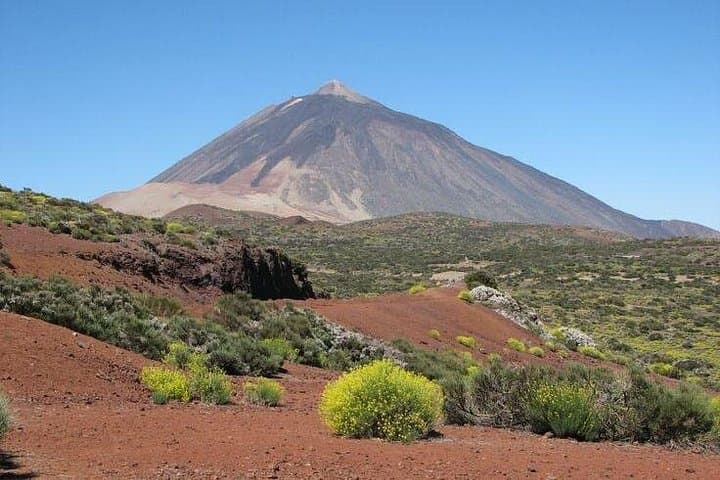
The bus starts before sunrise, tires whispering along coastal roads as Tenerife slips awake. By the time the island’s spine comes into view—sheer basalt ridges giving way to a broad, lunar basin—the air has thinned and the light has sharpened. Mount Teide, a stratovolcano that commands the island at 3,718 meters, looms like a weathered watchman; its slopes push clouds aside and the volcanic rock seems to hold stories in every fracture.
Verified experiences and guided adventures in the surrounding area.
Operated by Pindoria Viajes SL · Costa Adeje, Santa Cruz de Tenerife
The bus starts before sunrise, tires whispering along coastal roads as Tenerife slips awake. By the time the island’s spine comes into view—sheer basalt ridges giving way to a broad, lunar basin—the air has thinned and the light has sharpened. Mount Teide, a stratovolcano that commands the island at 3,718 meters, looms like a weathered watchman; its slopes push clouds aside and the volcanic rock seems to hold stories in every fracture.
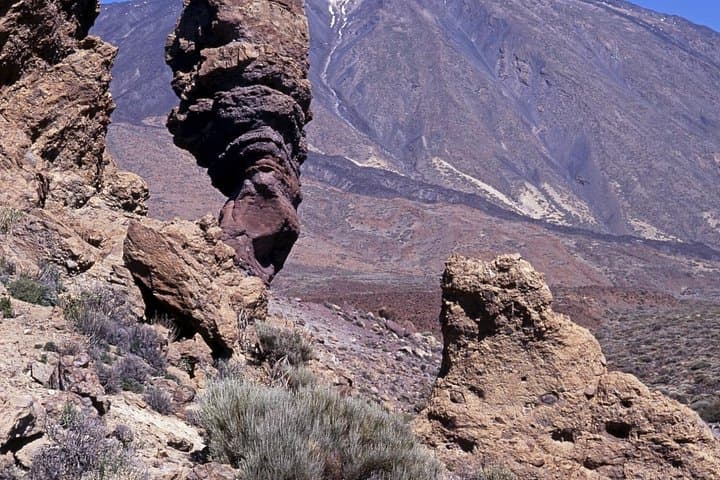
This full-day loop stitches together the island’s geological and cultural highlights. You’ll thread through Vilaflor—one of Spain’s highest villages—then enter Teide National Park, a UNESCO-listed landscape where pumice plains and jagged lava flows still show the island’s violent adolescence. The guide points out pyroclastic ridges and the old Chiñero lava field from 1909, and the silence in the parking lot lets the wind tell the rest of the tale.
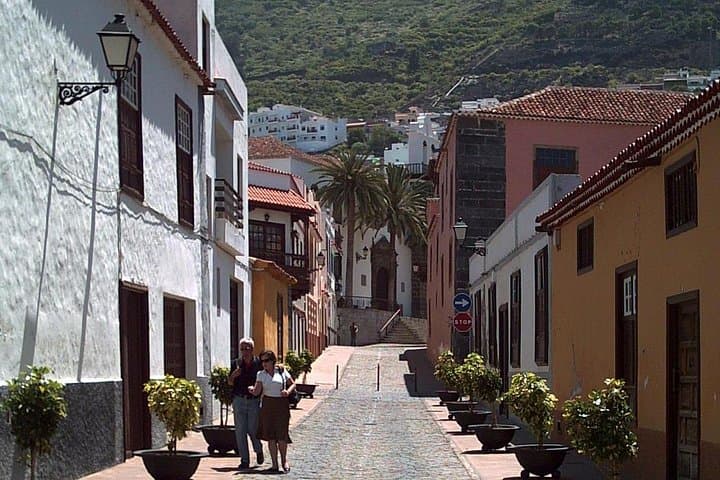
From the high desert the route drops west toward Icod de los Vinos, where a dragon tree, estimated at over 1,000 years old by some scholars (local lore inflates that age to three millennia), spreads a gargantuan, umbrella crown over a cobbled plaza. Nearby Garachico—the island’s original port—still bears the black scars of the 1706 eruption that re-routed shorelines and turned trade inward. The town rebuilds itself in basalt and low white houses; it’s a good spot for tapas and a slow coffee.
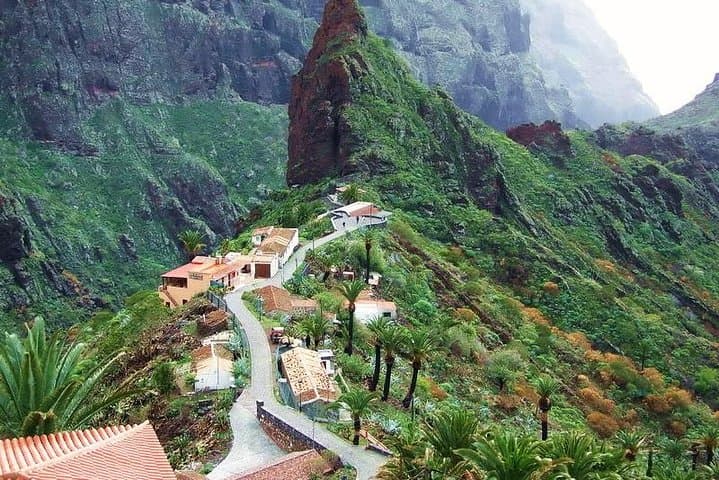
The finale is Masca, a village clung to a serrated ridge, where houses squat like geological relics and a narrow path threads down toward a gorge that dares you to stare over the edge. The place is small enough that the rhythm of life is visible: laundry on lines, goats on terraces, wind shaping the scent of thyme.
Practicalities: expect a long day—about 9½ hours including stops—and considerable altitude change. Dress in layers, bring a warm windproof jacket and sun protection; mountain weather can change fast and November–May is noticeably colder above 2,000 meters. There’s free time in Garachico and Masca for walking or lunch; most vendors accept cards, but carry cash for small cafés. Pickup points vary by resort—confirm your exact time with the operator 48 hours in advance.
Why go: the tour compresses Tenerife’s best dramatic scenes into a single day, moving from volcanic high country to coastal villages with enough on-foot time to feel the island rather than just see it. If you want a concentrated primer on the island’s geology, history, and rural culture—with a route designed for photographers and short walkers—this circuit delivers.
The total duration is about 9½ hours (approximately 570 minutes) including multiple stops for photos and walks.
No—there’s free time in Garachico or Masca to eat at local restaurants or bring a packed lunch.
The tour visits Teide National Park viewpoints and walk areas; summit access requires a separate permit and is not included.
Pickups run from major coastal resorts; the operator does not collect from Santa Cruz or many rural addresses—confirm your pickup point when booking.
Yes—infants can ride in strollers and the day is suitable for most ages, but consider altitude and long bus time for very young children.
Layered clothing, a warm midlayer, and a windproof outer shell; sturdy shoes are recommended for short walks.
Pindoria Viajes SL operates guided outdoor trips and adventures with an emphasis on safety, stewardship, and memorable experiences.
The bus starts before sunrise, tires whispering along coastal roads as Tenerife slips awake. By the time the island’s spine comes into view—sheer basalt ridges giving way to a broad, lunar basin—the air has thinned and the light has sharpened. Mount Teide, a stratovolcano that commands the island at 3,718 meters, looms like a weathered watchman; its slopes push clouds aside and the volcanic rock seems to hold stories in every fracture.
The bus starts before sunrise, tires whispering along coastal roads as Tenerife slips awake. By the time the island’s spine comes into view—sheer basalt ridges giving way to a broad, lunar basin—the air has thinned and the light has sharpened. Mount Teide, a stratovolcano that commands the island at 3,718 meters, looms like a weathered watchman; its slopes push clouds aside and the volcanic rock seems to hold stories in every fracture.
This full-day loop stitches together the island’s geological and cultural highlights. You’ll thread through Vilaflor—one of Spain’s highest villages—then enter Teide National Park, a UNESCO-listed landscape where pumice plains and jagged lava flows still show the island’s violent adolescence. The guide points out pyroclastic ridges and the old Chiñero lava field from 1909, and the silence in the parking lot lets the wind tell the rest of the tale.
From the high desert the route drops west toward Icod de los Vinos, where a dragon tree, estimated at over 1,000 years old by some scholars (local lore inflates that age to three millennia), spreads a gargantuan, umbrella crown over a cobbled plaza. Nearby Garachico—the island’s original port—still bears the black scars of the 1706 eruption that re-routed shorelines and turned trade inward. The town rebuilds itself in basalt and low white houses; it’s a good spot for tapas and a slow coffee.
The finale is Masca, a village clung to a serrated ridge, where houses squat like geological relics and a narrow path threads down toward a gorge that dares you to stare over the edge. The place is small enough that the rhythm of life is visible: laundry on lines, goats on terraces, wind shaping the scent of thyme.
Practicalities: expect a long day—about 9½ hours including stops—and considerable altitude change. Dress in layers, bring a warm windproof jacket and sun protection; mountain weather can change fast and November–May is noticeably colder above 2,000 meters. There’s free time in Garachico and Masca for walking or lunch; most vendors accept cards, but carry cash for small cafés. Pickup points vary by resort—confirm your exact time with the operator 48 hours in advance.
Why go: the tour compresses Tenerife’s best dramatic scenes into a single day, moving from volcanic high country to coastal villages with enough on-foot time to feel the island rather than just see it. If you want a concentrated primer on the island’s geology, history, and rural culture—with a route designed for photographers and short walkers—this circuit delivers.