THE ADVENTURE COLLECTIVE® · Independent discovery and booking for outdoor travel

Walk through Thailand’s architectural history at Muang Boran, a 96-hectare open-air museum near Bangkok where scaled replicas and reconstructed monuments map the nation’s past. Plan a half- to full-day visit, arrive early for the best light, and expect flat, walkable paths across an expansive park.
Walk through Thailand’s architectural history at Muang Boran, a 96-hectare open-air museum near Bangkok where scaled replicas and reconstructed monuments map the nation’s past. Plan a half- to full-day visit, arrive early for the best light, and expect flat, walkable paths across an expansive park.
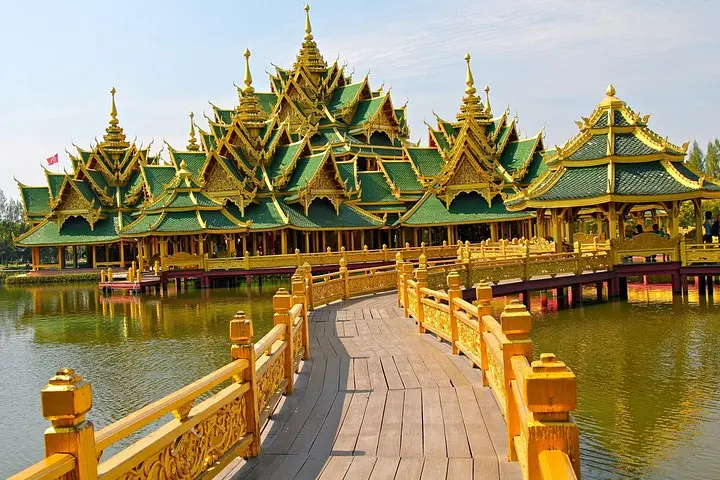
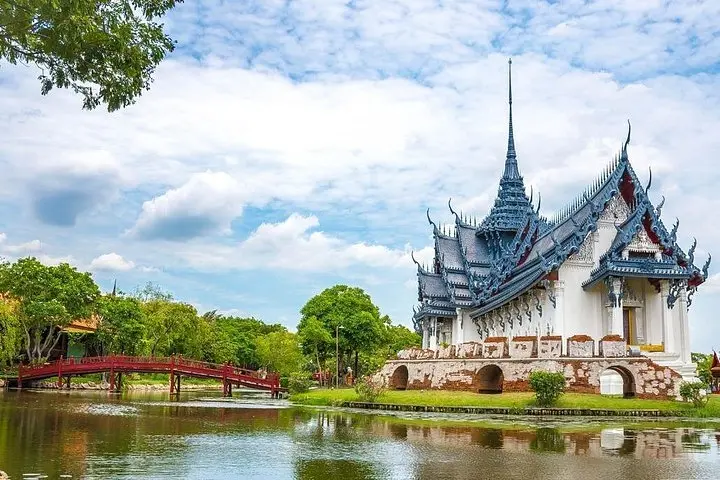
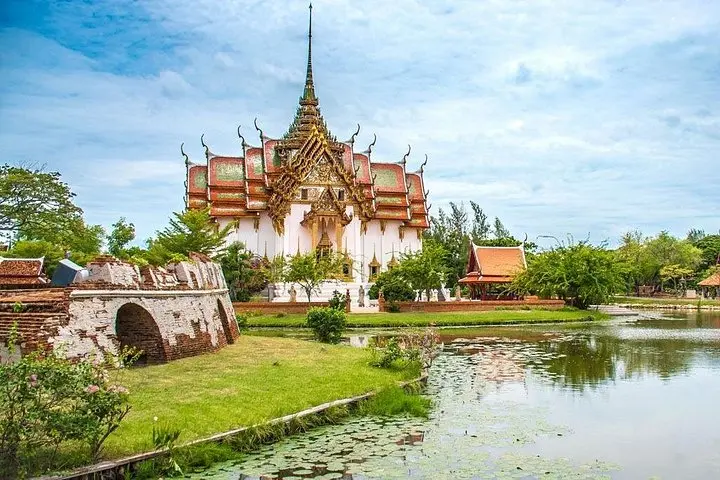
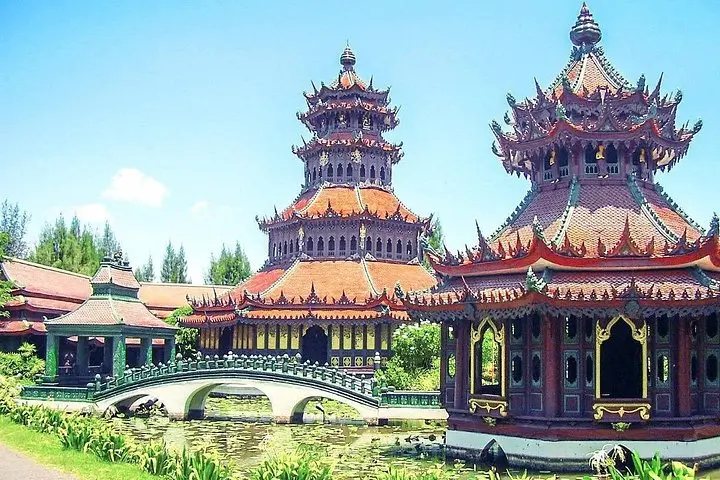
You step through an unassuming gate and the scale of Muang Boran unfolds: broad lawns, ponds that reflect temple roofs, and long sightlines where miniaturized palaces and ruined city walls sit side by side. The park itself is shaped like the map of Thailand, a deliberate frame that turns each replica into a stop on a condensed national journey.
Verified experiences and guided adventures in the surrounding area.
Operated by Way to Bangkok · Samut Prakan, Samut Prakan
You step through an unassuming gate and the scale of Muang Boran unfolds: broad lawns, ponds that reflect temple roofs, and long sightlines where miniaturized palaces and ruined city walls sit side by side. The park itself is shaped like the map of Thailand, a deliberate frame that turns each replica into a stop on a condensed national journey.
The collection was assembled by Khun Lek Viriyaphant to preserve architectural forms from Dvaravati through Rattanakosin eras. Models are generally about one-third the size of originals, though a few structures are reconstructions of demolished sites; the effect is a curated timeline of Thai kingdom-building and regional exchange. Geologically the site sits on the low coastal plain of Samut Prakan, so paths are flat and easy but can collect water in the rainy months.
Culturally, Muang Boran functions as an educational landscape—its buildings illustrate variations in roofline, ornament and scale across Lanna, Sukhothai, Ayutthaya and later styles. Local guides and interpretive plaques translate key features, and small canals and ponds move through the park like a deliberate choreography, nudging visitors along.
Practical guidance: arrive early to avoid midday heat and maximize photo light; allow half to a full day to wander the 96 hectares. Wear comfortable walking shoes, carry water, and plan for sun or sudden showers depending on season. Public transit and taxi access are available from Bangkok; the site is family-friendly and physically easy but spread out, so pace your visit. Bring a camera and a map—the park rewards slow attention.
Most visitors spend 3–6 hours; you can cover highlights in half a day, but a full day lets you move slowly and photograph details.
Paths are generally flat and many areas are stroller-accessible, though some replicas have steps—check specific exhibits for access.
Local guides and informational plaques provide context; private guided options may be available through tour operators from Bangkok.
Taxis or arranged transfers are the most direct; public buses serve Samut Prakan with short taxi rides to the park—allow traffic time during peak hours.
Way to Bangkok operates guided outdoor trips and adventures with an emphasis on safety, stewardship, and memorable experiences.
You step through an unassuming gate and the scale of Muang Boran unfolds: broad lawns, ponds that reflect temple roofs, and long sightlines where miniaturized palaces and ruined city walls sit side by side. The park itself is shaped like the map of Thailand, a deliberate frame that turns each replica into a stop on a condensed national journey.
You step through an unassuming gate and the scale of Muang Boran unfolds: broad lawns, ponds that reflect temple roofs, and long sightlines where miniaturized palaces and ruined city walls sit side by side. The park itself is shaped like the map of Thailand, a deliberate frame that turns each replica into a stop on a condensed national journey.
The collection was assembled by Khun Lek Viriyaphant to preserve architectural forms from Dvaravati through Rattanakosin eras. Models are generally about one-third the size of originals, though a few structures are reconstructions of demolished sites; the effect is a curated timeline of Thai kingdom-building and regional exchange. Geologically the site sits on the low coastal plain of Samut Prakan, so paths are flat and easy but can collect water in the rainy months.
Culturally, Muang Boran functions as an educational landscape—its buildings illustrate variations in roofline, ornament and scale across Lanna, Sukhothai, Ayutthaya and later styles. Local guides and interpretive plaques translate key features, and small canals and ponds move through the park like a deliberate choreography, nudging visitors along.
Practical guidance: arrive early to avoid midday heat and maximize photo light; allow half to a full day to wander the 96 hectares. Wear comfortable walking shoes, carry water, and plan for sun or sudden showers depending on season. Public transit and taxi access are available from Bangkok; the site is family-friendly and physically easy but spread out, so pace your visit. Bring a camera and a map—the park rewards slow attention.