THE ADVENTURE COLLECTIVE® · Independent discovery and booking for outdoor travel

Spend a single, well-paced day through Munnar’s highlights: waterfalls and tea slopes, Nilgiri tahr country at Eravikulam, and Kerala’s rare sandalwood forests in Marayoor. This private tour blends short walks, scenic stops and cultural side trips for a concentrated taste of the Western Ghats.
Spend a single, well-paced day through Munnar’s highlights: waterfalls and tea slopes, Nilgiri tahr country at Eravikulam, and Kerala’s rare sandalwood forests in Marayoor. This private tour blends short walks, scenic stops and cultural side trips for a concentrated taste of the Western Ghats.
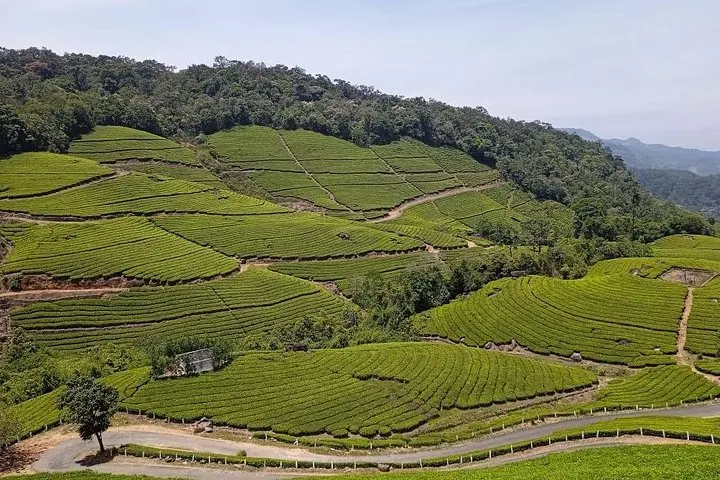
Morning light slips across rolling tea ridges as the tour vehicle climbs toward Munnar’s cool air. The day moves with a steady rhythm: a short hike to Nyamakad/Lakkom Falls where spray freshens the path, a slow drive through Rajamala toward Eravikulam’s grasslands, then eastward to Marayoor’s rare sandalwood groves and sugarcane flats.
Verified experiences and guided adventures in the surrounding area.
Operated by munnar valley trekking & tours · Munnar, Kerala
Morning light slips across rolling tea ridges as the tour vehicle climbs toward Munnar’s cool air. The day moves with a steady rhythm: a short hike to Nyamakad/Lakkom Falls where spray freshens the path, a slow drive through Rajamala toward Eravikulam’s grasslands, then eastward to Marayoor’s rare sandalwood groves and sugarcane flats.
This compact loop threads history and geology—high Western Ghats plateaus carved from ancient rocks, tea estates planted during the British era, and Marayoor’s prehistoric dolmens and guarded sandalwood groves. Eravikulam National Park protects the Anamudi massif (India’s highest peak at 2,695 m) and the endemic Nilgiri tahr; the park’s rolling shola-grassland mosaics are striking after a misty dawn.
Culturally, Munnar’s economy mixes tea, spice and small-scale farming; local guides often point out estate practices and the forest department’s sandalwood processing at Marayoor. Optional detours include Chinnar Wildlife Sanctuary for dry-forest wildlife viewing.
Practical guidance: this is a 5–6 hour private sightseeing circuit with short walks and some uneven terrain—sturdy shoes and a light rain layer are essential. Expect multiple stops for photography and short hikes (15–120 minutes each), limited facilities at viewpoints, and entrance fees for Eravikulam. Bring water, modest cash for local snacks and guide tips, and plan hotel pickup in Munnar to maximize time. Early starts beat crowds and raise wildlife sighting odds. Respect protected areas: stay on trails, don’t disturb wildlife, and follow your guide’s directions.
Eravikulam entry fees are typically not included and are paid at the park; your operator will advise current rates.
Marayoor is about 35–45 km east of Munnar by road; expect roughly 1–1.5 hours of driving depending on stops.
Short stops and gentle walks make it family-friendly, but travelers with mobility or heart issues should avoid strenuous segments and consult the operator beforehand.
No—sightings of Nilgiri tahr and deer are common but not guaranteed; early morning in Rajamala improves chances.
munnar valley trekking & tours operates guided outdoor trips and adventures with an emphasis on safety, stewardship, and memorable experiences.
Morning light slips across rolling tea ridges as the tour vehicle climbs toward Munnar’s cool air. The day moves with a steady rhythm: a short hike to Nyamakad/Lakkom Falls where spray freshens the path, a slow drive through Rajamala toward Eravikulam’s grasslands, then eastward to Marayoor’s rare sandalwood groves and sugarcane flats.
Morning light slips across rolling tea ridges as the tour vehicle climbs toward Munnar’s cool air. The day moves with a steady rhythm: a short hike to Nyamakad/Lakkom Falls where spray freshens the path, a slow drive through Rajamala toward Eravikulam’s grasslands, then eastward to Marayoor’s rare sandalwood groves and sugarcane flats.
This compact loop threads history and geology—high Western Ghats plateaus carved from ancient rocks, tea estates planted during the British era, and Marayoor’s prehistoric dolmens and guarded sandalwood groves. Eravikulam National Park protects the Anamudi massif (India’s highest peak at 2,695 m) and the endemic Nilgiri tahr; the park’s rolling shola-grassland mosaics are striking after a misty dawn.
Culturally, Munnar’s economy mixes tea, spice and small-scale farming; local guides often point out estate practices and the forest department’s sandalwood processing at Marayoor. Optional detours include Chinnar Wildlife Sanctuary for dry-forest wildlife viewing.
Practical guidance: this is a 5–6 hour private sightseeing circuit with short walks and some uneven terrain—sturdy shoes and a light rain layer are essential. Expect multiple stops for photography and short hikes (15–120 minutes each), limited facilities at viewpoints, and entrance fees for Eravikulam. Bring water, modest cash for local snacks and guide tips, and plan hotel pickup in Munnar to maximize time. Early starts beat crowds and raise wildlife sighting odds. Respect protected areas: stay on trails, don’t disturb wildlife, and follow your guide’s directions.