THE ADVENTURE COLLECTIVE® · Independent discovery and booking for outdoor travel

Trade Broadway’s neon for moonlit streets and true-crime lore on this adult-only, 90-minute walking tour that traces murders, mob ties, haunted shops and the city’s former red-light district. Start at the Alvin York statue and let a local guide stitch history, court records and eerie anecdotes into a compact, walkable route through downtown Nashville.
Trade Broadway’s neon for moonlit streets and true-crime lore on this adult-only, 90-minute walking tour that traces murders, mob ties, haunted shops and the city’s former red-light district. Start at the Alvin York statue and let a local guide stitch history, court records and eerie anecdotes into a compact, walkable route through downtown Nashville.
The Alvin York statue stands under sodium streetlights, a musket held like a question pointed at the quiet. It’s here—on the broad steps of the Tennessee State Capitol—that a small group gathers, breath visible on cooler nights, ears tuned to a guide who trades the cheer of Broadway for the darker chapters of the city.
Verified experiences and guided adventures in the surrounding area.
Operated by Ghost City Tours · Nashville, Tennessee
The Alvin York statue stands under sodium streetlights, a musket held like a question pointed at the quiet. It’s here—on the broad steps of the Tennessee State Capitol—that a small group gathers, breath visible on cooler nights, ears tuned to a guide who trades the cheer of Broadway for the darker chapters of the city.
On the 90-minute Murder in Music City tour you move through downtown as if trailing a headline from another era. Sidewalks hum with the echo of late-night traffic; alleys keep secrets. The walk is compact—roughly 1–1.5 miles of mostly flat, paved streets—so the rhythm is conversational: stop, listen, step on. Expect to hear about Andrew Jackson’s complicated legacy and Civil War hauntings, the Wilcox Building’s scandalous past and a doctor whose patients died under mysterious care, and the Climax Saloon where the city’s nightlife once crossed into vice and violence.
Nashville’s history is physical here: brick façades scarred by time, former hotel lots that held fortunes and funerals, and the Cumberland River that quietly pushed commerce—and rumor—through town. The geology of the area is subtle but present; the city sits on the Cumberland Plateau’s edge, streets rising and dipping gently, providing vantage points where neon cuts into the night and the skyline frames an improbable mix of Victorian masonry and modern glass.
Culturally, the tour is less about music and more about the machines that fed it—brothels, organized crime, and the hotel lobbies where deals were struck. Guides anchor stories in documents, court records and old reporting, keeping the true-crime energy grounded in fact even as the evening leans toward the uncanny.
Practical details are straightforward. The tour starts and ends at 553 Charlotte Ave (look for Alvin York); arrive 15 minutes early. It runs rain or shine; wear sturdy shoes and a weather layer—Nashville nights can flip from warm to windy. The route is wheelchair accessible with ramps noted at the Capitol, but patrons should check specific needs in advance. Bring ID—this is an adults-only tour (16+)—and a charged phone for photos and emergency calls.
For photographers, blue hour and early night give the best contrasts: streetlamps, signage, and shadowed doorways. For comfort and safety, travel light, stay with the group, and be ready for language and topics that aren’t suitable for children. If you want a deeper dive, ask guides about court records or where to read contemporary coverage; many of the locations have plaques or nearby cafés where you can prolong the research.
At its best, Murder in Music City is urban history with edges—part true-crime briefing, part architectural scavenger hunt, and all an invitation to see Nashville’s nightlife through a different lens.
No—this tour is for ages 16 and up due to mature themes, graphic historical accounts, and strong language.
Meet at the Alvin York statue at the Tennessee State Capitol, 553 Charlotte Ave; the tour ends at the same location.
Yes, the tour notes wheelchair access points and ramps; contact the operator ahead of time to confirm specific accommodations.
Tours operate in most weather but may be canceled for severe conditions; you can get a full refund if canceled at least 24 hours before departure per the cancellation policy.
Groups of 10 or more should contact the private & group sales coordinator to arrange a private tour option.
Yes—photography is allowed, though guides may ask for discretion at sensitive sites; bring a small light for better night shots.
Ghost City Tours operates guided outdoor trips and adventures with an emphasis on safety, stewardship, and memorable experiences.


The Alvin York statue stands under sodium streetlights, a musket held like a question pointed at the quiet. It’s here—on the broad steps of the Tennessee State Capitol—that a small group gathers, breath visible on cooler nights, ears tuned to a guide who trades the cheer of Broadway for the darker chapters of the city.
The Alvin York statue stands under sodium streetlights, a musket held like a question pointed at the quiet. It’s here—on the broad steps of the Tennessee State Capitol—that a small group gathers, breath visible on cooler nights, ears tuned to a guide who trades the cheer of Broadway for the darker chapters of the city.
On the 90-minute Murder in Music City tour you move through downtown as if trailing a headline from another era. Sidewalks hum with the echo of late-night traffic; alleys keep secrets. The walk is compact—roughly 1–1.5 miles of mostly flat, paved streets—so the rhythm is conversational: stop, listen, step on. Expect to hear about Andrew Jackson’s complicated legacy and Civil War hauntings, the Wilcox Building’s scandalous past and a doctor whose patients died under mysterious care, and the Climax Saloon where the city’s nightlife once crossed into vice and violence.
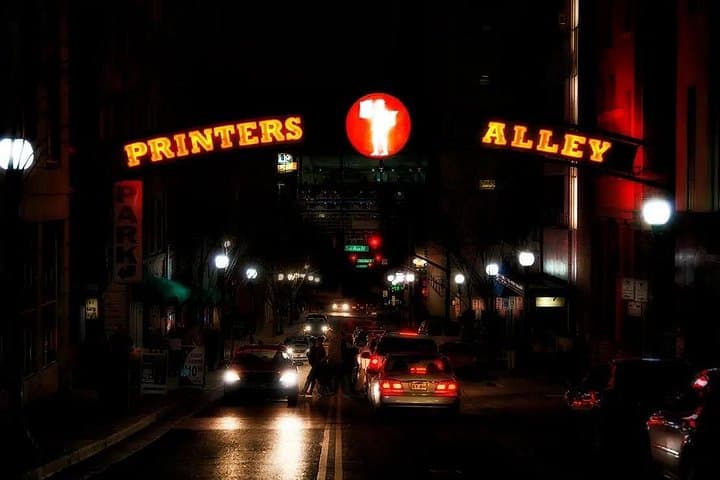
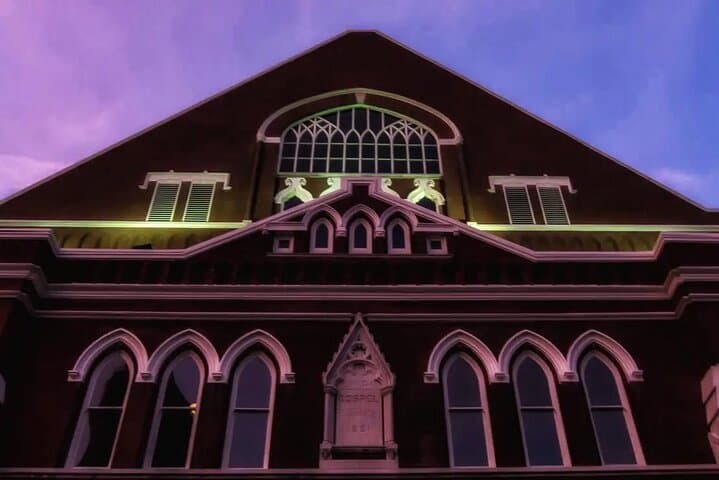
Nashville’s history is physical here: brick façades scarred by time, former hotel lots that held fortunes and funerals, and the Cumberland River that quietly pushed commerce—and rumor—through town. The geology of the area is subtle but present; the city sits on the Cumberland Plateau’s edge, streets rising and dipping gently, providing vantage points where neon cuts into the night and the skyline frames an improbable mix of Victorian masonry and modern glass.
Culturally, the tour is less about music and more about the machines that fed it—brothels, organized crime, and the hotel lobbies where deals were struck. Guides anchor stories in documents, court records and old reporting, keeping the true-crime energy grounded in fact even as the evening leans toward the uncanny.
Practical details are straightforward. The tour starts and ends at 553 Charlotte Ave (look for Alvin York); arrive 15 minutes early. It runs rain or shine; wear sturdy shoes and a weather layer—Nashville nights can flip from warm to windy. The route is wheelchair accessible with ramps noted at the Capitol, but patrons should check specific needs in advance. Bring ID—this is an adults-only tour (16+)—and a charged phone for photos and emergency calls.
For photographers, blue hour and early night give the best contrasts: streetlamps, signage, and shadowed doorways. For comfort and safety, travel light, stay with the group, and be ready for language and topics that aren’t suitable for children. If you want a deeper dive, ask guides about court records or where to read contemporary coverage; many of the locations have plaques or nearby cafés where you can prolong the research.
At its best, Murder in Music City is urban history with edges—part true-crime briefing, part architectural scavenger hunt, and all an invitation to see Nashville’s nightlife through a different lens.