
Muscat Day Trip to Nizwa, Al Hamra & Misfah: Forts, Falaj Systems & Mountain Footpaths
Spend a full day exploring Nizwa’s fortress and souq, the traditional mudbrick village of Al Hamra, and the terraced gardens and falaj channels of Misfah al Abryeen. This guided 4x4 tour blends history, geology and walkable village trails with practical local insight.
An Adventure In Muscat.
Spend a full day exploring Nizwa’s fortress and souq, the traditional mudbrick village of Al Hamra, and the terraced gardens and falaj channels of Misfah al Abryeen. This guided 4x4 tour blends history, geology and walkable village trails with practical local insight.
Read the full experience
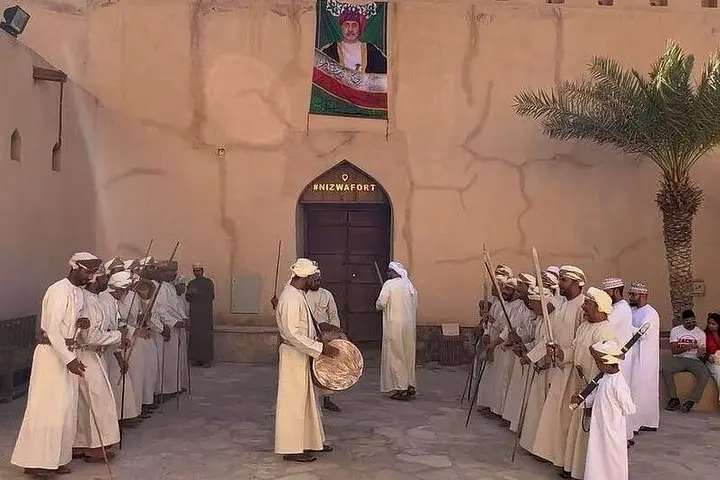
You arrive before sunrise on the road out of Muscat, the 4x4 humming as the plain gives way to folded mountains. Dusty light scratches the rounded towers of Nizwa Fort and the souq outside is already stirring—traders laying out silver khanjar, woven baskets and trays of dates. The day moves from stone battlements to mudbrick lanes and finally to terraced gardens fed by an ancient falaj that still directs every drop.
You arrive before sunrise on the road out of Muscat, the 4x4 humming as the plain gives way to folded mountains. Dusty light scratches the rounded towers of Nizwa Fort and the souq outside is already stirring—traders laying out silver khanjar, woven baskets and trays of dates. The day moves from stone battlements to mudbrick lanes and finally to terraced gardens fed by an ancient falaj that still directs every drop.
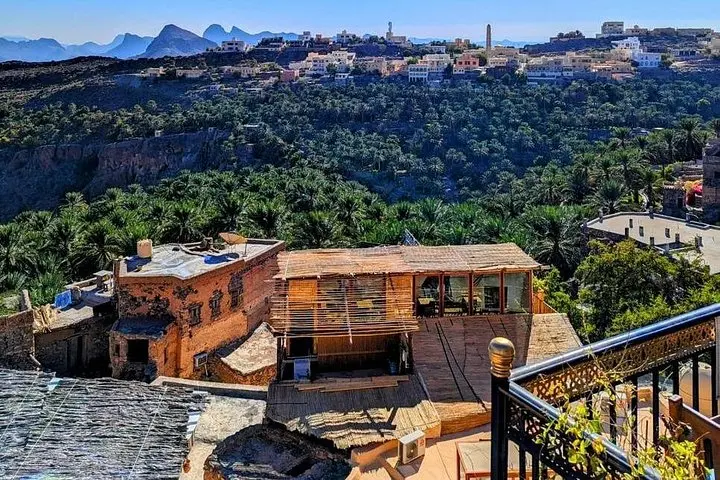
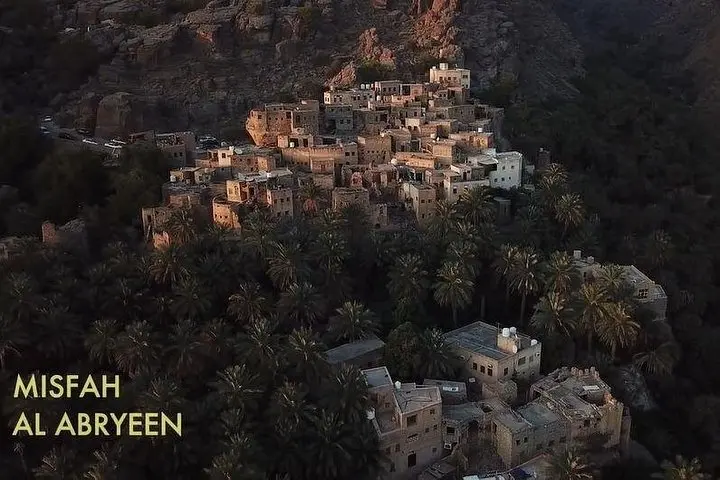
Nizwa was Oman's political and religious center centuries ago; its circular fort—reworked in the 17th century—was built as both watchtower and stronghold. The surrounding geology is steep limestone folds and alluvial fans at the foothills of Jebel Shams, where water still shapes human settlement in linear terraces. Al Hamra preserves gabled, mud-brick houses with wooden galleries; Misfah al Abryeen’s narrow paths and stacked orchards show how falaj irrigation made agriculture possible in a dry mountain pocket.
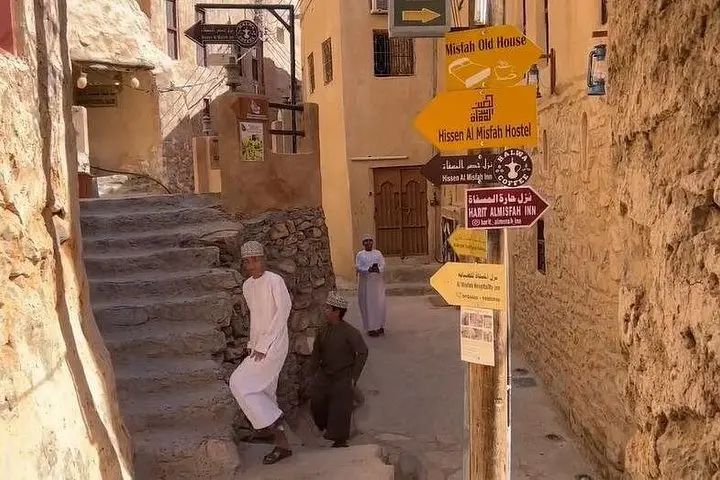
Expect mixed terrain: paved streets and fortress stairs, short stretches of uneven stone and marked footpaths through village gardens. The tour is a full day (about eight hours) with several short walks—comfortable walking shoes and sun protection are essential. Bring water, move deliberately on narrow lanes, and leave time to wander the souq and sample local coffee.
Practical: tours typically depart Muscat early (1.5–2 hour drive to Nizwa), include English-speaking guides and round-trip transport, and are best in cooler months. Respect private yards, stay on marked paths around the falaj, and charge your camera—every viewpoint pays off.
Frequently asked questions
Expect roughly 1.5–2 hours each way by road depending on traffic; many operators include pickup and drop-off in Muscat.
Private tours often include admission to the fort; confirm with your operator when booking.
Short walks are required and there are stairs and uneven ground; not recommended for those with significant mobility constraints.
October–April offers cooler temperatures and clearer skies; summer can be hot and is less comfortable for walking.
About This Experience
Landscape Tours operates guided outdoor trips and adventures with an emphasis on safety, stewardship, and memorable experiences.
Adventure tips
Recommended gear
- Sturdy walking shoes: Provides grip and ankle protection on uneven stone steps and village paths.
- 2–3L refillable water bottle: Keeps you hydrated through long drives and sun-exposed walks; a filter is optional.
- Sun protection (hat, sunscreen, sunglasses): Midday sun in Oman is strong even in cooler months—protect skin and eyes.
- Light daypack and camera: Carries snacks, layers and the camera for fortress views and village details.
Photos of the experience
Related adventures & guides
Read the full experience
You arrive before sunrise on the road out of Muscat, the 4x4 humming as the plain gives way to folded mountains. Dusty light scratches the rounded towers of Nizwa Fort and the souq outside is already stirring—traders laying out silver khanjar, woven baskets and trays of dates. The day moves from stone battlements to mudbrick lanes and finally to terraced gardens fed by an ancient falaj that still directs every drop.
You arrive before sunrise on the road out of Muscat, the 4x4 humming as the plain gives way to folded mountains. Dusty light scratches the rounded towers of Nizwa Fort and the souq outside is already stirring—traders laying out silver khanjar, woven baskets and trays of dates. The day moves from stone battlements to mudbrick lanes and finally to terraced gardens fed by an ancient falaj that still directs every drop.
Nizwa was Oman's political and religious center centuries ago; its circular fort—reworked in the 17th century—was built as both watchtower and stronghold. The surrounding geology is steep limestone folds and alluvial fans at the foothills of Jebel Shams, where water still shapes human settlement in linear terraces. Al Hamra preserves gabled, mud-brick houses with wooden galleries; Misfah al Abryeen’s narrow paths and stacked orchards show how falaj irrigation made agriculture possible in a dry mountain pocket.
Expect mixed terrain: paved streets and fortress stairs, short stretches of uneven stone and marked footpaths through village gardens. The tour is a full day (about eight hours) with several short walks—comfortable walking shoes and sun protection are essential. Bring water, move deliberately on narrow lanes, and leave time to wander the souq and sample local coffee.
Practical: tours typically depart Muscat early (1.5–2 hour drive to Nizwa), include English-speaking guides and round-trip transport, and are best in cooler months. Respect private yards, stay on marked paths around the falaj, and charge your camera—every viewpoint pays off.
Make a day of it nearby.
Verified experiences and guided adventures in the surrounding area.