
Muscat in Four Hours: Private Cultural Tour of Mosque, Souq & Forts
See Muscat’s essential landmarks in a compact private tour: the Grand Mosque, Royal Opera House, Mutrah Souq and coastal forts. This four-hour itinerary balances architectural highlights with market stops and seaside viewpoints—ideal for first-time visitors with limited time.
An Adventure In Muscat.
See Muscat’s essential landmarks in a compact private tour: the Grand Mosque, Royal Opera House, Mutrah Souq and coastal forts. This four-hour itinerary balances architectural highlights with market stops and seaside viewpoints—ideal for first-time visitors with limited time.
Read the full experience
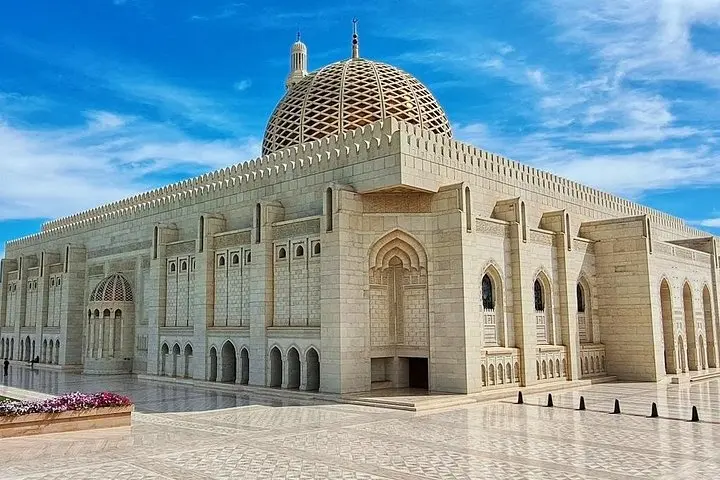
The morning opens over a silver Gulf as your private driver threads coastal roads toward the Grand Mosque; sunlight throws sharp geometry across white marble and hand-carved screens. In four hours you move from the mosque’s hushed courtyards to the spice-scented alleys of Mutrah Souq, past Portuguese forts that still watch the harbor.
The morning opens over a silver Gulf as your private driver threads coastal roads toward the Grand Mosque; sunlight throws sharp geometry across white marble and hand-carved screens. In four hours you move from the mosque’s hushed courtyards to the spice-scented alleys of Mutrah Souq, past Portuguese forts that still watch the harbor.
Muscat’s story is visible in its layers: an 18th–20th century fishing and pearling economy shaped by Indian Ocean trade, later punctuated by Portuguese and British coastal influence. The city sits where the Hajar Mountains descend to the sea; geology is simple but stark—granite ridges folding toward a recessed coastline where forts were built to control trade.
Culturally, the tour traces Omani hospitality and craft: brassware, frankincense, and embroidered kuma caps in markets, and modern cultural programming at the Royal Opera House. Mutrah Corniche offers marine views and a quick sense of the city’s maritime life; climb a short hill near Mutrah Fort for a full panorama of the harbor and clustered white rooftops.
Practical guidance: the tour includes private, air-conditioned transport and light walking on paved streets and market alleys—expect 1–2 km of on-foot exploration. Dress modestly for mosque visits (long sleeves, long trousers or skirts; women should have a headscarf available). Carry water, sun protection, and cash for small purchases. Plan visits in cooler hours (morning or late afternoon) to avoid heat. With a private guide you’ll move efficiently through highlights while leaving room to linger at a favorite souq stall or museum exhibit.
Frequently asked questions
The Sultan Qaboos Grand Mosque has public visiting hours and a dress code; while many private tours include access without advance tickets, check current visitor hours and bring appropriate clothing.
The tour notes wheelchair accessibility for transportation and many sites, but some historical forts and souq alleys have steps or narrow passages—confirm needs when booking.
Guides can explain local etiquette and typical prices, but bargaining is usually done by the visitor; your guide can assist with language and customs if requested.
Yes—this private tour is typically flexible: request slower pacing, more time at the museum, or photo stops when you book.
About This Experience
WeDoTrips.Co operates guided outdoor trips and adventures with an emphasis on safety, stewardship, and memorable experiences.
Adventure tips
Recommended gear
- Light daypack: Carries water, sunscreen, camera and purchases from the souq.
- Sun hat and sunscreen: Protects against strong sun during outdoor stops along the corniche and forts.
- Comfortable walking shoes: Support and traction for paved streets and uneven alleys.
- Small amount of OMR cash: Useful for small purchases, tips, and market bargaining.
Photos of the experience


Related adventures & guides
Read the full experience
The morning opens over a silver Gulf as your private driver threads coastal roads toward the Grand Mosque; sunlight throws sharp geometry across white marble and hand-carved screens. In four hours you move from the mosque’s hushed courtyards to the spice-scented alleys of Mutrah Souq, past Portuguese forts that still watch the harbor.
The morning opens over a silver Gulf as your private driver threads coastal roads toward the Grand Mosque; sunlight throws sharp geometry across white marble and hand-carved screens. In four hours you move from the mosque’s hushed courtyards to the spice-scented alleys of Mutrah Souq, past Portuguese forts that still watch the harbor.
Muscat’s story is visible in its layers: an 18th–20th century fishing and pearling economy shaped by Indian Ocean trade, later punctuated by Portuguese and British coastal influence. The city sits where the Hajar Mountains descend to the sea; geology is simple but stark—granite ridges folding toward a recessed coastline where forts were built to control trade.
Culturally, the tour traces Omani hospitality and craft: brassware, frankincense, and embroidered kuma caps in markets, and modern cultural programming at the Royal Opera House. Mutrah Corniche offers marine views and a quick sense of the city’s maritime life; climb a short hill near Mutrah Fort for a full panorama of the harbor and clustered white rooftops.
Practical guidance: the tour includes private, air-conditioned transport and light walking on paved streets and market alleys—expect 1–2 km of on-foot exploration. Dress modestly for mosque visits (long sleeves, long trousers or skirts; women should have a headscarf available). Carry water, sun protection, and cash for small purchases. Plan visits in cooler hours (morning or late afternoon) to avoid heat. With a private guide you’ll move efficiently through highlights while leaving room to linger at a favorite souq stall or museum exhibit.
Make a day of it nearby.
Verified experiences and guided adventures in the surrounding area.