THE ADVENTURE COLLECTIVE® · Independent discovery and booking for outdoor travel
Short on time but curious about perception? The Museum of Illusions in Charlotte’s City Center packs 50+ hands-on exhibits into a 30–90 minute sensory tour that demonstrates how vision and the brain collaborate—or betray—you. Plan your visit with tips on timing, accessibility, and what to expect inside.
Short on time but curious about perception? The Museum of Illusions in Charlotte’s City Center packs 50+ hands-on exhibits into a 30–90 minute sensory tour that demonstrates how vision and the brain collaborate—or betray—you. Plan your visit with tips on timing, accessibility, and what to expect inside.
The lights dim and a tilted room makes your reflection look impossibly long — you step in and the city’s grid fades to a small stage of optical trickery. Located in Charlotte’s City Center, the Museum of Illusions compresses big ideas into compact rooms: gravity seems negotiable, scale plays tricks, and holograms slide between science and showmanship.
Verified experiences and guided adventures in the surrounding area.
Operated by Museum Of Illusions Charlotte · Charlotte, North Carolina
The lights dim and a tilted room makes your reflection look impossibly long — you step in and the city’s grid fades to a small stage of optical trickery. Located in Charlotte’s City Center, the Museum of Illusions compresses big ideas into compact rooms: gravity seems negotiable, scale plays tricks, and holograms slide between science and showmanship.
Charlotte sits on the Piedmont plateau; the museum’s concrete and glass interiors contrast with nearby granite outcrops and the slow curve of the Catawba watershed. The brand began in Europe, bringing hands-on exhibits that teach perception, neuroscience, and visual physics through playful misdirection. In Uptown, the museum is part of a cultural cluster that includes the NASCAR Hall of Fame and public art along Tryon Street — it’s a civic pocket of curiosity built atop a banking-turned-cultural district.
Expect 30–90 minutes of roaming through 50+ installations: rooms that alter height, kaleidoscopes you can enter, and holograms that appear to breathe. The experience is family-friendly and physically easy; most rooms are wheelchair accessible but can be tight at peak times. Tickets are mobile — show your QR at check-in; all sales are final so plan timing carefully. Visit early weekday mornings or late afternoons to avoid crowds, keep phones charged for photos in low light, and allow time to experiment with the exhibits rather than rushing through. Whether you’re chasing a quick educational outing or an offbeat stop between stadium and museum visits, this attraction is a fast, tactile lesson in how the brain builds reality.
Visits range from about 30 to 90 minutes depending on crowd size and how long you linger at each exhibit.
Children are welcome; exhibits are family-oriented. Strollers may be cumbersome in tighter spaces—consider a carrier for infants.
Yes — the facility is wheelchair accessible, though a few smaller installations may have limited maneuvering room; contact the museum for specifics.
All sales are final and non-refundable, so confirm your plans before purchase. The museum may close for severe weather or special events per its policies.
Museum Of Illusions Charlotte operates guided outdoor trips and adventures with an emphasis on safety, stewardship, and memorable experiences.

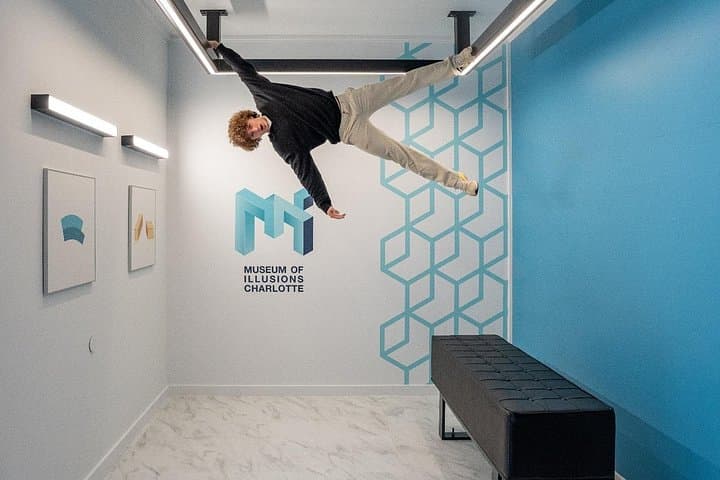
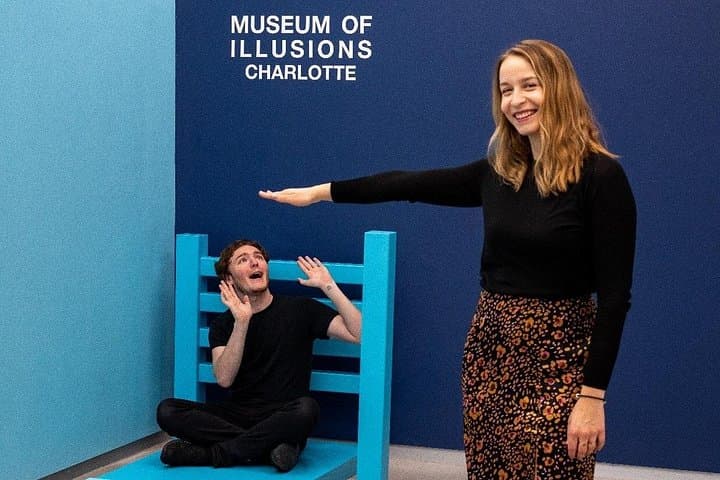
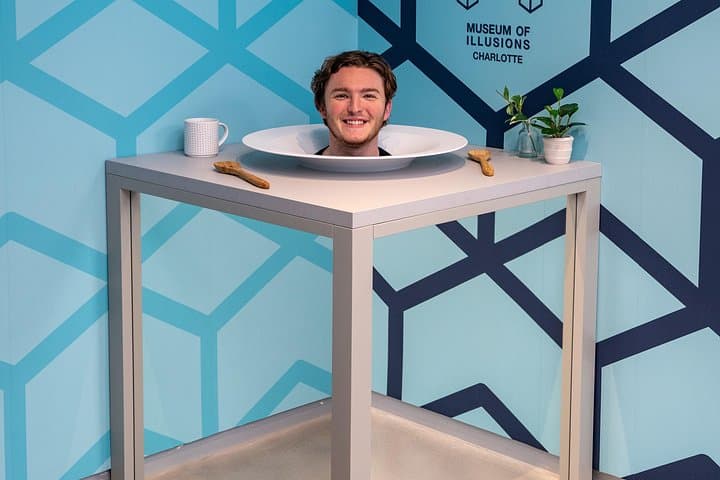
The lights dim and a tilted room makes your reflection look impossibly long — you step in and the city’s grid fades to a small stage of optical trickery. Located in Charlotte’s City Center, the Museum of Illusions compresses big ideas into compact rooms: gravity seems negotiable, scale plays tricks, and holograms slide between science and showmanship.
The lights dim and a tilted room makes your reflection look impossibly long — you step in and the city’s grid fades to a small stage of optical trickery. Located in Charlotte’s City Center, the Museum of Illusions compresses big ideas into compact rooms: gravity seems negotiable, scale plays tricks, and holograms slide between science and showmanship.
Charlotte sits on the Piedmont plateau; the museum’s concrete and glass interiors contrast with nearby granite outcrops and the slow curve of the Catawba watershed. The brand began in Europe, bringing hands-on exhibits that teach perception, neuroscience, and visual physics through playful misdirection. In Uptown, the museum is part of a cultural cluster that includes the NASCAR Hall of Fame and public art along Tryon Street — it’s a civic pocket of curiosity built atop a banking-turned-cultural district.
Expect 30–90 minutes of roaming through 50+ installations: rooms that alter height, kaleidoscopes you can enter, and holograms that appear to breathe. The experience is family-friendly and physically easy; most rooms are wheelchair accessible but can be tight at peak times. Tickets are mobile — show your QR at check-in; all sales are final so plan timing carefully. Visit early weekday mornings or late afternoons to avoid crowds, keep phones charged for photos in low light, and allow time to experiment with the exhibits rather than rushing through. Whether you’re chasing a quick educational outing or an offbeat stop between stadium and museum visits, this attraction is a fast, tactile lesson in how the brain builds reality.
