THE ADVENTURE COLLECTIVE® · Independent discovery and booking for outdoor travel

Drive north from Anchorage along the Knik Arm to the Musk Ox Farm in the Matanuska Valley, where a 45-minute walking tour explains the 60-year story of domesticated musk oxen and the prized qiviut fiber. Expect glacial scenery, tangible history, and practical tips for a three-hour, rain-or-shine outing.
Drive north from Anchorage along the Knik Arm to the Musk Ox Farm in the Matanuska Valley, where a 45-minute walking tour explains the 60-year story of domesticated musk oxen and the prized qiviut fiber. Expect glacial scenery, tangible history, and practical tips for a three-hour, rain-or-shine outing.
The tour begins with a quiet departure from downtown Anchorage, the bus tracing the edge of Knik Arm as the Chugach and Talkeetna ranges loom ahead.
Verified experiences and guided adventures in the surrounding area.
Operated by Escaping Anchorage · Palmer, Alaska
The tour begins with a quiet departure from downtown Anchorage, the bus tracing the edge of Knik Arm as the Chugach and Talkeetna ranges loom ahead.
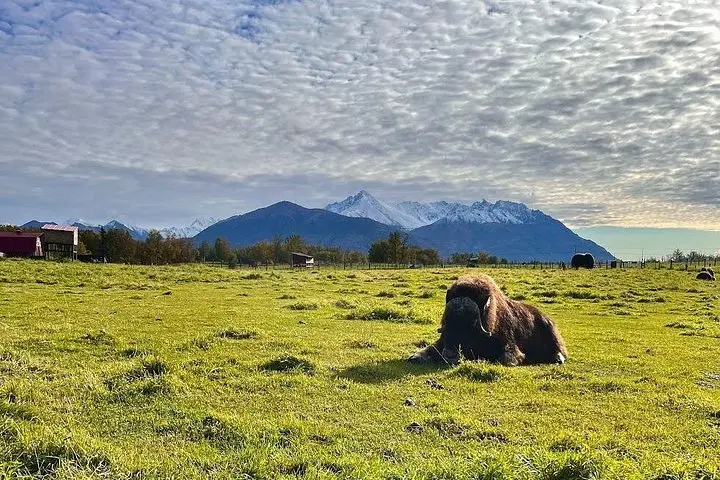
Windows frame a shifting landscape: braided rivers daring the valley floor, glacial-polished ridges, and farmland opening like a patchwork beneath distant peaks. The short drive—about 50 minutes north—sets the tone for a day where Ice Age survivors meet modern stewardship.
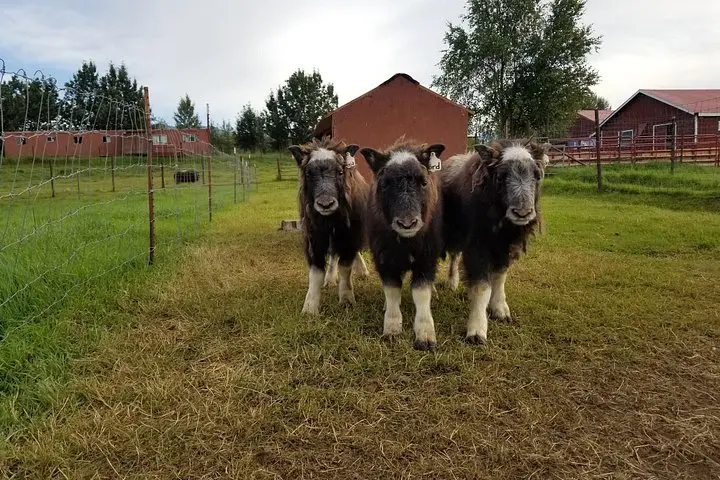
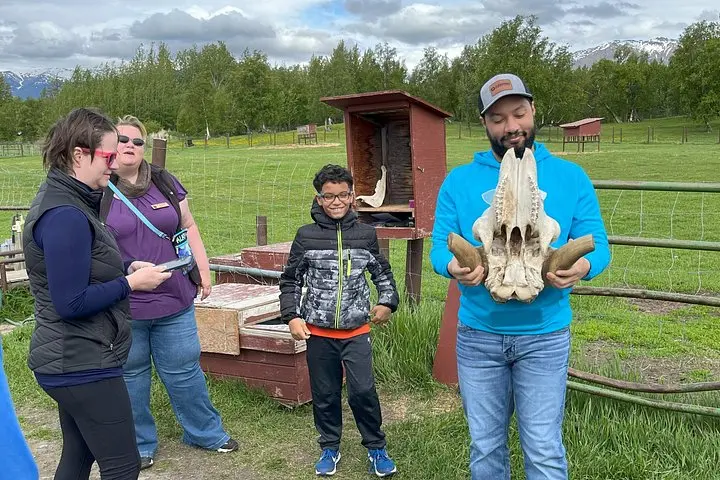
At the Musk Ox Farm, guides lead a 45-minute walking tour across pens and pastures where Oomingmak (musk oxen) graze, shedding coarse guard hairs for the precious qiviut beneath. The farm’s 60-year history is part animal husbandry, part conservation experiment: domestication efforts aimed to preserve genetic stock and sustain a market for qiviut, one of the warmest natural fibers on earth.
Geologically the Matanuska Valley is a glacial outwash plain; soils and waterways reflect recent ice movements, and the area’s microclimate shapes forage available to both livestock and wild mammals. Culturally, the farm sits amid agricultural farms and Alaska Native histories—ask guides about local legends and sponsorship programs if you want a closer connection.
Practicalities are straightforward. The tour runs rain or shine; bring layered clothing and waterproof shoes for the farm walk. Expect a total outing of roughly 3–3.5 hours including transport; restrooms are limited at meeting points. Photographers should meter for contrast—dark-hued musk oxen against often-bright snow or sky—and keep distance to avoid stressing animals. For travelers seeking an accessible wildlife encounter with solid interpretive value, this guided drive-and-walk combo delivers contextual scenery, hands-on learning, and a clear look at qiviut’s role in Alaskan livelihoods.
The guided farm tour is about 45 minutes and covers pens and interpretive areas on mostly flat ground.
Yes—roundtrip transport from Anchorage is included; meeting is in front of the Dena’ina Center at 7th Ave & F Street.
The tour is family-friendly, but those with significant mobility limitations should note there is a 45-minute walk over uneven surfaces; contact the operator for accommodations.
Do not feed or touch the musk oxen; follow guide instructions—maintaining distance minimizes stress and protects both visitors and animals.
Escaping Anchorage operates guided outdoor trips and adventures with an emphasis on safety, stewardship, and memorable experiences.

The tour begins with a quiet departure from downtown Anchorage, the bus tracing the edge of Knik Arm as the Chugach and Talkeetna ranges loom ahead.
The tour begins with a quiet departure from downtown Anchorage, the bus tracing the edge of Knik Arm as the Chugach and Talkeetna ranges loom ahead.
Windows frame a shifting landscape: braided rivers daring the valley floor, glacial-polished ridges, and farmland opening like a patchwork beneath distant peaks. The short drive—about 50 minutes north—sets the tone for a day where Ice Age survivors meet modern stewardship.
At the Musk Ox Farm, guides lead a 45-minute walking tour across pens and pastures where Oomingmak (musk oxen) graze, shedding coarse guard hairs for the precious qiviut beneath. The farm’s 60-year history is part animal husbandry, part conservation experiment: domestication efforts aimed to preserve genetic stock and sustain a market for qiviut, one of the warmest natural fibers on earth.
Geologically the Matanuska Valley is a glacial outwash plain; soils and waterways reflect recent ice movements, and the area’s microclimate shapes forage available to both livestock and wild mammals. Culturally, the farm sits amid agricultural farms and Alaska Native histories—ask guides about local legends and sponsorship programs if you want a closer connection.
Practicalities are straightforward. The tour runs rain or shine; bring layered clothing and waterproof shoes for the farm walk. Expect a total outing of roughly 3–3.5 hours including transport; restrooms are limited at meeting points. Photographers should meter for contrast—dark-hued musk oxen against often-bright snow or sky—and keep distance to avoid stressing animals. For travelers seeking an accessible wildlife encounter with solid interpretive value, this guided drive-and-walk combo delivers contextual scenery, hands-on learning, and a clear look at qiviut’s role in Alaskan livelihoods.