THE ADVENTURE COLLECTIVE® · Independent discovery and booking for outdoor travel

Explore Sri Lanka’s largest saline peat bog by boat with local guides. Expect close views of kingfishers, herons and eagles, guided context on the marsh’s ecology, and practical tips for timing and gear.
Explore Sri Lanka’s largest saline peat bog by boat with local guides. Expect close views of kingfishers, herons and eagles, guided context on the marsh’s ecology, and practical tips for timing and gear.
You push through low mangrove branches and the boat answers with a soft, steady burble as the marsh opens—black water threading through reed beds, kingfishers flashing like bright punctuation.
Verified experiences and guided adventures in the surrounding area.
Operated by Classical Lanka Tours · Negombo, Western Province
You push through low mangrove branches and the boat answers with a soft, steady burble as the marsh opens—black water threading through reed beds, kingfishers flashing like bright punctuation.
Muthurajawela is Sri Lanka’s largest saline coastal peat bog, a landscape shaped by tidal salt, freshwater seepage and millennia of sediment. The northern section was declared a sanctuary in 1996, but people have used these waterways and adjacent lagoon systems for fishing and salt-tolerant agriculture for generations. Geologically it’s peat and silt laid down where rivers met the sea; ecologically it supports wading birds, raptors and reed-dependent species whose calls cut through the marsh.
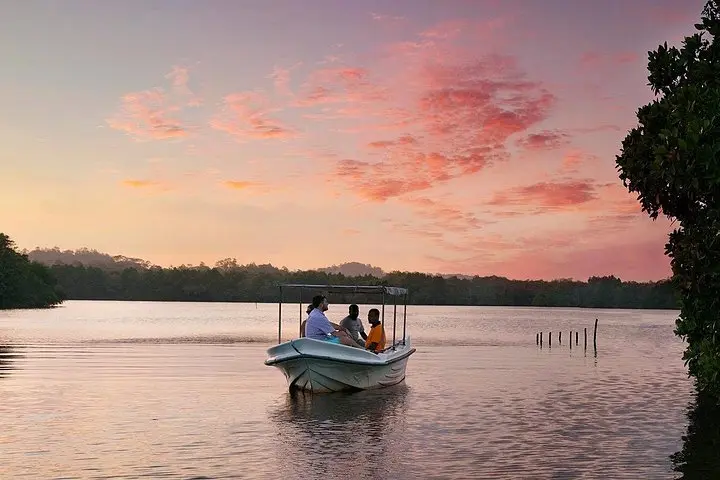
Guided boat loops from the Marsh Centre are the practical way to see the habitat—guides navigate narrow channels and point out bitterns, herons, eagles and secretive marshland species while explaining local conservation efforts and the peat bog’s role in coastal buffering.
Plan for early light: birds are most active at sunrise and the air is cooler. Bring binoculars and a camera with a tele lens, wear reef- or mud-friendly shoes, and apply insect repellent before boarding. Weather shifts quickly—seasons alter water levels and salt influence—so a lightweight waterproof layer is useful.
Trips from Colombo run roughly 45–75 minutes; from Negombo it’s often 20–30 minutes. Expect a gentle, mostly seated outing that rewards patience and quiet observation rather than long hikes. Respect the guides’ instructions: the marsh is fragile and quiet boats preserve the wildlife experience for everyone.
The tour lasts about 4–5 hours total with pick-up from Colombo or Negombo; driving time varies (roughly 45–75 minutes from Colombo, 20–30 minutes from Negombo) and includes a guided boat loop through the marsh.
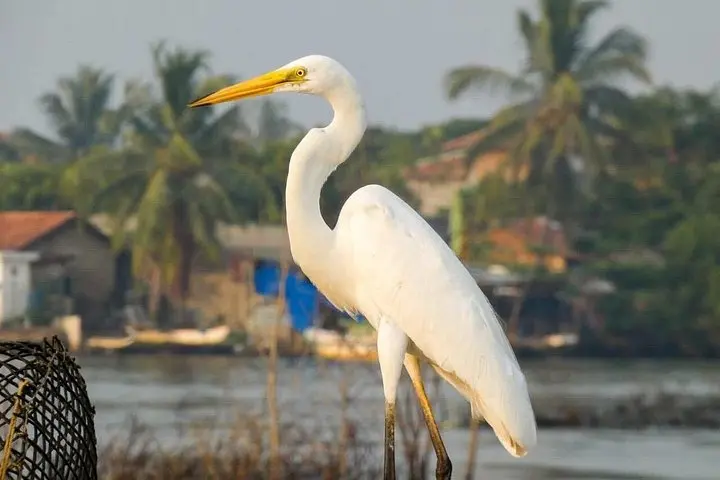
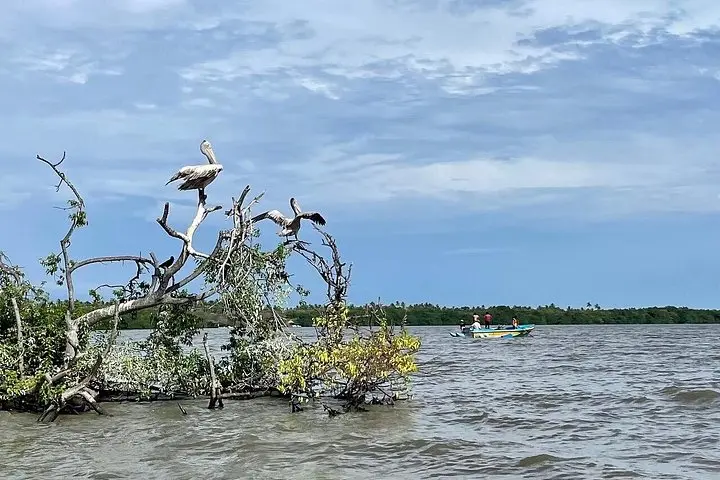
Common sightings include kingfishers, various herons and egrets, bitterns, and occasionally raptors such as fish eagles; sightings depend on season and time of day.
Access involves boarding a low boat and moving along short, sometimes uneven paths; wheelchair accessibility is limited but staff can assist—check with the operator when booking.
Bottled water is included; plan to bring snacks if you need more than a light refreshment during the outing.
Classical Lanka Tours operates guided outdoor trips and adventures with an emphasis on safety, stewardship, and memorable experiences.
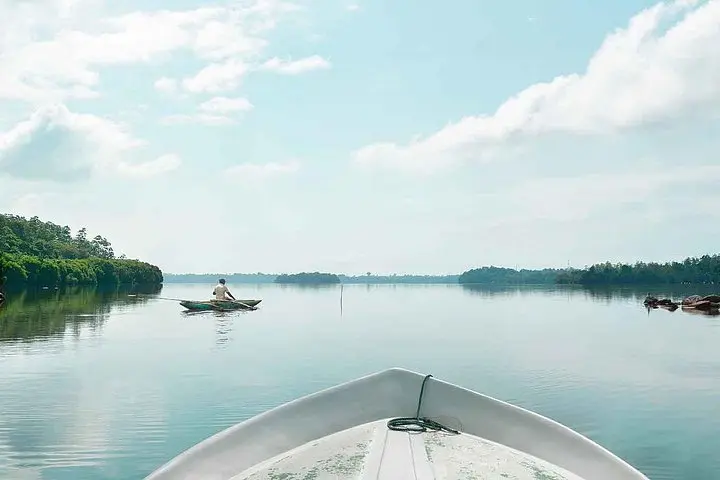
You push through low mangrove branches and the boat answers with a soft, steady burble as the marsh opens—black water threading through reed beds, kingfishers flashing like bright punctuation.
You push through low mangrove branches and the boat answers with a soft, steady burble as the marsh opens—black water threading through reed beds, kingfishers flashing like bright punctuation.
Muthurajawela is Sri Lanka’s largest saline coastal peat bog, a landscape shaped by tidal salt, freshwater seepage and millennia of sediment. The northern section was declared a sanctuary in 1996, but people have used these waterways and adjacent lagoon systems for fishing and salt-tolerant agriculture for generations. Geologically it’s peat and silt laid down where rivers met the sea; ecologically it supports wading birds, raptors and reed-dependent species whose calls cut through the marsh.
Guided boat loops from the Marsh Centre are the practical way to see the habitat—guides navigate narrow channels and point out bitterns, herons, eagles and secretive marshland species while explaining local conservation efforts and the peat bog’s role in coastal buffering.
Plan for early light: birds are most active at sunrise and the air is cooler. Bring binoculars and a camera with a tele lens, wear reef- or mud-friendly shoes, and apply insect repellent before boarding. Weather shifts quickly—seasons alter water levels and salt influence—so a lightweight waterproof layer is useful.
Trips from Colombo run roughly 45–75 minutes; from Negombo it’s often 20–30 minutes. Expect a gentle, mostly seated outing that rewards patience and quiet observation rather than long hikes. Respect the guides’ instructions: the marsh is fragile and quiet boats preserve the wildlife experience for everyone.