THE ADVENTURE COLLECTIVE® · Independent discovery and booking for outdoor travel

Slide from a tuk-tuk into a low boat and follow narrow mangrove channels where terns cry and kingfishers flash. This two-hour tour through Muthurajawela marsh pairs local transport with guided birding and a close look at Sri Lanka’s coastal ecology.
Slide from a tuk-tuk into a low boat and follow narrow mangrove channels where terns cry and kingfishers flash. This two-hour tour through Muthurajawela marsh pairs local transport with guided birding and a close look at Sri Lanka’s coastal ecology.
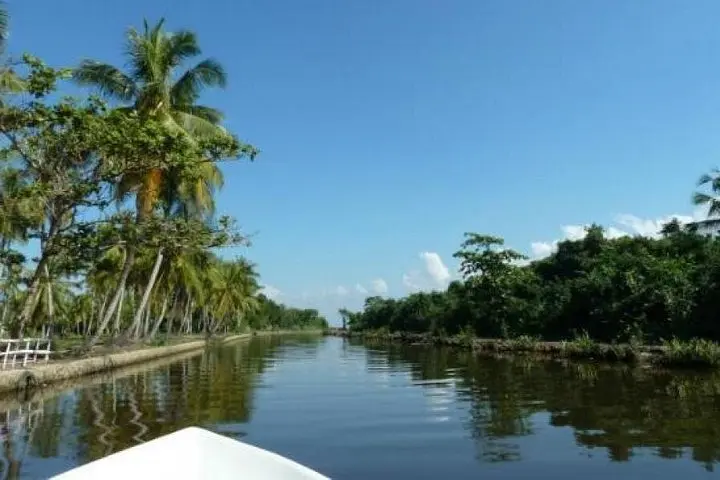
The salt-bright wind off the Negombo Lagoon arrives first, carrying the sharp cry of terns and the rustle of mangrove roots. You roll out of a tuk-tuk—the everyday vehicle of Sri Lanka—onto a narrow jetty and slide into a long, low boat that threads channels under arched mangrove canopies. For two hours the marsh defines the pace: tidal pulses, braided waterways and avian calls that punctuate the air.
Verified experiences and guided adventures in the surrounding area.
Operated by Beyond Escapes · Negombo, Western Province
The salt-bright wind off the Negombo Lagoon arrives first, carrying the sharp cry of terns and the rustle of mangrove roots. You roll out of a tuk-tuk—the everyday vehicle of Sri Lanka—onto a narrow jetty and slide into a long, low boat that threads channels under arched mangrove canopies. For two hours the marsh defines the pace: tidal pulses, braided waterways and avian calls that punctuate the air.
Muthurajawela’s name translates from Sinhalese as “Swamp of Royal Treasure,” a reminder of local lore and the marsh’s long place in coastal culture. Geologically it’s an estuarine wetland where river sediment meets the Indian Ocean, creating peat and mudflats that feed a dense mangrove network. The area supports both migratory and resident birds and has been protected as a marine sanctuary; nearby Negombo is a working fishing town with its own coastal traditions and markets.
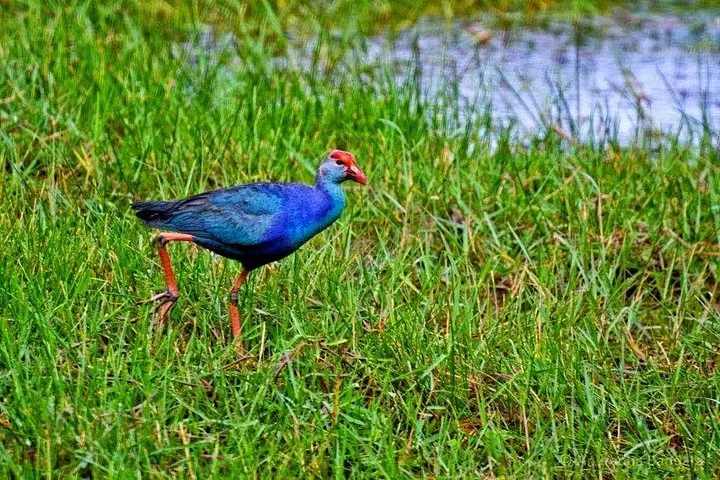
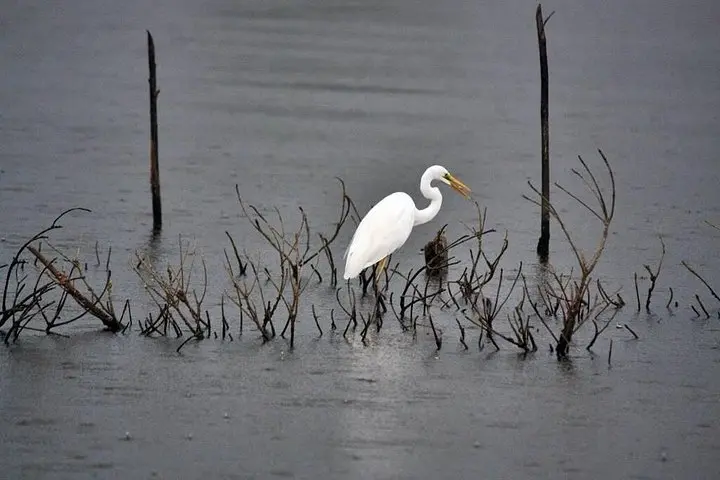
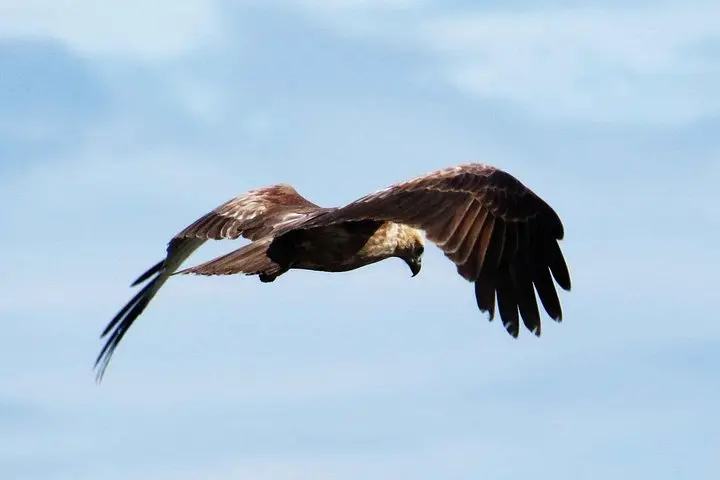
On the water you’ll encounter egrets, kingfishers and the occasional monitor lizard or estuarine crocodile slipping among roots. Guides steer slow lines through back channels where fiddler crabs tunnel and shorebirds probe exposed mud.
Practical guide: tours last about two hours, often starting at first light when bird activity peaks. Wear closed-toe shoes for landing, bring insect repellent and binoculars, and dress in light layers with sun protection. Photography works best with longer lenses and steady hands in the boat. Respect wildlife—avoid loud noise, keep distance from crocodiles and follow your guide’s instructions. For a short, accessible taste of Sri Lanka’s coastal ecology, the tuk-tuk plus boat loop through Muthurajawela is compact, vivid and unpretentious.
The standard experience is approximately two hours, including tuk-tuk transfer and a guided boat ride through the marsh.
Yes—operators describe it as suitable for all fitness levels, though boarding the low boat requires basic mobility and supervision for small children.
Saltwater or estuarine crocodiles are present but sightings are uncommon; guides maintain safe distances and will advise where to avoid shorelines.
Pickup is usually from Negombo hotels; some operators offer transfers from nearby locations for an extra charge—confirm at booking.
Beyond Escapes operates guided outdoor trips and adventures with an emphasis on safety, stewardship, and memorable experiences.
The salt-bright wind off the Negombo Lagoon arrives first, carrying the sharp cry of terns and the rustle of mangrove roots. You roll out of a tuk-tuk—the everyday vehicle of Sri Lanka—onto a narrow jetty and slide into a long, low boat that threads channels under arched mangrove canopies. For two hours the marsh defines the pace: tidal pulses, braided waterways and avian calls that punctuate the air.
The salt-bright wind off the Negombo Lagoon arrives first, carrying the sharp cry of terns and the rustle of mangrove roots. You roll out of a tuk-tuk—the everyday vehicle of Sri Lanka—onto a narrow jetty and slide into a long, low boat that threads channels under arched mangrove canopies. For two hours the marsh defines the pace: tidal pulses, braided waterways and avian calls that punctuate the air.
Muthurajawela’s name translates from Sinhalese as “Swamp of Royal Treasure,” a reminder of local lore and the marsh’s long place in coastal culture. Geologically it’s an estuarine wetland where river sediment meets the Indian Ocean, creating peat and mudflats that feed a dense mangrove network. The area supports both migratory and resident birds and has been protected as a marine sanctuary; nearby Negombo is a working fishing town with its own coastal traditions and markets.
On the water you’ll encounter egrets, kingfishers and the occasional monitor lizard or estuarine crocodile slipping among roots. Guides steer slow lines through back channels where fiddler crabs tunnel and shorebirds probe exposed mud.
Practical guide: tours last about two hours, often starting at first light when bird activity peaks. Wear closed-toe shoes for landing, bring insect repellent and binoculars, and dress in light layers with sun protection. Photography works best with longer lenses and steady hands in the boat. Respect wildlife—avoid loud noise, keep distance from crocodiles and follow your guide’s instructions. For a short, accessible taste of Sri Lanka’s coastal ecology, the tuk-tuk plus boat loop through Muthurajawela is compact, vivid and unpretentious.