THE ADVENTURE COLLECTIVE® · Independent discovery and booking for outdoor travel

Spend an afternoon at Mutianyu—walk restored ramparts, ride the cable car up and a single-track toboggan down. This practical tour combines comfortable transport from Beijing with expert guiding, giving you time to hike, photograph, and learn about one of the Great Wall’s best-preserved sections.
Spend an afternoon at Mutianyu—walk restored ramparts, ride the cable car up and a single-track toboggan down. This practical tour combines comfortable transport from Beijing with expert guiding, giving you time to hike, photograph, and learn about one of the Great Wall’s best-preserved sections.
Late-afternoon light slants across gray stone as a line of restored watchtowers marches over the ridgeline — you arrive at Mutianyu with the mountain wind nudging you toward the wall.
Verified experiences and guided adventures in the surrounding area.
Operated by Busda · Huairou District, Beijing
Late-afternoon light slants across gray stone as a line of restored watchtowers marches over the ridgeline — you arrive at Mutianyu with the mountain wind nudging you toward the wall.
This section of the Great Wall, rebuilt and maintained through the Ming dynasty, spans roughly 2–2.5 kilometers with 23 watchtowers threading along a serrated spine of granite and mortar. The slope gains around 200–300 meters from the valley parking area to the highest ramparts; underfoot are uneven stone steps and broad parapets that reveal northern Beijing’s rolling forested hills.
Mutianyu’s geology is granite outcrop cut by deep gullies; the Wall follows those ribs, hugging steep drops and small clefts where pines grip the rock. Culturally, it was part of a defensive network—its watchtowers and beacon platforms once relayed warnings across the frontier. Today local vendors and a small village at the base preserve regional snacks, teas, and craftwork that hint at rural Hebei life.
Practicalities are straightforward: most visitors pair a cable-car ascent with a walking tour along restored ramparts, then choose a toboggan or the cable-car down. Expect 2–4 hours on site in a typical afternoon tour; bring cash for snacks and simple purchases since some vendors don’t accept foreign cards. Wear sturdy shoes with good traction, carry water, and time your visit to avoid late-afternoon crowds if you want quieter towers. Guides on bus or private-car options provide context and a stress-free transit from Beijing, letting you focus on the climb, the view, and the slow, stubborn patience of the wall itself.
The scheduled duration is about 8 hours round-trip, including travel time from central Beijing and roughly 2–4 hours at the Mutianyu site depending on options chosen.
Yes — many visitors ride the cable car up for efficiency and choose either the scenic toboggan or the cable car for the descent.
Segments include steep stone steps and short climbs; people in reasonable health can manage it, but those with mobility limits should plan to use the cable car and avoid long stretches.
This tour includes the Mutianyu entry ticket and air-conditioned transport; confirm whether your selected option includes private door-to-door pickup.
Busda operates guided outdoor trips and adventures with an emphasis on safety, stewardship, and memorable experiences.
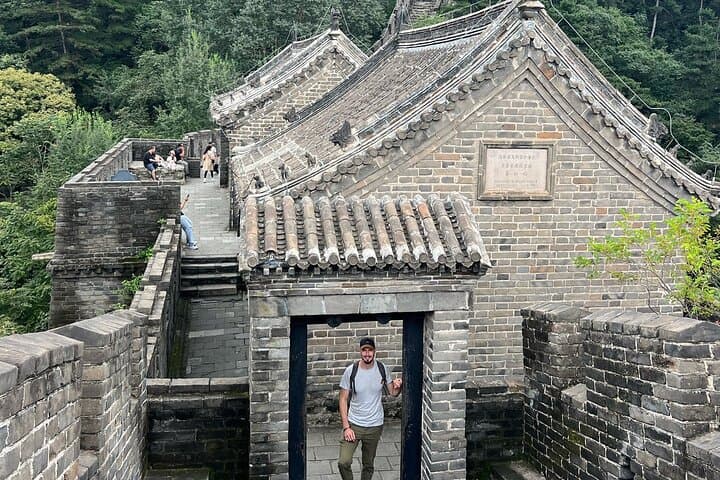

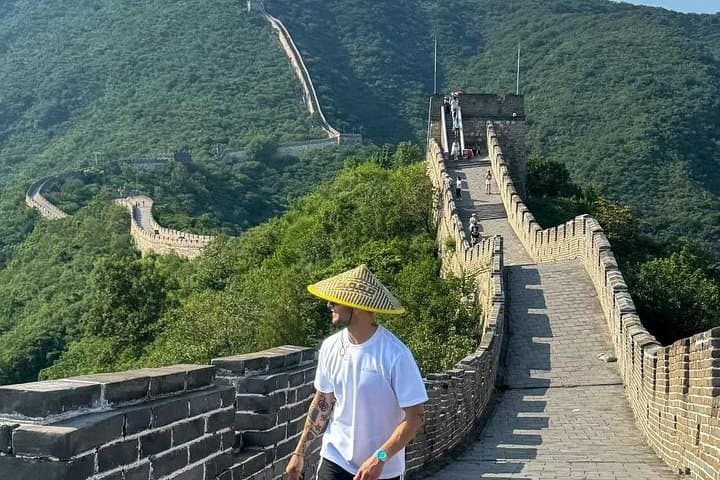
Late-afternoon light slants across gray stone as a line of restored watchtowers marches over the ridgeline — you arrive at Mutianyu with the mountain wind nudging you toward the wall.
Late-afternoon light slants across gray stone as a line of restored watchtowers marches over the ridgeline — you arrive at Mutianyu with the mountain wind nudging you toward the wall.
This section of the Great Wall, rebuilt and maintained through the Ming dynasty, spans roughly 2–2.5 kilometers with 23 watchtowers threading along a serrated spine of granite and mortar. The slope gains around 200–300 meters from the valley parking area to the highest ramparts; underfoot are uneven stone steps and broad parapets that reveal northern Beijing’s rolling forested hills.
Mutianyu’s geology is granite outcrop cut by deep gullies; the Wall follows those ribs, hugging steep drops and small clefts where pines grip the rock. Culturally, it was part of a defensive network—its watchtowers and beacon platforms once relayed warnings across the frontier. Today local vendors and a small village at the base preserve regional snacks, teas, and craftwork that hint at rural Hebei life.
Practicalities are straightforward: most visitors pair a cable-car ascent with a walking tour along restored ramparts, then choose a toboggan or the cable-car down. Expect 2–4 hours on site in a typical afternoon tour; bring cash for snacks and simple purchases since some vendors don’t accept foreign cards. Wear sturdy shoes with good traction, carry water, and time your visit to avoid late-afternoon crowds if you want quieter towers. Guides on bus or private-car options provide context and a stress-free transit from Beijing, letting you focus on the climb, the view, and the slow, stubborn patience of the wall itself.