THE ADVENTURE COLLECTIVE® · Independent discovery and booking for outdoor travel

A flexible 6–8 hour tour delivers you to the restored Mutianyu section of the Great Wall with entrance included. This guide covers what to expect on the stone steps, optional cable-car and toboggan choices, and how to prepare for the climb.
A flexible 6–8 hour tour delivers you to the restored Mutianyu section of the Great Wall with entrance included. This guide covers what to expect on the stone steps, optional cable-car and toboggan choices, and how to prepare for the climb.
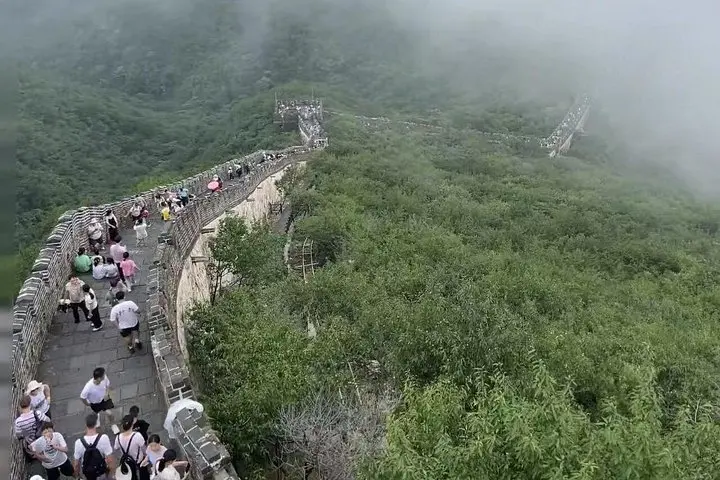
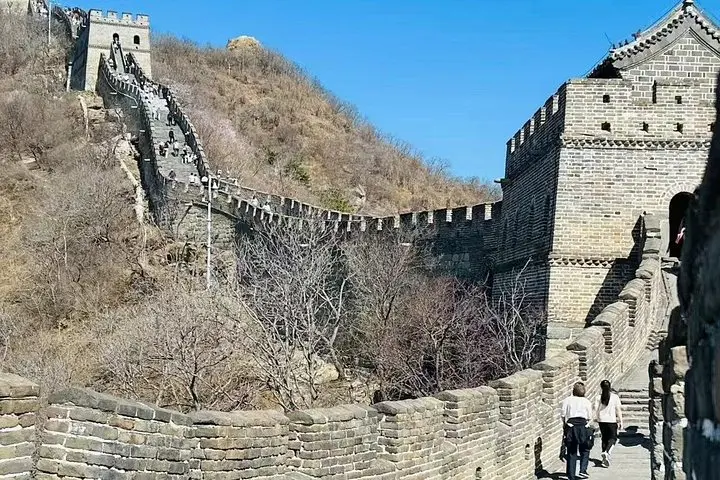
You step out of the minivan into a high, cool light — the Wall rises over tree-tufted ridgelines, stone steps marching toward watchtowers that bank the horizon. The wind tugs at your jacket; occasionally a crow cuts across a crenel, daring you to hurry. Mutianyu feels immediate: restored masonry underfoot, broad parapets and staggered towers that invite exploration without losing the sense of scale.
Verified experiences and guided adventures in the surrounding area.
Operated by China Highlights-Beijing · Beijing, Beijing
You step out of the minivan into a high, cool light — the Wall rises over tree-tufted ridgelines, stone steps marching toward watchtowers that bank the horizon. The wind tugs at your jacket; occasionally a crow cuts across a crenel, daring you to hurry. Mutianyu feels immediate: restored masonry underfoot, broad parapets and staggered towers that invite exploration without losing the sense of scale.
The section at Mutianyu traces defensive work first established in the Northern Qi (6th century) and rebuilt extensively under the Ming dynasty. Geologically it rides a spine of granite and gneiss; the masonry sits on compact ridges that made this stretch strategically valuable. Culturally, the nearby Huairou villages supplied labor and stone for the restoration decades ago, and today the site balances tourism with conservation initiatives.
On a practical note, this is a half- to full-day outing: expect 6–8 hours including transfers. The entrance fee is included in the tour price; cable car and toboggan are optional, paid locally—useful if you prefer to skip steep descents. Terrain is mostly stone steps and restored ramps; there are sections of steep climbing and uneven treads. Bring sturdy hiking shoes, sun protection, and water even though bottled water may be available. Mornings are cooler and less crowded; late afternoon light favors photography but can be hot in summer.
Plan for variable weather, keep to marked paths, and allow time to move between towers slowly — the Wall rewards a patient pace. With flexible hotel or airport pickup, this tour is a practical way to experience one of the Great Wall’s most accessible and photogenic stretches.
Yes—the tour price includes the Mutianyu entrance ticket; cable car and toboggan rides are optional and paid locally.
Mutianyu has steep, uneven stone steps and is not wheelchair-accessible; the cable car can reduce walking but does not make the wall fully accessible.
Most tours allocate about 2 hours on the wall itself within a 6–8 hour schedule that includes travel time and transfers.
Early morning offers cooler temperatures and fewer people; late afternoon provides warm light for photos but can be busier.
China Highlights-Beijing operates guided outdoor trips and adventures with an emphasis on safety, stewardship, and memorable experiences.
You step out of the minivan into a high, cool light — the Wall rises over tree-tufted ridgelines, stone steps marching toward watchtowers that bank the horizon. The wind tugs at your jacket; occasionally a crow cuts across a crenel, daring you to hurry. Mutianyu feels immediate: restored masonry underfoot, broad parapets and staggered towers that invite exploration without losing the sense of scale.
You step out of the minivan into a high, cool light — the Wall rises over tree-tufted ridgelines, stone steps marching toward watchtowers that bank the horizon. The wind tugs at your jacket; occasionally a crow cuts across a crenel, daring you to hurry. Mutianyu feels immediate: restored masonry underfoot, broad parapets and staggered towers that invite exploration without losing the sense of scale.
The section at Mutianyu traces defensive work first established in the Northern Qi (6th century) and rebuilt extensively under the Ming dynasty. Geologically it rides a spine of granite and gneiss; the masonry sits on compact ridges that made this stretch strategically valuable. Culturally, the nearby Huairou villages supplied labor and stone for the restoration decades ago, and today the site balances tourism with conservation initiatives.
On a practical note, this is a half- to full-day outing: expect 6–8 hours including transfers. The entrance fee is included in the tour price; cable car and toboggan are optional, paid locally—useful if you prefer to skip steep descents. Terrain is mostly stone steps and restored ramps; there are sections of steep climbing and uneven treads. Bring sturdy hiking shoes, sun protection, and water even though bottled water may be available. Mornings are cooler and less crowded; late afternoon light favors photography but can be hot in summer.
Plan for variable weather, keep to marked paths, and allow time to move between towers slowly — the Wall rewards a patient pace. With flexible hotel or airport pickup, this tour is a practical way to experience one of the Great Wall’s most accessible and photogenic stretches.