THE ADVENTURE COLLECTIVE® · Independent discovery and booking for outdoor travel

Escape the crowds on a private day trip to Mutianyu and walk centuries of stone across forested ridgelines. This practical guide covers history, terrain, seasonal tips and what to pack for a confident visit.
Escape the crowds on a private day trip to Mutianyu and walk centuries of stone across forested ridgelines. This practical guide covers history, terrain, seasonal tips and what to pack for a confident visit.
You step out of the car where the road meets a hillside that soon becomes a line of stone, and the Great Wall rises ahead — angular, uneven, threaded with watchtowers that frame the ridge. Mutianyu feels less frenetic than Badaling: trees crowd the slopes, chestnut blooms scent the air in spring, and the cadence of footsteps on worn steps sets the day’s pace.
Verified experiences and guided adventures in the surrounding area.
Operated by Jenny's Guide & Driver Service · Beijing, Beijing
You step out of the car where the road meets a hillside that soon becomes a line of stone, and the Great Wall rises ahead — angular, uneven, threaded with watchtowers that frame the ridge. Mutianyu feels less frenetic than Badaling: trees crowd the slopes, chestnut blooms scent the air in spring, and the cadence of footsteps on worn steps sets the day’s pace.
Built and rebuilt across centuries, Mutianyu’s core walls date to the Ming dynasty when the frontier was fortified with signal towers and garrison stations. Geologically, the wall follows ridgelines of weathered schist and sandstone; erosion has carved steep steps and occasional crumbly stretches that remind hikers to watch their footing. Local villages once supplied the garrisons, and the surrounding orchards still reflect that agricultural past.
On a private tour you’ll typically have hotel pickup, a guided 2–3 hour walk along restored and rugged sections, and options to return by cable car or to descend the toboggan. Practical realities: expect uneven stone steps, sudden climbs between towers, and quick temperature shifts on exposed ridgelines. Carry water, wear grippy footwear, and budget extra time for photos — the towers make natural platforms for sweeping views over forested valleys.
Timing matters: early weekdays minimize crowds; late afternoon softens the light but can be cooler and windier. Respect conservation rules — don’t climb fragile masonry — and use marked access points and shuttle services provided on-site. With a private driver and guide, the experience focuses on pacing and local context, leaving you to walk the wall on your own terms.
Typical guided walking on-site is about 2–3 hours exploring several towers and stretches; total tour time including transport is 5–8 hours.
The trail consists of paved stone with many steps; it’s physically demanding in places but requires no technical climbing skills.
Private tours usually include hotel pickup, drop-off, entrance and local shuttle fees — confirm details on booking.
Yes — Mutianyu offers a cable car and a single-rider alpine toboggan for descent; options and costs are often included in private tour packages or available for separate purchase.
Jenny's Guide & Driver Service operates guided outdoor trips and adventures with an emphasis on safety, stewardship, and memorable experiences.
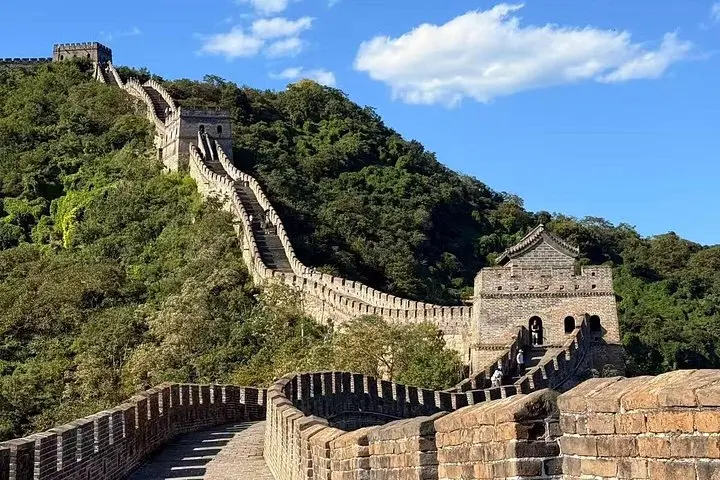
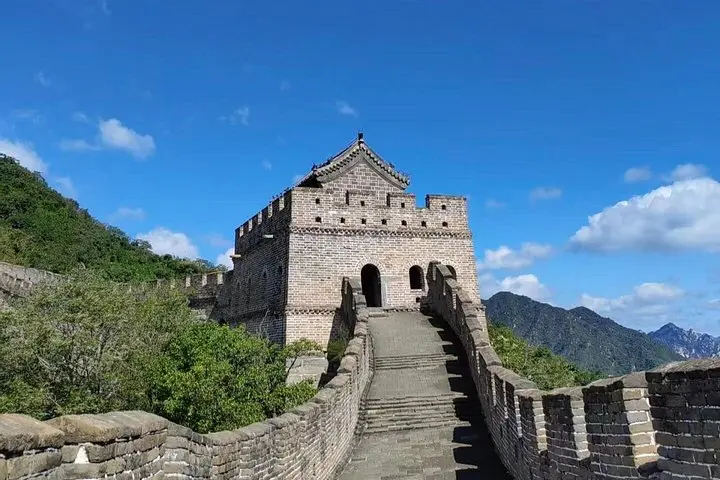

You step out of the car where the road meets a hillside that soon becomes a line of stone, and the Great Wall rises ahead — angular, uneven, threaded with watchtowers that frame the ridge. Mutianyu feels less frenetic than Badaling: trees crowd the slopes, chestnut blooms scent the air in spring, and the cadence of footsteps on worn steps sets the day’s pace.
You step out of the car where the road meets a hillside that soon becomes a line of stone, and the Great Wall rises ahead — angular, uneven, threaded with watchtowers that frame the ridge. Mutianyu feels less frenetic than Badaling: trees crowd the slopes, chestnut blooms scent the air in spring, and the cadence of footsteps on worn steps sets the day’s pace.
Built and rebuilt across centuries, Mutianyu’s core walls date to the Ming dynasty when the frontier was fortified with signal towers and garrison stations. Geologically, the wall follows ridgelines of weathered schist and sandstone; erosion has carved steep steps and occasional crumbly stretches that remind hikers to watch their footing. Local villages once supplied the garrisons, and the surrounding orchards still reflect that agricultural past.
On a private tour you’ll typically have hotel pickup, a guided 2–3 hour walk along restored and rugged sections, and options to return by cable car or to descend the toboggan. Practical realities: expect uneven stone steps, sudden climbs between towers, and quick temperature shifts on exposed ridgelines. Carry water, wear grippy footwear, and budget extra time for photos — the towers make natural platforms for sweeping views over forested valleys.
Timing matters: early weekdays minimize crowds; late afternoon softens the light but can be cooler and windier. Respect conservation rules — don’t climb fragile masonry — and use marked access points and shuttle services provided on-site. With a private driver and guide, the experience focuses on pacing and local context, leaving you to walk the wall on your own terms.