THE ADVENTURE COLLECTIVE® · Independent discovery and booking for outdoor travel

Beat the crowds with an early-morning visit to My Son Sanctuary, then drift back to Hoi An by private covered boat. This 6-hour tour pairs quiet ruins, Cham history, and riverside craft villages for photographers and culture-seekers.
Beat the crowds with an early-morning visit to My Son Sanctuary, then drift back to Hoi An by private covered boat. This 6-hour tour pairs quiet ruins, Cham history, and riverside craft villages for photographers and culture-seekers.
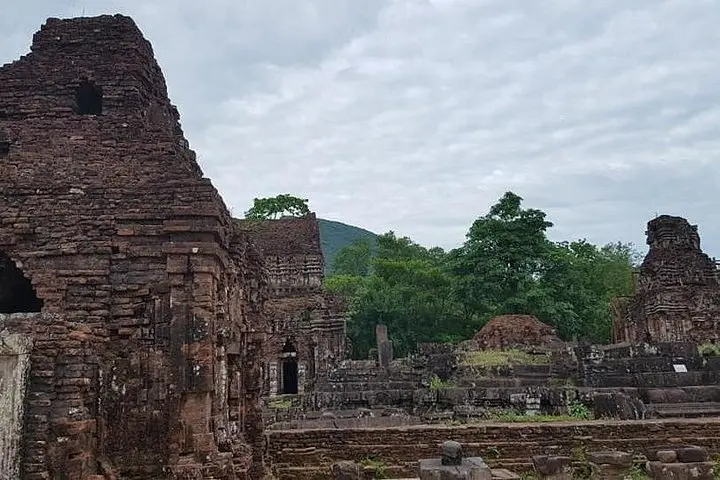
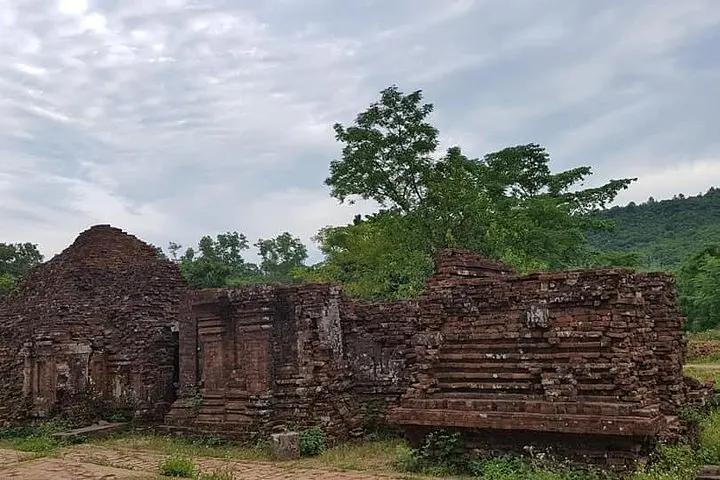
You step into the cool hush of the river valley before the day crowds arrive: mist lifts from paddy fields, and the red-baked bricks of My Son catch the first thin light. The approach is quiet—you pass coconut palms and low jungle as your private vehicle delivers you to the sanctuary’s fringe. The complex sits low in a bowl of limestone hills, its towers rising like deliberate, man-made trees.
Verified experiences and guided adventures in the surrounding area.
Operated by Da Nang Hoi An Private Tours & Shore Excursion · Hoi An, Quang Nam
You step into the cool hush of the river valley before the day crowds arrive: mist lifts from paddy fields, and the red-baked bricks of My Son catch the first thin light. The approach is quiet—you pass coconut palms and low jungle as your private vehicle delivers you to the sanctuary’s fringe. The complex sits low in a bowl of limestone hills, its towers rising like deliberate, man-made trees.
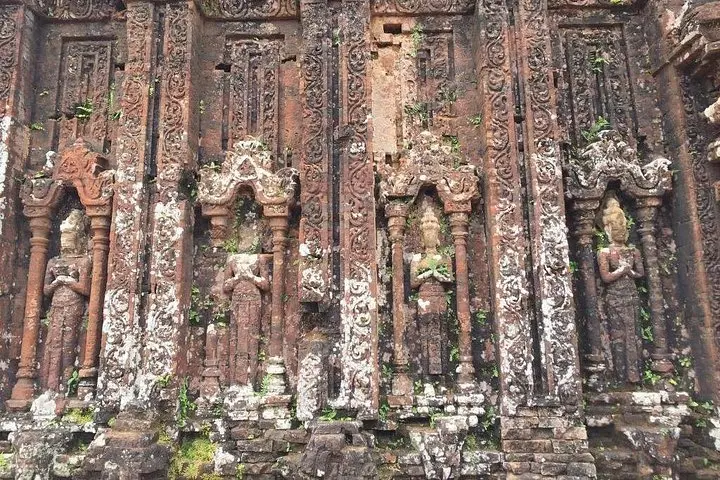
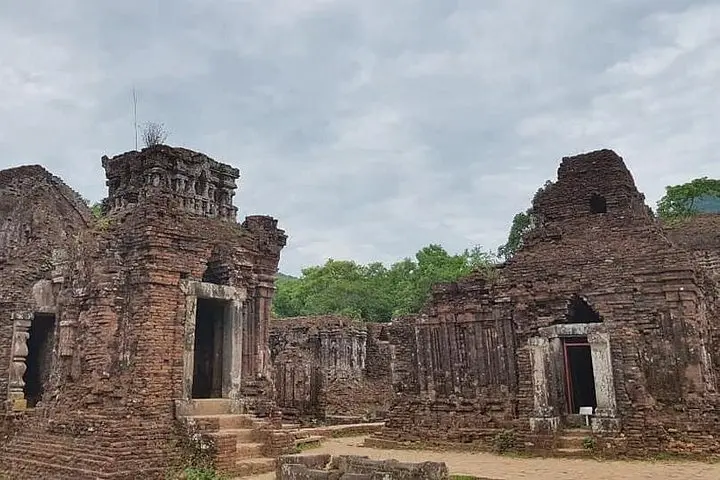
My Son was the religious heart of the Champa kingdom from the 4th to 13th centuries; its brick towers and carved lintels reflect Indian-influenced Hindu architecture adapted to local materials and climate. The bricks themselves—fired and bonded with an organic mortar—confuse modern engineers and speak to long-standing craft traditions. Nearby, the Thu Bon River shepherds trade and timber to Hoi An, and villages such as Kim Bong preserve woodcarving skills still used when boats and houses were built by hand.
Practically: arrive early to avoid crowds and the midday heat; the site is largely unshaded and involves uneven brick steps and short climbs between temples. A guided visit clarifies Champa iconography and points out restoration efforts. After the sanctuary, the trip returns by private covered boat along Thu Bon, offering a slow-moving view of river life and a stop at Kim Bong carpentry village.
Plan for variable weather—light rain or strong sun—and bring water, sturdy closed shoes, and a soft-brim hat for photography. The early light rewards patient shooters, and the river ride provides a relaxed way to read the landscape on the way back to Hoi An.
Yes—this tour includes the site entrance tickets as part of the package.
Typical on-site time is about 90 minutes, enough for guided highlights and photography stops.
Yes, the return is by private covered boat along the Thu Bon River with an optional stop at Kim Bong village.
Young children can visit but expect stairs and uneven ground; those with significant mobility limits may find parts of the sanctuary difficult.
Da Nang Hoi An Private Tours & Shore Excursion operates guided outdoor trips and adventures with an emphasis on safety, stewardship, and memorable experiences.
You step into the cool hush of the river valley before the day crowds arrive: mist lifts from paddy fields, and the red-baked bricks of My Son catch the first thin light. The approach is quiet—you pass coconut palms and low jungle as your private vehicle delivers you to the sanctuary’s fringe. The complex sits low in a bowl of limestone hills, its towers rising like deliberate, man-made trees.
You step into the cool hush of the river valley before the day crowds arrive: mist lifts from paddy fields, and the red-baked bricks of My Son catch the first thin light. The approach is quiet—you pass coconut palms and low jungle as your private vehicle delivers you to the sanctuary’s fringe. The complex sits low in a bowl of limestone hills, its towers rising like deliberate, man-made trees.
My Son was the religious heart of the Champa kingdom from the 4th to 13th centuries; its brick towers and carved lintels reflect Indian-influenced Hindu architecture adapted to local materials and climate. The bricks themselves—fired and bonded with an organic mortar—confuse modern engineers and speak to long-standing craft traditions. Nearby, the Thu Bon River shepherds trade and timber to Hoi An, and villages such as Kim Bong preserve woodcarving skills still used when boats and houses were built by hand.
Practically: arrive early to avoid crowds and the midday heat; the site is largely unshaded and involves uneven brick steps and short climbs between temples. A guided visit clarifies Champa iconography and points out restoration efforts. After the sanctuary, the trip returns by private covered boat along Thu Bon, offering a slow-moving view of river life and a stop at Kim Bong carpentry village.
Plan for variable weather—light rain or strong sun—and bring water, sturdy closed shoes, and a soft-brim hat for photography. The early light rewards patient shooters, and the river ride provides a relaxed way to read the landscape on the way back to Hoi An.