THE ADVENTURE COLLECTIVE® · Independent discovery and booking for outdoor travel

Spend a morning among the Champa ruins of My Son, combining guided archaeology, traditional Champa performances, and a hands-on rice-paper workshop before returning to Hoi An. This practical day trip balances easy walking with deep cultural context.
Spend a morning among the Champa ruins of My Son, combining guided archaeology, traditional Champa performances, and a hands-on rice-paper workshop before returning to Hoi An. This practical day trip balances easy walking with deep cultural context.
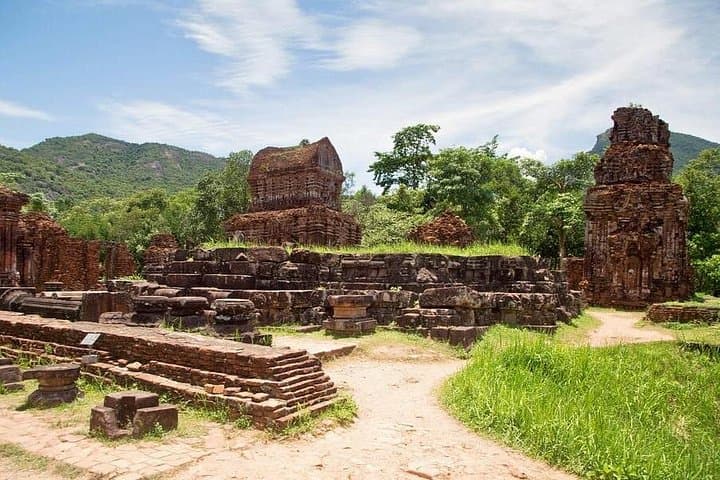
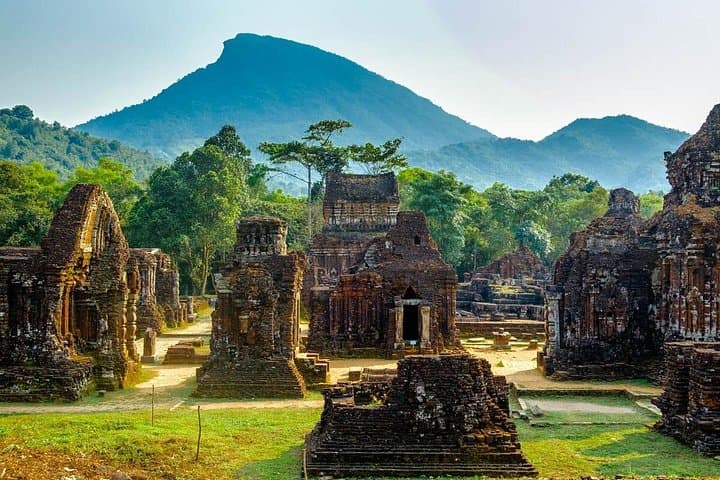
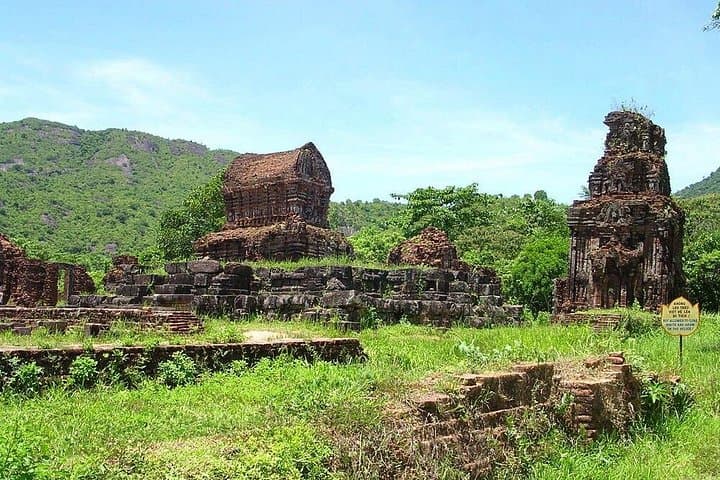
The morning light slips through tall palms as the minivan threads the rice fields toward My Son Sanctuary, the stone towers appearing like weathered bookmarks in the green. Visitors step from the vehicle into humid air scented with earth and lemongrass; paths wind under a canopy and the temple ruins sit quietly, their carvings beaded with lichen and history.
Verified experiences and guided adventures in the surrounding area.
Operated by longtravel-hoian · Hoi An, Quang Nam
The morning light slips through tall palms as the minivan threads the rice fields toward My Son Sanctuary, the stone towers appearing like weathered bookmarks in the green. Visitors step from the vehicle into humid air scented with earth and lemongrass; paths wind under a canopy and the temple ruins sit quietly, their carvings beaded with lichen and history.
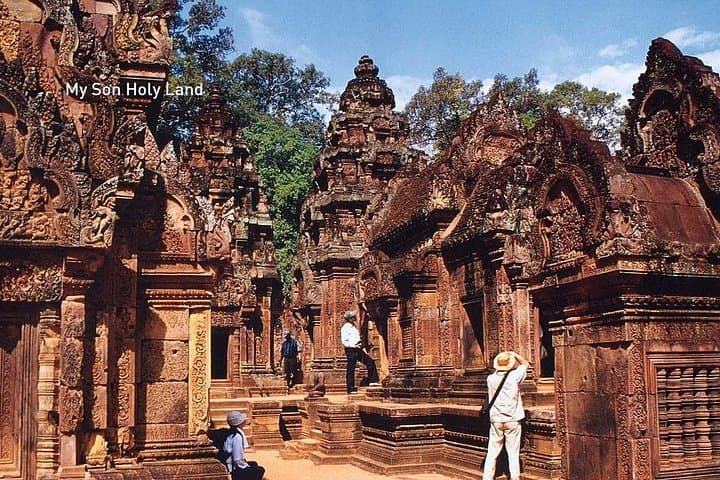
My Son was the religious and political heart of the Champa kingdom from roughly the 4th to the 13th centuries. Built of laterite and sandstone and set in a tectonically calm valley, the towers reflect Hindu influence brought via maritime trade routes. Centuries and wartime damage have left fragments, but restoration and UNESCO designation have stabilized many structures.
The tour pairs archaeology with living culture: an English-speaking guide recounts Champa myths and construction techniques, then leads a hands-on rice-paper demonstration at a local house where rural craft remains a daily practice. Expect traditional lunch with herbal tea and an easy rhythm—time to ask about local agriculture, Cham community traditions, and the slow return of native birdlife to the paddy margins.
Practical notes: the route involves uneven jungle trails and short stair climbs; comfortable walking shoes and sun protection are essential. Mornings are cooler and less dusty; midday humidity rises. Bring a refillable bottle (one water provided) and a light rain layer in the wet season. The itinerary fits travelers seeking a compact cultural-heritage experience with low exertion but high interpretive value.
The round-trip transfer covers roughly 100 km and the door-to-door travel time is about 1–1.5 hours each way depending on traffic.
The listed tour notes that the 150,000 VND entrance fee and electric car transfer at the site are additional and should be expected.
Yes—walking is low-impact, but uneven ground can challenge strollers and mobility-limited guests; notify the operator if mobility assistance is needed.
Lunch is traditional Vietnamese at a local house; inform the operator about dietary restrictions when booking to arrange alternatives.
longtravel-hoian operates guided outdoor trips and adventures with an emphasis on safety, stewardship, and memorable experiences.
The morning light slips through tall palms as the minivan threads the rice fields toward My Son Sanctuary, the stone towers appearing like weathered bookmarks in the green. Visitors step from the vehicle into humid air scented with earth and lemongrass; paths wind under a canopy and the temple ruins sit quietly, their carvings beaded with lichen and history.
The morning light slips through tall palms as the minivan threads the rice fields toward My Son Sanctuary, the stone towers appearing like weathered bookmarks in the green. Visitors step from the vehicle into humid air scented with earth and lemongrass; paths wind under a canopy and the temple ruins sit quietly, their carvings beaded with lichen and history.
My Son was the religious and political heart of the Champa kingdom from roughly the 4th to the 13th centuries. Built of laterite and sandstone and set in a tectonically calm valley, the towers reflect Hindu influence brought via maritime trade routes. Centuries and wartime damage have left fragments, but restoration and UNESCO designation have stabilized many structures.
The tour pairs archaeology with living culture: an English-speaking guide recounts Champa myths and construction techniques, then leads a hands-on rice-paper demonstration at a local house where rural craft remains a daily practice. Expect traditional lunch with herbal tea and an easy rhythm—time to ask about local agriculture, Cham community traditions, and the slow return of native birdlife to the paddy margins.
Practical notes: the route involves uneven jungle trails and short stair climbs; comfortable walking shoes and sun protection are essential. Mornings are cooler and less dusty; midday humidity rises. Bring a refillable bottle (one water provided) and a light rain layer in the wet season. The itinerary fits travelers seeking a compact cultural-heritage experience with low exertion but high interpretive value.