THE ADVENTURE COLLECTIVE® · Independent discovery and booking for outdoor travel

Explore the Champa heartland with an on-site guide at My Son Sanctuary. This private half‑day tour from Hoi An brings temple architecture, local stories, and conservation context into one accessible cultural outing.
Explore the Champa heartland with an on-site guide at My Son Sanctuary. This private half‑day tour from Hoi An brings temple architecture, local stories, and conservation context into one accessible cultural outing.
You arrive under a hot central-Vietnam sky, the low hills of the Annamite range pushing up behind the temple ruins. The valley smells of grass and warm brick; wind threads through broken lintels and the towers seem to lean toward one another as if exchanging stories. An on-site guide meets you and the narrative shifts from stones to people — how the Cham built with fired brick and clay mortar, how sandstone carvings once caught ocean trade wealth.
Verified experiences and guided adventures in the surrounding area.
Operated by My Son Sanctuary Tours with Locals · Duy Xuyên, Quảng Nam
You arrive under a hot central-Vietnam sky, the low hills of the Annamite range pushing up behind the temple ruins. The valley smells of grass and warm brick; wind threads through broken lintels and the towers seem to lean toward one another as if exchanging stories. An on-site guide meets you and the narrative shifts from stones to people — how the Cham built with fired brick and clay mortar, how sandstone carvings once caught ocean trade wealth.
My Son is the spiritual heart of the Champa kingdom, a cluster of Hindu temple towers that grew from the 4th to 13th centuries CE. Geology matters here: red laterite and baked brick survive the monsoon heat differently, and the site’s layout follows sacred lines rather than modern grids. The sanctuary was heavily damaged during the 20th century but remains a working archaeological landscape where restoration and local memory intersect.
Expect 4–5 hours for a private half-day tour including transfer from Hoi An or Da Nang; the guide usually concentrates on a few key groups of towers, Cham inscriptions, and construction techniques that still puzzle scholars. Terrain is a mix of grassy paths, exposed brick platforms, and shaded groves—comfortable shoes and sun protection matter.
Photography is welcomed, but treat the stones respectfully and follow the guide’s routes to protect fragile structures. Bring water, insect repellent, and time to listen: this is a place where history speaks slowly and the landscape pushes you to notice the details.
Driving from central Hoi An typically takes 45–60 minutes depending on traffic; transfers are usually included in private tour packages.
Not always—this specific tour notes admission is not included, so confirm with the operator and bring cash for tickets.
Some pathways and viewpoints are accessible, and the tour lists wheelchair-accessible options, but many temple platforms are uneven; check in advance for specific access needs.
Photography for personal use is permitted in most areas; drone use is restricted and requires permits—ask your guide before flying.
My Son Sanctuary Tours with Locals operates guided outdoor trips and adventures with an emphasis on safety, stewardship, and memorable experiences.

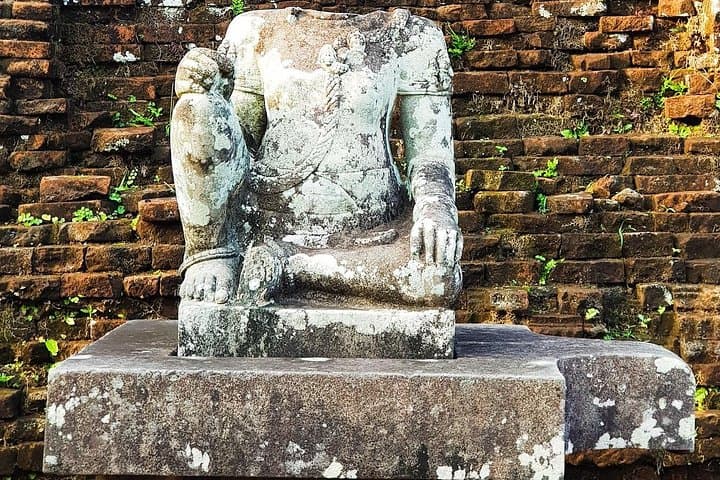
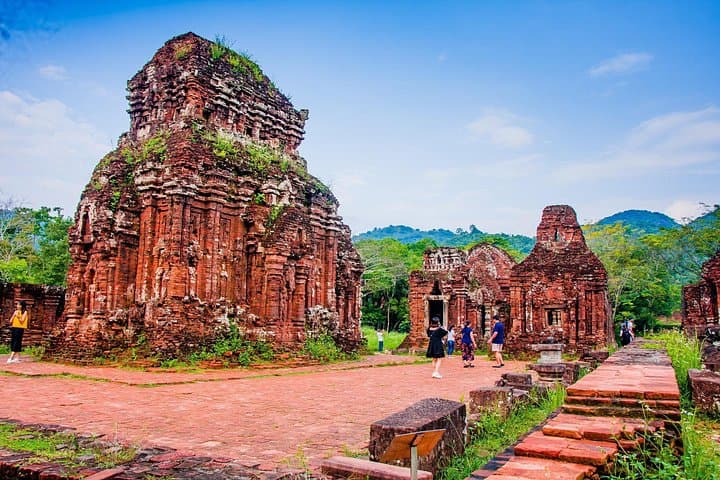

You arrive under a hot central-Vietnam sky, the low hills of the Annamite range pushing up behind the temple ruins. The valley smells of grass and warm brick; wind threads through broken lintels and the towers seem to lean toward one another as if exchanging stories. An on-site guide meets you and the narrative shifts from stones to people — how the Cham built with fired brick and clay mortar, how sandstone carvings once caught ocean trade wealth.
You arrive under a hot central-Vietnam sky, the low hills of the Annamite range pushing up behind the temple ruins. The valley smells of grass and warm brick; wind threads through broken lintels and the towers seem to lean toward one another as if exchanging stories. An on-site guide meets you and the narrative shifts from stones to people — how the Cham built with fired brick and clay mortar, how sandstone carvings once caught ocean trade wealth.
My Son is the spiritual heart of the Champa kingdom, a cluster of Hindu temple towers that grew from the 4th to 13th centuries CE. Geology matters here: red laterite and baked brick survive the monsoon heat differently, and the site’s layout follows sacred lines rather than modern grids. The sanctuary was heavily damaged during the 20th century but remains a working archaeological landscape where restoration and local memory intersect.
Expect 4–5 hours for a private half-day tour including transfer from Hoi An or Da Nang; the guide usually concentrates on a few key groups of towers, Cham inscriptions, and construction techniques that still puzzle scholars. Terrain is a mix of grassy paths, exposed brick platforms, and shaded groves—comfortable shoes and sun protection matter.
Photography is welcomed, but treat the stones respectfully and follow the guide’s routes to protect fragile structures. Bring water, insect repellent, and time to listen: this is a place where history speaks slowly and the landscape pushes you to notice the details.