THE ADVENTURE COLLECTIVE® · Independent discovery and booking for outdoor travel

Travel by vintage jeep through rice paddies to My Son Sanctuary, the Champa Kingdom’s brick temple complex. This private tour pairs rural village stops and a pottery workshop with guided exploration of UNESCO-listed ruins and a local My Quang lunch.
Travel by vintage jeep through rice paddies to My Son Sanctuary, the Champa Kingdom’s brick temple complex. This private tour pairs rural village stops and a pottery workshop with guided exploration of UNESCO-listed ruins and a local My Quang lunch.
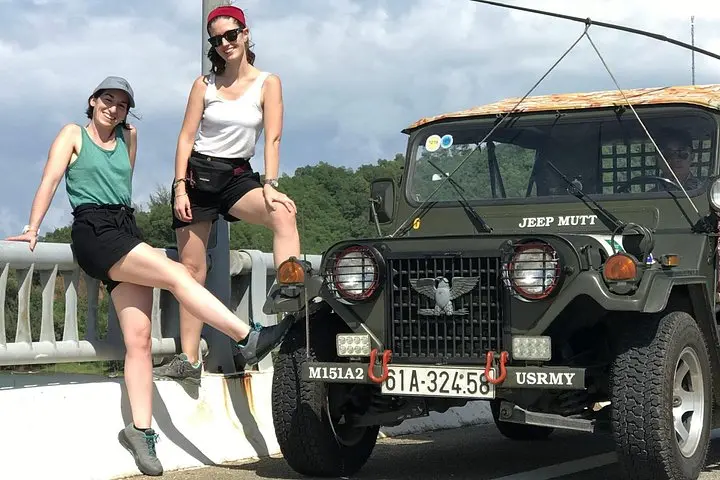
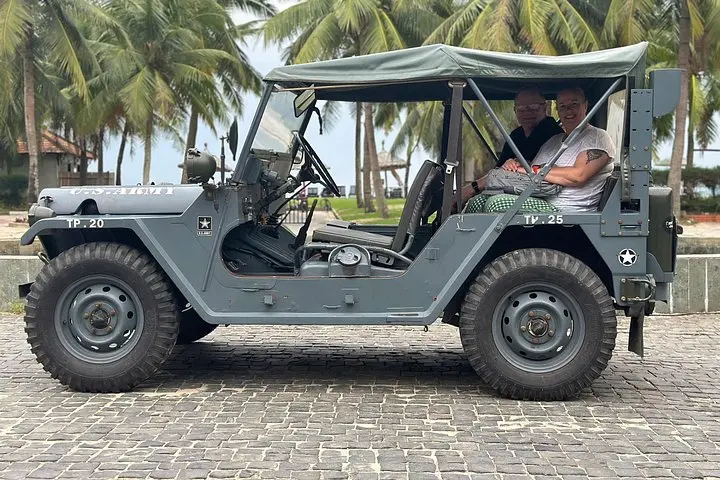
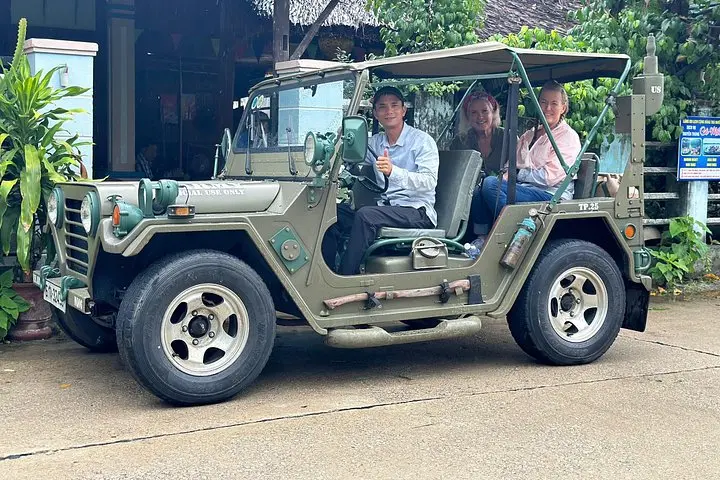
You step from a vintage army jeep onto soft roadside earth, the air scented with wet soil and cooking smoke. Rice paddies spread like green mirrors; water buffalo lift their heads as the jeep retreats down a narrow lane. The Thu Bon River cuts a slow line through the valley, daring you to follow its reflective path toward the low hills where temples rise from brick like memory.
Verified experiences and guided adventures in the surrounding area.
Operated by Local Buddy Tours - Danang City · Hoi An, Quang Nam Province
You step from a vintage army jeep onto soft roadside earth, the air scented with wet soil and cooking smoke. Rice paddies spread like green mirrors; water buffalo lift their heads as the jeep retreats down a narrow lane. The Thu Bon River cuts a slow line through the valley, daring you to follow its reflective path toward the low hills where temples rise from brick like memory.
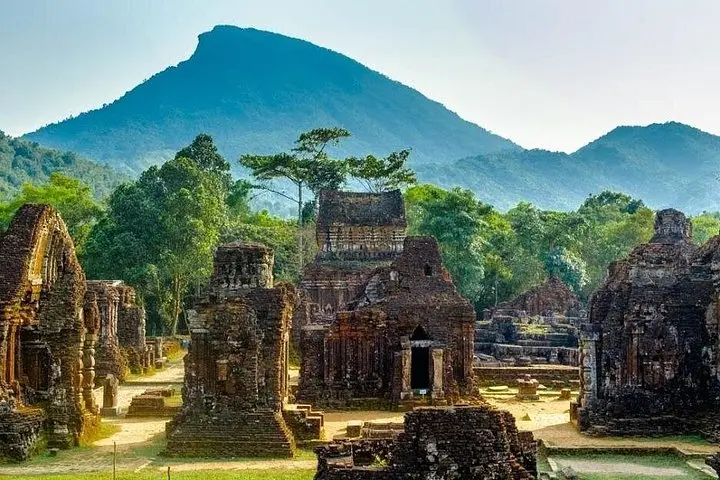
My Son was the spiritual capstone of the Champa Kingdom between the 4th and 13th centuries. The temples—built almost entirely from fired brick—show architectural ties to Indian Hinduism and were dedicated largely to Shiva. The valley’s red bricks are local clay baked hard by ancient hands; tectonic folding of the Truong Son range to the west created the sheltered basin that allowed this ceremonial center to flourish.
A private tour gives time to listen: guides translate inscriptions, point out the distinctive Champa carving styles, and explain wartime damage and recent restoration work. Culture is alive in nearby villages and at Le Duc Ha Terra Cotta Workshop, where modern artisans still shape the same clay.
Practical guidance: wear sturdy closed-toe shoes for uneven temple platforms, bring sun protection and a refillable water bottle, and allow 4–6 hours for pickup, transit, a 90–120 minute site visit, and a local My Quang lunch. Mornings are cooler and less crowded; afternoons can be hot. Stay on marked paths to protect fragile masonry and carry small change for restroom stops and market purchases.
Yes—private pickup and drop-off from Da Nang or Hoi An within the defined area is included in the tour.
Entrance fees to My Son are included; the My Quang lunch at a local restaurant is part of the itinerary as described.
Expect a leisurely 60–120 minute walk around the main temple clusters on uneven surfaces—good mobility is helpful but no steep climbs are required.
Yes—being a private tour allows your guide to adjust timing and focus, whether you need more time for photos or slower mobility.
Local Buddy Tours - Danang City operates guided outdoor trips and adventures with an emphasis on safety, stewardship, and memorable experiences.
You step from a vintage army jeep onto soft roadside earth, the air scented with wet soil and cooking smoke. Rice paddies spread like green mirrors; water buffalo lift their heads as the jeep retreats down a narrow lane. The Thu Bon River cuts a slow line through the valley, daring you to follow its reflective path toward the low hills where temples rise from brick like memory.
You step from a vintage army jeep onto soft roadside earth, the air scented with wet soil and cooking smoke. Rice paddies spread like green mirrors; water buffalo lift their heads as the jeep retreats down a narrow lane. The Thu Bon River cuts a slow line through the valley, daring you to follow its reflective path toward the low hills where temples rise from brick like memory.
My Son was the spiritual capstone of the Champa Kingdom between the 4th and 13th centuries. The temples—built almost entirely from fired brick—show architectural ties to Indian Hinduism and were dedicated largely to Shiva. The valley’s red bricks are local clay baked hard by ancient hands; tectonic folding of the Truong Son range to the west created the sheltered basin that allowed this ceremonial center to flourish.
A private tour gives time to listen: guides translate inscriptions, point out the distinctive Champa carving styles, and explain wartime damage and recent restoration work. Culture is alive in nearby villages and at Le Duc Ha Terra Cotta Workshop, where modern artisans still shape the same clay.
Practical guidance: wear sturdy closed-toe shoes for uneven temple platforms, bring sun protection and a refillable water bottle, and allow 4–6 hours for pickup, transit, a 90–120 minute site visit, and a local My Quang lunch. Mornings are cooler and less crowded; afternoons can be hot. Stay on marked paths to protect fragile masonry and carry small change for restroom stops and market purchases.