THE ADVENTURE COLLECTIVE® · Independent discovery and booking for outdoor travel

Beat the crowds and catch My Son at its most elemental—sunrise over centuries-old Cham towers in a quiet valley. This private guided tour from Hoi An combines early access with expert context to make the ruins and their stories feel immediate.
Beat the crowds and catch My Son at its most elemental—sunrise over centuries-old Cham towers in a quiet valley. This private guided tour from Hoi An combines early access with expert context to make the ruins and their stories feel immediate.
The bus pulls off Vietnam’s coastal highway before the sky is fully awake and a cool hush hangs over the valley. Mist threads between low jungle ribs and the ruined brick towers throw long, exacting shadows as the sun lifts behind the Annamite foothills. Arriving at My Son at first light feels like stepping into a place still keeping its own calendar—quiet, patient, slightly raw.
Verified experiences and guided adventures in the surrounding area.
Operated by Golden Bridge Tour Da Nang · Duy Phú (Duy Xuyên District), Quảng Nam Province
The bus pulls off Vietnam’s coastal highway before the sky is fully awake and a cool hush hangs over the valley. Mist threads between low jungle ribs and the ruined brick towers throw long, exacting shadows as the sun lifts behind the Annamite foothills. Arriving at My Son at first light feels like stepping into a place still keeping its own calendar—quiet, patient, slightly raw.
My Son was the religious and political heart of the Champa Kingdom from roughly the 2nd to the 15th centuries. The temples are built of fired brick set without mortar; careful stone carving and stacked geometry hold structures that have survived centuries of monsoon and war. Geology matters here: a narrow valley of alluvial soil and volcanic tuff created the raw materials and shelter for the complex, while surrounding ridgelines give the site its compact, protected character.
Culturally this is Cham craft and Hindu ritual translated into central Vietnam’s landscape, with a local population that still honors elements of that past. The experience is sensory—damp earth, the smell of brush, the bite of morning light on brick—and practical: expect uneven dirt tracks, short uphill sections and shaded clearings where guide commentary brings the stones to life.
Plan for early starts, light layers, and a camera with a wide-angle lens. Wear sturdy walking shoes and bring water—the tour includes bottled water and entrance tickets, and most groups return to Hoi An or Da Nang for a relaxed breakfast. Respect the ruins: no climbing, no flash photography inside delicate chambers, and keep to marked paths to protect both the site and your footing. Sunrise here rewards patience: the valley seems to breathe with you as history quietly wakes.
Pickup is offered from hotels in Hoi An or Da Nang, typically around 5:10 a.m.; confirm your exact pickup point when you book.
The approach includes a buggy ride and some flat paved areas, but the temple zones have uneven ground and steps—access is limited for wheelchairs.
Yes, the tour includes entrance tickets to My Son as listed in the inclusions.
Yes—the English-speaking guide knows the best vantage points for sunrise shots and can assist with framing and timing.
Golden Bridge Tour Da Nang operates guided outdoor trips and adventures with an emphasis on safety, stewardship, and memorable experiences.
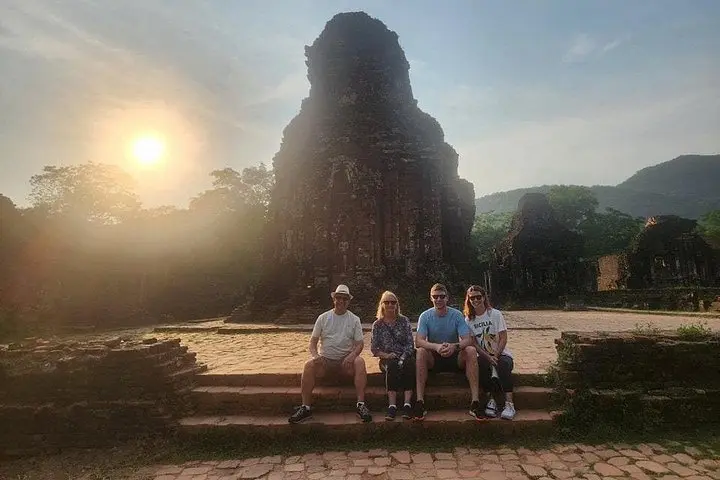
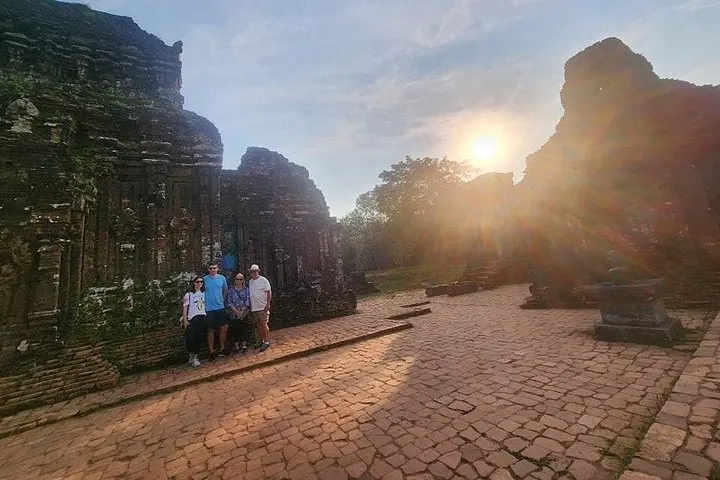
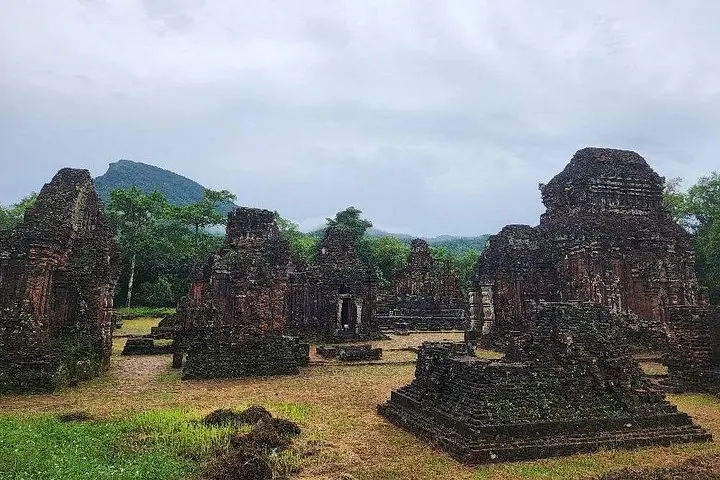
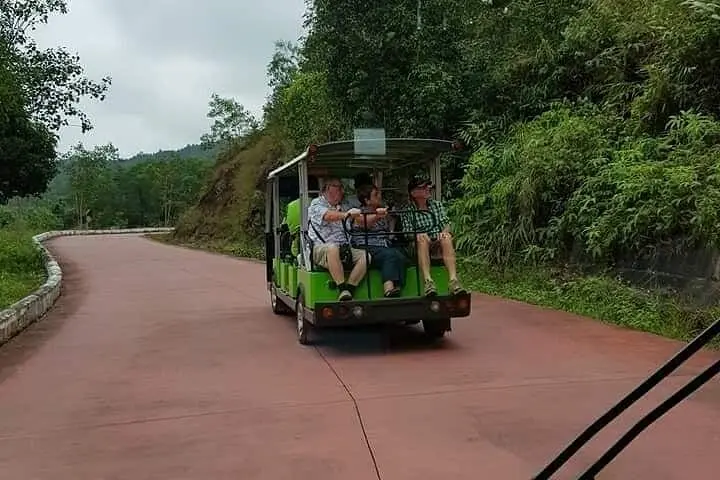
The bus pulls off Vietnam’s coastal highway before the sky is fully awake and a cool hush hangs over the valley. Mist threads between low jungle ribs and the ruined brick towers throw long, exacting shadows as the sun lifts behind the Annamite foothills. Arriving at My Son at first light feels like stepping into a place still keeping its own calendar—quiet, patient, slightly raw.
The bus pulls off Vietnam’s coastal highway before the sky is fully awake and a cool hush hangs over the valley. Mist threads between low jungle ribs and the ruined brick towers throw long, exacting shadows as the sun lifts behind the Annamite foothills. Arriving at My Son at first light feels like stepping into a place still keeping its own calendar—quiet, patient, slightly raw.
My Son was the religious and political heart of the Champa Kingdom from roughly the 2nd to the 15th centuries. The temples are built of fired brick set without mortar; careful stone carving and stacked geometry hold structures that have survived centuries of monsoon and war. Geology matters here: a narrow valley of alluvial soil and volcanic tuff created the raw materials and shelter for the complex, while surrounding ridgelines give the site its compact, protected character.
Culturally this is Cham craft and Hindu ritual translated into central Vietnam’s landscape, with a local population that still honors elements of that past. The experience is sensory—damp earth, the smell of brush, the bite of morning light on brick—and practical: expect uneven dirt tracks, short uphill sections and shaded clearings where guide commentary brings the stones to life.
Plan for early starts, light layers, and a camera with a wide-angle lens. Wear sturdy walking shoes and bring water—the tour includes bottled water and entrance tickets, and most groups return to Hoi An or Da Nang for a relaxed breakfast. Respect the ruins: no climbing, no flash photography inside delicate chambers, and keep to marked paths to protect both the site and your footing. Sunrise here rewards patience: the valley seems to breathe with you as history quietly wakes.