THE ADVENTURE COLLECTIVE® · Independent discovery and booking for outdoor travel

Start before sunrise to catch the temples in soft light and avoid the crowds. This private My Son tour pairs quiet exploration with expert interpretation of Cham history and temple construction.
Start before sunrise to catch the temples in soft light and avoid the crowds. This private My Son tour pairs quiet exploration with expert interpretation of Cham history and temple construction.
Dawn slices through the valley at My Son, turning red-brick towers into silhouettes against a humid sky. The air smells of wet soil and tropical leaf litter; birds punctuate the quiet as a private van threads a narrow road toward the archaeological park. Arriving before the day-trippers means light that flatters bas‑reliefs and empty paths that allow time to study carved lintels.
Verified experiences and guided adventures in the surrounding area.
Operated by My Son Tours · Duy Xuyen, Quang Nam
Dawn slices through the valley at My Son, turning red-brick towers into silhouettes against a humid sky. The air smells of wet soil and tropical leaf litter; birds punctuate the quiet as a private van threads a narrow road toward the archaeological park. Arriving before the day-trippers means light that flatters bas‑reliefs and empty paths that allow time to study carved lintels.
My Son was the religious heart of the Champa kingdom from roughly the 4th to the 13th century. Set in a river valley framed by low karst hills, the site’s red brick towers were built with a precise interlocking technique—no mortar—reflecting a lost engineering craft and Hindu-Buddhist ritual life now interpreted by onsite guides.
Geology looms in subtle ways: limestone outcrops hem the valley, feeding humid microclimates that keep the ruins mottled with moss and vine. Local culture remains alive in nearby villages where Cham-descended communities preserve language, crafts, and festivals linked to these temples.
Practical considerations: arrive at sunrise to avoid heat and crowds; wear sturdy shoes for uneven stones and short trails between temple groups; bring water and a lightweight rain layer—sudden tropical showers are common. Photography rewards patience: low light, side-lit carvings, and steam rising from paddy fields create strong compositions. Respect restricted areas and follow guide directions—conservation is enforced to protect fragile masonry.
A private, early start offers time to learn construction theories, linger at favorite towers, and enjoy the valley’s quiet before busloads arrive—an efficient, contemplative visit that balances cultural discovery with simple logistical planning.
Yes—this tour typically includes entrance fees to My Son as noted in the booking details.
The itinerary usually allows about 90 minutes at the archaeological park within a 4‑hour round trip tour.
Access is limited; terrain is uneven with steps and compacted dirt—travellers with mobility concerns should check with the operator beforehand.
Drone use is generally restricted inside the UNESCO site—ask your guide and secure any required permissions in advance.
My Son Tours operates guided outdoor trips and adventures with an emphasis on safety, stewardship, and memorable experiences.
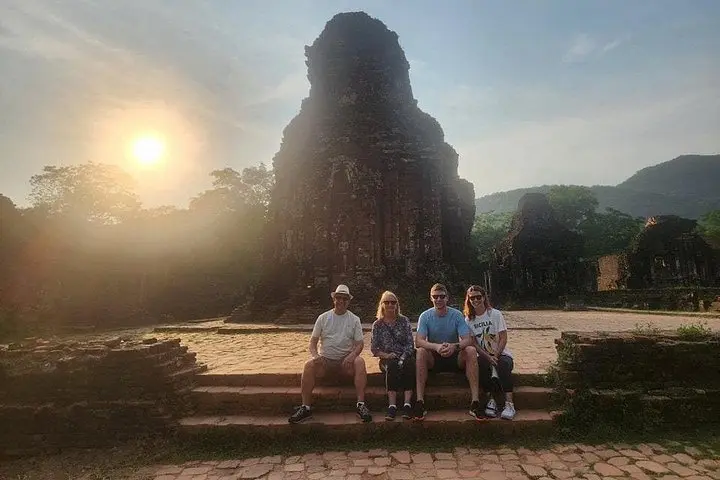
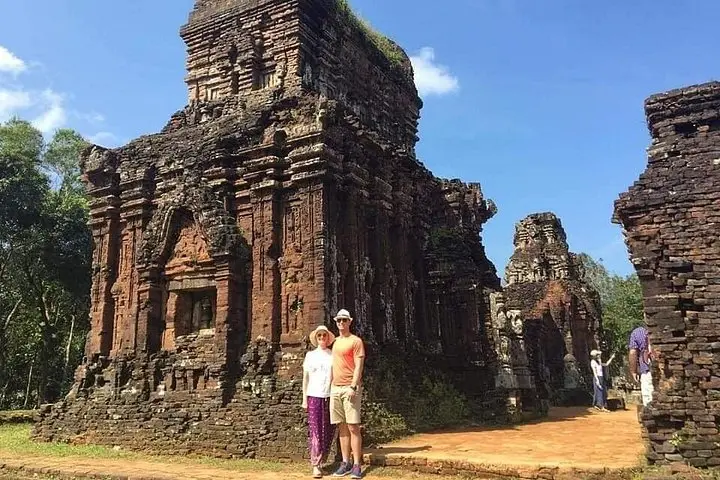

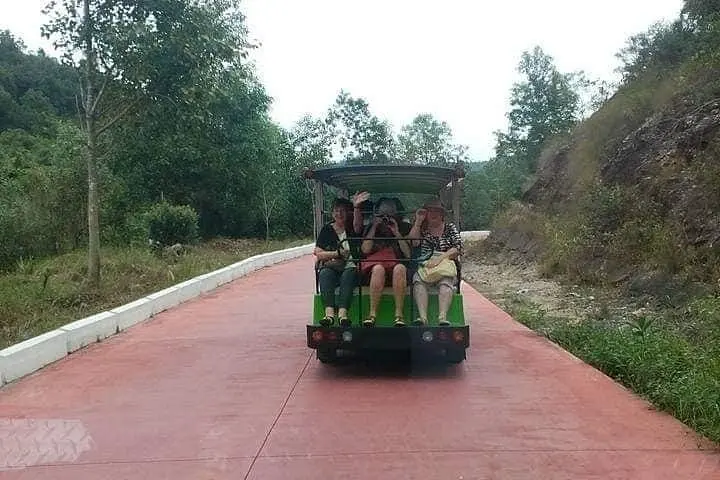
Dawn slices through the valley at My Son, turning red-brick towers into silhouettes against a humid sky. The air smells of wet soil and tropical leaf litter; birds punctuate the quiet as a private van threads a narrow road toward the archaeological park. Arriving before the day-trippers means light that flatters bas‑reliefs and empty paths that allow time to study carved lintels.
Dawn slices through the valley at My Son, turning red-brick towers into silhouettes against a humid sky. The air smells of wet soil and tropical leaf litter; birds punctuate the quiet as a private van threads a narrow road toward the archaeological park. Arriving before the day-trippers means light that flatters bas‑reliefs and empty paths that allow time to study carved lintels.
My Son was the religious heart of the Champa kingdom from roughly the 4th to the 13th century. Set in a river valley framed by low karst hills, the site’s red brick towers were built with a precise interlocking technique—no mortar—reflecting a lost engineering craft and Hindu-Buddhist ritual life now interpreted by onsite guides.
Geology looms in subtle ways: limestone outcrops hem the valley, feeding humid microclimates that keep the ruins mottled with moss and vine. Local culture remains alive in nearby villages where Cham-descended communities preserve language, crafts, and festivals linked to these temples.
Practical considerations: arrive at sunrise to avoid heat and crowds; wear sturdy shoes for uneven stones and short trails between temple groups; bring water and a lightweight rain layer—sudden tropical showers are common. Photography rewards patience: low light, side-lit carvings, and steam rising from paddy fields create strong compositions. Respect restricted areas and follow guide directions—conservation is enforced to protect fragile masonry.
A private, early start offers time to learn construction theories, linger at favorite towers, and enjoy the valley’s quiet before busloads arrive—an efficient, contemplative visit that balances cultural discovery with simple logistical planning.