THE ADVENTURE COLLECTIVE® · Independent discovery and booking for outdoor travel

Spend a day moving from the temple ruins of My Son to Thanh Ha pottery, Tra Que vegetable gardens and the basket-boat channels of Cam Thanh. This private tour blends Cham history, hands-on craft and rural river life into an 8–9 hour countryside immersion.
Spend a day moving from the temple ruins of My Son to Thanh Ha pottery, Tra Que vegetable gardens and the basket-boat channels of Cam Thanh. This private tour blends Cham history, hands-on craft and rural river life into an 8–9 hour countryside immersion.
Morning light slides over a low valley of ruined red brick towers as the traveler arrives at My Son, the abandoned heart of the Cham kingdom. Dust from the access road rises; guides gesture toward carved lintels and collapsed sanctuaries while cicadas and distant river calls mark time.
Verified experiences and guided adventures in the surrounding area.
Operated by Danang Private Taxi · Hoi An, Quang Nam
Morning light slides over a low valley of ruined red brick towers as the traveler arrives at My Son, the abandoned heart of the Cham kingdom. Dust from the access road rises; guides gesture toward carved lintels and collapsed sanctuaries while cicadas and distant river calls mark time.
My Son sits in a volcanic valley that supported an independent South-East Asian polity from the 2nd–15th centuries; the temples were built with baked bricks and a mortar-free technique that still invites study. The day moves from archaeology to hands-on craft: the earthen smell of Thanh Ha pottery, the rhythm of shaping clay, then the sharp green tang of Tra Que’s vegetable beds where villagers coax fertile sand and seaweed into organic fertilizer.
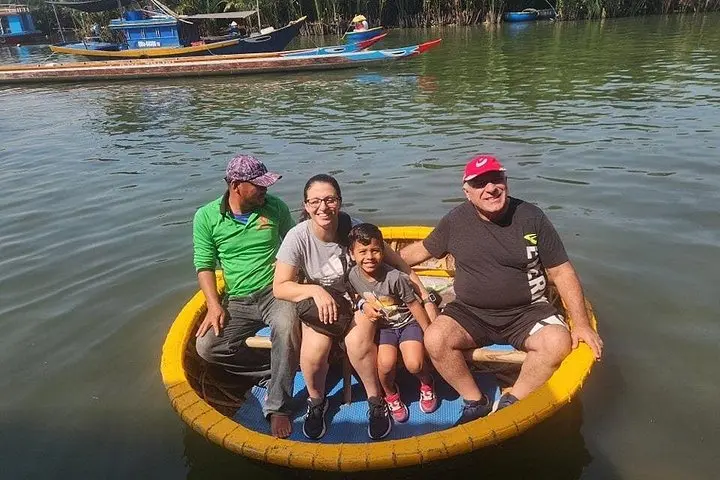
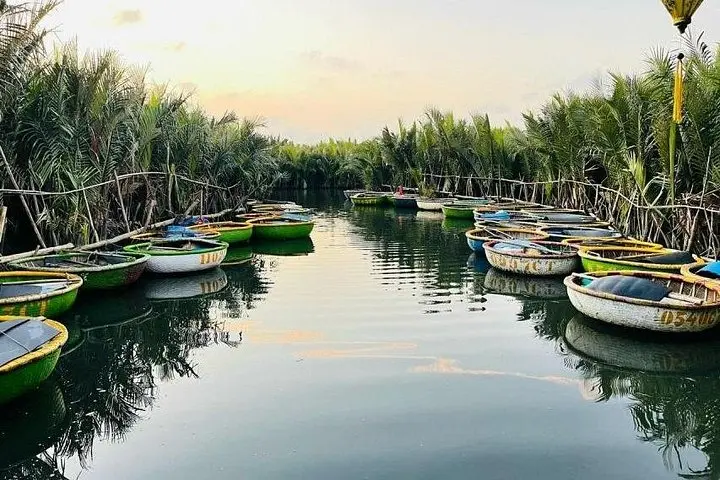
Later, Cam Thanh’s water coconut jungle reclaims the coast—round basket boats skirt braided mangrove channels, and fishermen show how crab traps and casting nets still feed Hoi An’s tables. The tour stitches culture, geology and rural life into a single, long day: temples and colonial scars, tidal soils and traditional farming.
Practical guidance: expect 8–9 hours with short walks on uneven ground, a buggy ride inside My Son, and wet mud at Tra Que. Bring sun protection, a light rain shell, closed-toe shoes that can get muddy, and a small daypack for camera, water, and cash for pottery or tips. Plan mornings for My Son before heat or afternoon rains; modest dress is required in temple areas. This itinerary pairs cultural depth with tactile, low-impact activities—good for travelers with moderate fitness and curiosity for how landscapes shape livelihoods.
This private tour runs about 8–9 hours and includes private transport, English-speaking guide, entrance fees, lunch, bottled water and activity fees like basket boat and pottery session.
Yes, but children should be supervised and able to sit steadily; life vests are typically provided—confirm at booking if you need infant-specific gear.
See previous answer
Local restaurants can often accommodate common dietary needs with advance notice—list restrictions when you book the tour.
Danang Private Taxi operates guided outdoor trips and adventures with an emphasis on safety, stewardship, and memorable experiences.
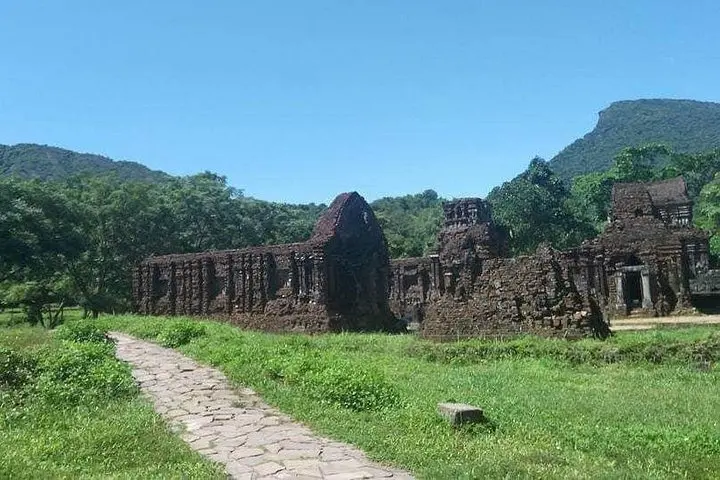
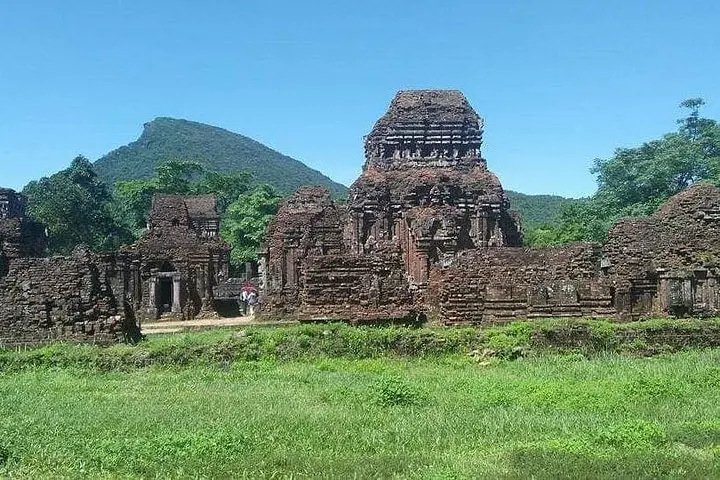
Morning light slides over a low valley of ruined red brick towers as the traveler arrives at My Son, the abandoned heart of the Cham kingdom. Dust from the access road rises; guides gesture toward carved lintels and collapsed sanctuaries while cicadas and distant river calls mark time.
Morning light slides over a low valley of ruined red brick towers as the traveler arrives at My Son, the abandoned heart of the Cham kingdom. Dust from the access road rises; guides gesture toward carved lintels and collapsed sanctuaries while cicadas and distant river calls mark time.
My Son sits in a volcanic valley that supported an independent South-East Asian polity from the 2nd–15th centuries; the temples were built with baked bricks and a mortar-free technique that still invites study. The day moves from archaeology to hands-on craft: the earthen smell of Thanh Ha pottery, the rhythm of shaping clay, then the sharp green tang of Tra Que’s vegetable beds where villagers coax fertile sand and seaweed into organic fertilizer.
Later, Cam Thanh’s water coconut jungle reclaims the coast—round basket boats skirt braided mangrove channels, and fishermen show how crab traps and casting nets still feed Hoi An’s tables. The tour stitches culture, geology and rural life into a single, long day: temples and colonial scars, tidal soils and traditional farming.
Practical guidance: expect 8–9 hours with short walks on uneven ground, a buggy ride inside My Son, and wet mud at Tra Que. Bring sun protection, a light rain shell, closed-toe shoes that can get muddy, and a small daypack for camera, water, and cash for pottery or tips. Plan mornings for My Son before heat or afternoon rains; modest dress is required in temple areas. This itinerary pairs cultural depth with tactile, low-impact activities—good for travelers with moderate fitness and curiosity for how landscapes shape livelihoods.