THE ADVENTURE COLLECTIVE® · Independent discovery and booking for outdoor travel

Explore Muscat’s highlights in a focused half-day: the Sultan Qaboos Grand Mosque, Bait Al Zubair museum, Al Alam Palace and the Portuguese forts. This private tour pairs short walks with coastal drives and local context—ideal for travelers with limited time.
Explore Muscat’s highlights in a focused half-day: the Sultan Qaboos Grand Mosque, Bait Al Zubair museum, Al Alam Palace and the Portuguese forts. This private tour pairs short walks with coastal drives and local context—ideal for travelers with limited time.
Morning light glances off pale stone as the minarets and palace gates of Old Muscat come into view. On a half-day circuit through the capital’s historic spine, travelers move from the cool marble of the Sultan Qaboos Grand Mosque to the compact alleys of the traditional souq, and finally along the harbor past Portuguese-built forts that still watch the inlet.
Verified experiences and guided adventures in the surrounding area.
Operated by Oman Day Tours · Muscat, Muscat Governorate
Morning light glances off pale stone as the minarets and palace gates of Old Muscat come into view. On a half-day circuit through the capital’s historic spine, travelers move from the cool marble of the Sultan Qaboos Grand Mosque to the compact alleys of the traditional souq, and finally along the harbor past Portuguese-built forts that still watch the inlet.
Muscat’s coastline is carved by geology and history: a narrow coastal plain that meets the Hajar foothills, where Portuguese 16th-century fortifications—Al Jalali and Al Mirani—sit opposite Al Alam Palace, the ceremonial residence of the late Sultan Qaboos. Bait Al Zubair museum offers a focused cultural primer with weapons, costumes and a recreated village that explains Oman’s seafaring and desert roots. The market stalls hum with frankincense, pashmina and small silver khanjars; the sea outside the harbor seems to dare you toward its trading past.
Practicalities shape the visit: the mosque interior is open for visitors only in the morning (note: interior access typically stops after 11:00 and photography rules vary on Fridays), and Bait Al Zubair is closed on Fridays. The tour runs about 3–5 hours by private vehicle and involves light walking on paved surfaces and steps. Respectful dress is mandatory—shoulders and knees covered—and comfortable shoes and sun protection matter more here than technical gear. Plan for heat in summer; mornings are best for photography and cooler streets. With a local driver-guide handling navigation and tickets, this half-day is compact, informative, and ideal for first-time visitors who want a concentrated introduction to Muscat’s culture, architecture, and coastal character.
Yes, interior visits are included if scheduled in the morning; access may stop after 11:00 AM and is restricted on some Fridays—dress code is enforced.
Round-trip private transfers and Bait Al Zubair admission or fees are included as noted, though some sites have separate closures (e.g., Bait Al Zubair is closed on Fridays).
Yes—infants must sit on laps and child rates apply when sharing with two paying adults; the tour involves light walking and vehicle transfers.
Guides are typically multilingual; specific language requests may incur an extra charge—confirm at booking.
Oman Day Tours operates guided outdoor trips and adventures with an emphasis on safety, stewardship, and memorable experiences.


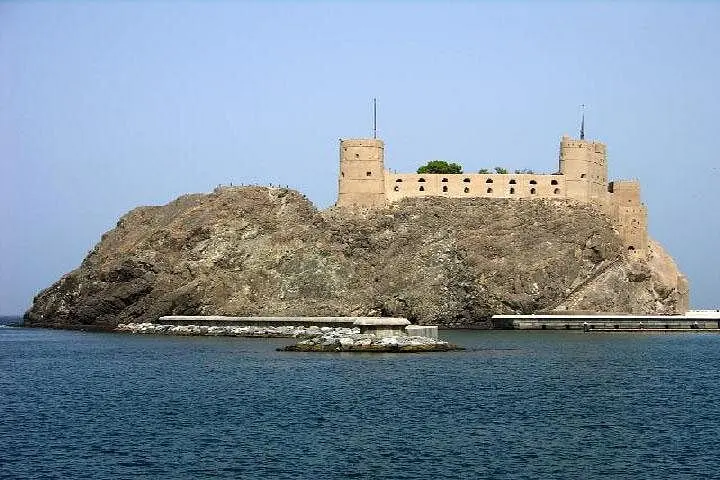

Morning light glances off pale stone as the minarets and palace gates of Old Muscat come into view. On a half-day circuit through the capital’s historic spine, travelers move from the cool marble of the Sultan Qaboos Grand Mosque to the compact alleys of the traditional souq, and finally along the harbor past Portuguese-built forts that still watch the inlet.
Morning light glances off pale stone as the minarets and palace gates of Old Muscat come into view. On a half-day circuit through the capital’s historic spine, travelers move from the cool marble of the Sultan Qaboos Grand Mosque to the compact alleys of the traditional souq, and finally along the harbor past Portuguese-built forts that still watch the inlet.
Muscat’s coastline is carved by geology and history: a narrow coastal plain that meets the Hajar foothills, where Portuguese 16th-century fortifications—Al Jalali and Al Mirani—sit opposite Al Alam Palace, the ceremonial residence of the late Sultan Qaboos. Bait Al Zubair museum offers a focused cultural primer with weapons, costumes and a recreated village that explains Oman’s seafaring and desert roots. The market stalls hum with frankincense, pashmina and small silver khanjars; the sea outside the harbor seems to dare you toward its trading past.
Practicalities shape the visit: the mosque interior is open for visitors only in the morning (note: interior access typically stops after 11:00 and photography rules vary on Fridays), and Bait Al Zubair is closed on Fridays. The tour runs about 3–5 hours by private vehicle and involves light walking on paved surfaces and steps. Respectful dress is mandatory—shoulders and knees covered—and comfortable shoes and sun protection matter more here than technical gear. Plan for heat in summer; mornings are best for photography and cooler streets. With a local driver-guide handling navigation and tickets, this half-day is compact, informative, and ideal for first-time visitors who want a concentrated introduction to Muscat’s culture, architecture, and coastal character.