THE ADVENTURE COLLECTIVE® · Independent discovery and booking for outdoor travel

Experience a sunrise ridge walk from Nagarkot, descending through Tamang and Newar villages to the ancient Changu Narayan Temple. This private day hike mixes Himalayan panoramas, living culture, and manageable terrain for adventurous day-trippers.
Experience a sunrise ridge walk from Nagarkot, descending through Tamang and Newar villages to the ancient Changu Narayan Temple. This private day hike mixes Himalayan panoramas, living culture, and manageable terrain for adventurous day-trippers.
Before dawn, the ridge at Nagarkot pries open the sky: a pale band of light pushes at sleeping peaks and the air tastes like cold tin. Hikers leave the roadside hotels in a private transfer, climbing into a landscape of terraced fields and scattered Tamang villages where prayer flags snap like small, colorful voices.
Verified experiences and guided adventures in the surrounding area.
Before dawn, the ridge at Nagarkot pries open the sky: a pale band of light pushes at sleeping peaks and the air tastes like cold tin. Hikers leave the roadside hotels in a private transfer, climbing into a landscape of terraced fields and scattered Tamang villages where prayer flags snap like small, colorful voices.
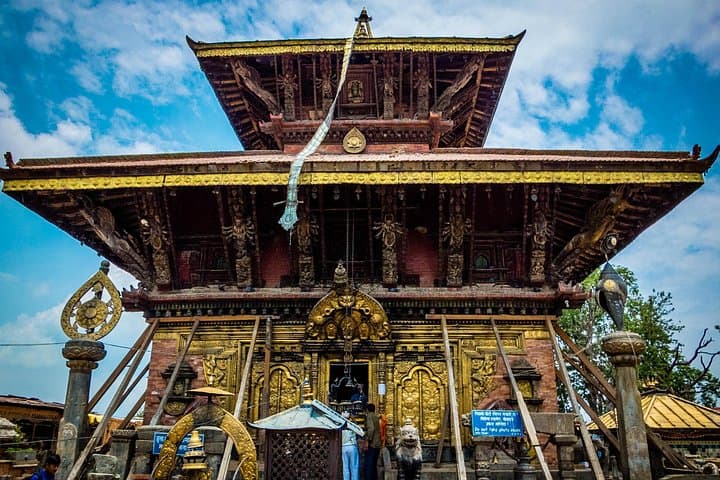
The route threads from Nagarkot (approx. 2,175 m) down toward the Kathmandu Valley and the 2nd-century Changu Narayan Temple, a UNESCO-listed shrine dedicated to Vishnu. Geologically, the trail sits on the rain-washed eastern rim of the valley—soft loess, compacted terraces and occasional paved switchbacks—offering views of the high Annapurna–Langtang skyline to the northwest on clear days.
Culture is constant: stone farmhouse walls, mani stones, and houses painted with Newar motifs. Locals—Tamang and Newar communities—tend cattle, carry woven baskets and will often exchange a nod. Changu Narayan’s carved stone reliefs recall the Lichhavi era and provide an architectural counterpoint to the rural walk.
Practical guidance: expect roughly 8–12 km of walking with a net descent of 400–700 m depending on route, mostly uneven trails and stone steps; plan for 4–5 hours of moving time within a 6-hour door-to-door schedule. Wear sturdy hiking shoes, layer for changing temperatures between ridge and valley, carry 1–2 liters of water, and bring small cash for tea in village stalls. Aim for early starts in spring and autumn for the clearest mountain views; monsoon months make paths slippery. Respect local customs at temple sites and pack out any waste—this landscape responds quickly to care or neglect.
Most tours include private transfer from central Kathmandu hotels; the drive is 30–60 minutes depending on traffic and your starting point.
No special trekking permit is required for this day hike; standard temple donation etiquette applies at Changu Narayan.
Expect about 8–12 km with a general net descent of roughly 400–700 m depending on the exact route taken.
A guide enhances cultural insight and navigation on side trails, and private guided transfers are typically included in organized day hikes.
Before dawn, the ridge at Nagarkot pries open the sky: a pale band of light pushes at sleeping peaks and the air tastes like cold tin. Hikers leave the roadside hotels in a private transfer, climbing into a landscape of terraced fields and scattered Tamang villages where prayer flags snap like small, colorful voices.
Before dawn, the ridge at Nagarkot pries open the sky: a pale band of light pushes at sleeping peaks and the air tastes like cold tin. Hikers leave the roadside hotels in a private transfer, climbing into a landscape of terraced fields and scattered Tamang villages where prayer flags snap like small, colorful voices.
The route threads from Nagarkot (approx. 2,175 m) down toward the Kathmandu Valley and the 2nd-century Changu Narayan Temple, a UNESCO-listed shrine dedicated to Vishnu. Geologically, the trail sits on the rain-washed eastern rim of the valley—soft loess, compacted terraces and occasional paved switchbacks—offering views of the high Annapurna–Langtang skyline to the northwest on clear days.
Culture is constant: stone farmhouse walls, mani stones, and houses painted with Newar motifs. Locals—Tamang and Newar communities—tend cattle, carry woven baskets and will often exchange a nod. Changu Narayan’s carved stone reliefs recall the Lichhavi era and provide an architectural counterpoint to the rural walk.
Practical guidance: expect roughly 8–12 km of walking with a net descent of 400–700 m depending on route, mostly uneven trails and stone steps; plan for 4–5 hours of moving time within a 6-hour door-to-door schedule. Wear sturdy hiking shoes, layer for changing temperatures between ridge and valley, carry 1–2 liters of water, and bring small cash for tea in village stalls. Aim for early starts in spring and autumn for the clearest mountain views; monsoon months make paths slippery. Respect local customs at temple sites and pack out any waste—this landscape responds quickly to care or neglect.