THE ADVENTURE COLLECTIVE® · Independent discovery and booking for outdoor travel

A one-day ridge-to-temple hike from Nagarkot to Changunarayan offers sweeping Himalayan views, village trails and an ancient UNESCO-linked temple. Expect mixed terrain, cultural encounters and a moderate descent across terraced fields.
A one-day ridge-to-temple hike from Nagarkot to Changunarayan offers sweeping Himalayan views, village trails and an ancient UNESCO-linked temple. Expect mixed terrain, cultural encounters and a moderate descent across terraced fields.
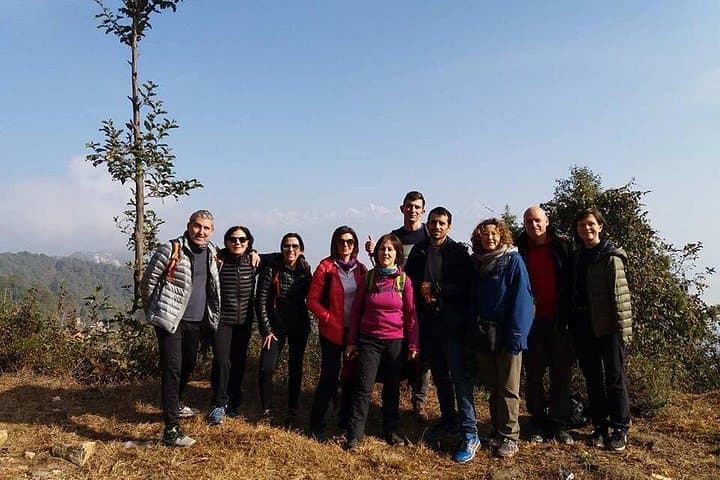
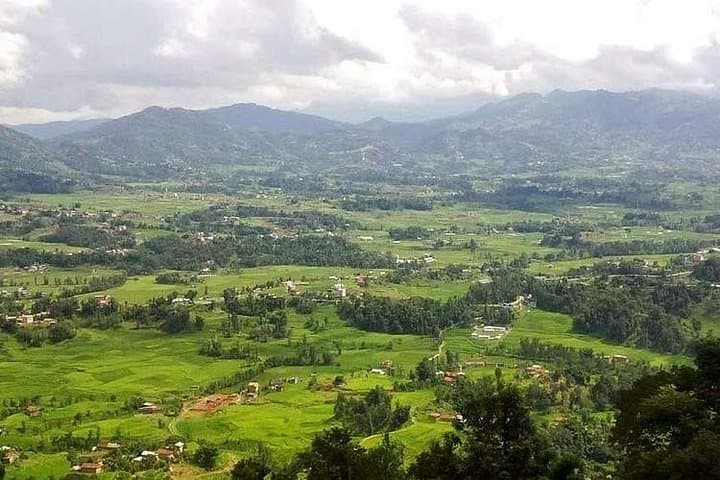
Morning light on the Kathmandu Valley slices across paddy fields as the van climbs toward Nagarkot, a hill station at roughly 2,100 m where the Himalaya first unfurl themselves on the horizon.
Verified experiences and guided adventures in the surrounding area.
Operated by Himalayan Aster Treks Tours P.Ltd. · Kathmandu, Bagmati Province
Morning light on the Kathmandu Valley slices across paddy fields as the van climbs toward Nagarkot, a hill station at roughly 2,100 m where the Himalaya first unfurl themselves on the horizon.
From the ridge the trail drops through terraces and quiet villages, the path alternating between packed earth, stone stairways and narrow farm tracks. The landscape shifts quickly: pine and rhododendron give way to mustard fields and mud-brick courtyards, while the wind across the ridge seems to push you forward toward the centuries-old Changunarayan temple.
Changunarayan sits on a low hill near Bhaktapur; the temple complex dates to the 4th–6th centuries CE and is one of Nepal’s oldest Hindu shrines, carved stone and tiered roofs that hint at the Kathmandu Valley’s layered history. Geologically, the route crosses young sedimentary soils and terraced slopes cut into the valley’s alluvial fans — expect rooted steps and occasional loose scree where erosion exposes bedrock.
Along the way you’ll encounter Newar villages where daily life follows agricultural rhythms unchanged by proximity to the city: water buffaloes in the fields, women carrying bundles, prayer flags snapping above shrines.
Practical guidance: this day hike is moderate — roughly 8–12 km depending on routing with a net descent of several hundred meters — so wear sturdy footwear, carry 2–3 liters of water, and pack a light insulating layer for winds on the ridge. Start mid-morning to avoid pre-dawn chill, and leave space for a relaxed lunch at Changunarayan before the return drive to Kathmandu in the afternoon.
The walking portion is typically 3–5 hours depending on pace and route, covering about 8–12 km with mixed terrain and a general descent toward Changunarayan.
Yes, if you have moderate fitness and experience with uneven trails; guides keep the pace steady and there are frequent village stopping points.
Typical inclusions are hotel pickup within Kathmandu ring road, private vehicle transfers, a professional English-speaking guide, and lunch as listed by the operator.
Nagarkot sits around 2,100 m which can cause mild symptoms for some; allow a day in Kathmandu to adjust and avoid overexertion early in the hike.
Himalayan Aster Treks Tours P.Ltd. operates guided outdoor trips and adventures with an emphasis on safety, stewardship, and memorable experiences.
Morning light on the Kathmandu Valley slices across paddy fields as the van climbs toward Nagarkot, a hill station at roughly 2,100 m where the Himalaya first unfurl themselves on the horizon.
Morning light on the Kathmandu Valley slices across paddy fields as the van climbs toward Nagarkot, a hill station at roughly 2,100 m where the Himalaya first unfurl themselves on the horizon.
From the ridge the trail drops through terraces and quiet villages, the path alternating between packed earth, stone stairways and narrow farm tracks. The landscape shifts quickly: pine and rhododendron give way to mustard fields and mud-brick courtyards, while the wind across the ridge seems to push you forward toward the centuries-old Changunarayan temple.
Changunarayan sits on a low hill near Bhaktapur; the temple complex dates to the 4th–6th centuries CE and is one of Nepal’s oldest Hindu shrines, carved stone and tiered roofs that hint at the Kathmandu Valley’s layered history. Geologically, the route crosses young sedimentary soils and terraced slopes cut into the valley’s alluvial fans — expect rooted steps and occasional loose scree where erosion exposes bedrock.
Along the way you’ll encounter Newar villages where daily life follows agricultural rhythms unchanged by proximity to the city: water buffaloes in the fields, women carrying bundles, prayer flags snapping above shrines.
Practical guidance: this day hike is moderate — roughly 8–12 km depending on routing with a net descent of several hundred meters — so wear sturdy footwear, carry 2–3 liters of water, and pack a light insulating layer for winds on the ridge. Start mid-morning to avoid pre-dawn chill, and leave space for a relaxed lunch at Changunarayan before the return drive to Kathmandu in the afternoon.