THE ADVENTURE COLLECTIVE® · Independent discovery and booking for outdoor travel

Short on time but hungry for an adventure? This 4 km guided hike in Nakhon Nayok leads to a dramatic vertical boulder on a ridge — a place of local lore and ancient paintings. Expect uneven terrain, sweeping watershed views, and a compact, intermediate climb.
Short on time but hungry for an adventure? This 4 km guided hike in Nakhon Nayok leads to a dramatic vertical boulder on a ridge — a place of local lore and ancient paintings. Expect uneven terrain, sweeping watershed views, and a compact, intermediate climb.
A humid morning in Nakhon Nayok opens with the forest inhaling fog and releasing the scent of damp earth. The trail climbs steadily through mixed dipterocarp and pine stands, leaves underfoot softening each step as the valley falls away. After a few kilometers the trees thin and a single vertical boulder stands at the ridge edge — austere, leaning toward the drop, its weathered face marked with ancient pigments.
Verified experiences and guided adventures in the surrounding area.
A humid morning in Nakhon Nayok opens with the forest inhaling fog and releasing the scent of damp earth. The trail climbs steadily through mixed dipterocarp and pine stands, leaves underfoot softening each step as the valley falls away. After a few kilometers the trees thin and a single vertical boulder stands at the ridge edge — austere, leaning toward the drop, its weathered face marked with ancient pigments.
Geologically the boulder is a remnant of older sandstone strata uplifted and eroded over millennia; the ridge offers clear views of the surrounding watershed and agricultural plains below. Locals call the site “Stonehenge” for the way the rock dominates the skyline and for the hand-painted motifs on its face, traces of ritual activity or territorial markings from past communities.
Culturally the hike connects modern visitors with a long history of human presence in central Thailand — the paintings are fragile reminders rather than complete stories. The route itself is recent, cut to give intermediate trekkers a compact, adventurous option without the long approaches of more remote national parks.
Practical guidance: expect 4 km round-trip with roughly 250 m of gain and uneven footing; the guided format means basic navigation is handled, but physical footing and weather are your responsibility. Bring at least 1.5–2 liters of water, sturdy treaded shoes, and sun protection; start early to avoid afternoon heat and thunder showers. Leave the rock art untouched and carry out all trash — the site’s value depends on quiet, respectful visitation.
The route is roughly 4 km round-trip with about 250 m of elevation gain; expect steep short pitches but no technical climbing.
Fees can vary by guide operator; the small-group guided tour typically includes access — confirm at booking for any park fees.
It's best for intermediate hikers; fit teenagers with experience on uneven terrain can manage, but very young children or those uncomfortable with exposure should sit this one out.
You can view the paintings from a short distance, but guides will instruct visitors to avoid touching or stepping on the rock to preserve the pigments.
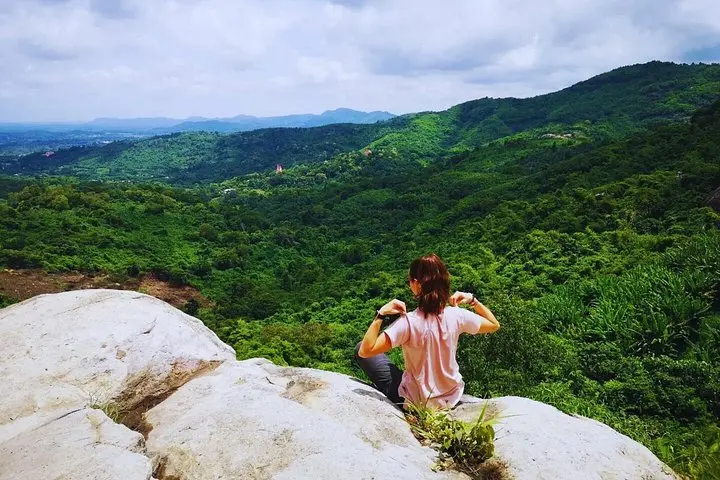
A humid morning in Nakhon Nayok opens with the forest inhaling fog and releasing the scent of damp earth. The trail climbs steadily through mixed dipterocarp and pine stands, leaves underfoot softening each step as the valley falls away. After a few kilometers the trees thin and a single vertical boulder stands at the ridge edge — austere, leaning toward the drop, its weathered face marked with ancient pigments.
A humid morning in Nakhon Nayok opens with the forest inhaling fog and releasing the scent of damp earth. The trail climbs steadily through mixed dipterocarp and pine stands, leaves underfoot softening each step as the valley falls away. After a few kilometers the trees thin and a single vertical boulder stands at the ridge edge — austere, leaning toward the drop, its weathered face marked with ancient pigments.
Geologically the boulder is a remnant of older sandstone strata uplifted and eroded over millennia; the ridge offers clear views of the surrounding watershed and agricultural plains below. Locals call the site “Stonehenge” for the way the rock dominates the skyline and for the hand-painted motifs on its face, traces of ritual activity or territorial markings from past communities.
Culturally the hike connects modern visitors with a long history of human presence in central Thailand — the paintings are fragile reminders rather than complete stories. The route itself is recent, cut to give intermediate trekkers a compact, adventurous option without the long approaches of more remote national parks.
Practical guidance: expect 4 km round-trip with roughly 250 m of gain and uneven footing; the guided format means basic navigation is handled, but physical footing and weather are your responsibility. Bring at least 1.5–2 liters of water, sturdy treaded shoes, and sun protection; start early to avoid afternoon heat and thunder showers. Leave the rock art untouched and carry out all trash — the site’s value depends on quiet, respectful visitation.