THE ADVENTURE COLLECTIVE® · Independent discovery and booking for outdoor travel

Covering Sossusvlei’s towering dunes, Swakopmund’s foggy coast, and Etosha’s waterhole drama, this five-day loop packs Namibia’s defining landscapes into a concise, lodge-based itinerary. Expect long drives, early starts for sun and wildlife, and days shaped by sand, sea, and savannah.
Covering Sossusvlei’s towering dunes, Swakopmund’s foggy coast, and Etosha’s waterhole drama, this five-day loop packs Namibia’s defining landscapes into a concise, lodge-based itinerary. Expect long drives, early starts for sun and wildlife, and days shaped by sand, sea, and savannah.
The bus eases out of Windhoek before dawn and the city’s hum gives way to a flat, ochre plain. By midmorning the horizon sharpens into the first low ridges of the Namib — a desert that moves. Sand slides like a slow current here; dunes rise and fall with a patience that dares you to match it. On day two you’ll stand on the crest of Dune 45 while the sun pries color out of the sand, a gossamer light that turns the slope from pale gold to a high, ancient red. The silence presses close, broken only by the hiss of your boots on loose grain.
Verified experiences and guided adventures in the surrounding area.
Operated by Discovery Transfer and Tours Namibia · Windhoek, Khomas
The bus eases out of Windhoek before dawn and the city’s hum gives way to a flat, ochre plain. By midmorning the horizon sharpens into the first low ridges of the Namib — a desert that moves. Sand slides like a slow current here; dunes rise and fall with a patience that dares you to match it. On day two you’ll stand on the crest of Dune 45 while the sun pries color out of the sand, a gossamer light that turns the slope from pale gold to a high, ancient red. The silence presses close, broken only by the hiss of your boots on loose grain.
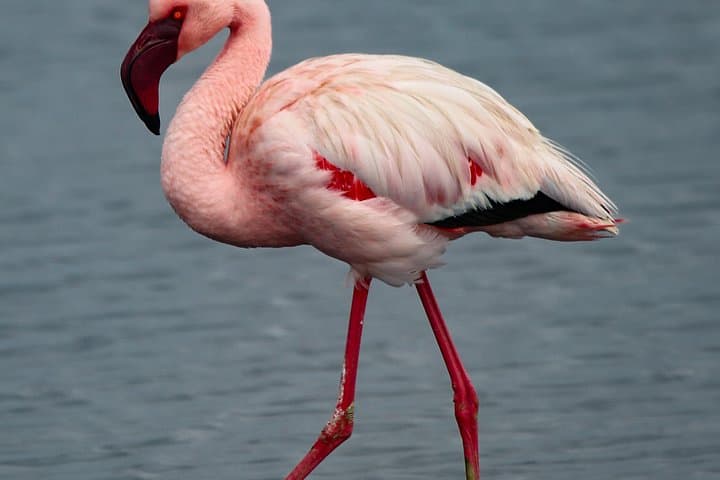
This five-day loop threads three of Namibia’s most distinct landscapes. Namib-Naukluft National Park holds Sossusvlei and Dead Vlei, where bleached camel-thorn trees sit like blackened sentries on a salt pan. Geologically the region is young: wind has been building dunes here for the last 5–10 million years, delivering sand from the Orange River along the coast and stacking it inland. Moving west to the coast, Walvis Bay and Swakopmund reveal a colder, fog-brushed ocean influenced by the cold Benguela Current — a lifeline for seabirds, flamingos, and fisheries shaped by German colonial history. The final act is Etosha National Park, an open savannah where waterholes write the daily script: predators come to hunt and herbivores arrive by compulsion.
Culturally you pass Nama and Herero country, and roadside craft markets where Okahandja wood carvers work on benches of sandalwood and mopane. Lodging ranges from rustic lodges near Sesriem to a seaside hotel in Swakopmund and a simple lodge by Etosha; each place is deliberately low-key, letting the landscape take center stage.
Practical notes: expect long drives — 4–6 hours between major stops — and early starts for best light and wildlife activity. Dune climbs are short but steep; Big Daddy is a strenuous ascent of loose sand and can take 45–90 minutes round-trip depending on pace. Bring layered clothing: desert mornings are cold, midday intense, and coastal evenings brisk. Hydration and sun protection are non-negotiable — the sun here is aggressive and water sources are managed.
The itinerary balances guided game drives and standalone exploration. In Etosha, game viewing is best at waterholes at dawn and dusk; in Sossusvlei aim for sunrise visits to avoid heat and crowds. Swakopmund offers optional activities (sandboarding, coastal cruises) if you want to trade solitude for adrenaline. For photographers, the light between 30 minutes before sunrise and two hours after is the moment to plan around.
This itinerary compresses Namibia’s scale into five days without rushing the essentials: sand that behaves like a living thing, a coastline that breathes fog, and a park where wildlife organizes the day around scarce water. It’s a compact introduction — bring stamina, respect for local rhythms, and a camera with a long lens.
Expect 4–6 hour drives between major stops; some days include shorter game drives or walking excursions on top of those transfers.
The itinerary notes admissions for Sossusvlei are included; confirm with the operator whether Etosha park fees are covered at time of booking.
Basic to moderate fitness is sufficient—dune climbs are optional but steep, and most time is spent in vehicles with short walks.
Yes, but infants must sit on laps per supplier rules; also consider long drives and early starts when traveling with young children.
Yes—sandboarding, quad biking, and boat cruises are available at extra cost and can be arranged on-site or in advance.
Bring a telephoto lens for Etosha game viewing, a wide-angle for dunes and landscapes, and protective covers for dust.
Discovery Transfer and Tours Namibia operates guided outdoor trips and adventures with an emphasis on safety, stewardship, and memorable experiences.


The bus eases out of Windhoek before dawn and the city’s hum gives way to a flat, ochre plain. By midmorning the horizon sharpens into the first low ridges of the Namib — a desert that moves. Sand slides like a slow current here; dunes rise and fall with a patience that dares you to match it. On day two you’ll stand on the crest of Dune 45 while the sun pries color out of the sand, a gossamer light that turns the slope from pale gold to a high, ancient red. The silence presses close, broken only by the hiss of your boots on loose grain.
The bus eases out of Windhoek before dawn and the city’s hum gives way to a flat, ochre plain. By midmorning the horizon sharpens into the first low ridges of the Namib — a desert that moves. Sand slides like a slow current here; dunes rise and fall with a patience that dares you to match it. On day two you’ll stand on the crest of Dune 45 while the sun pries color out of the sand, a gossamer light that turns the slope from pale gold to a high, ancient red. The silence presses close, broken only by the hiss of your boots on loose grain.
This five-day loop threads three of Namibia’s most distinct landscapes. Namib-Naukluft National Park holds Sossusvlei and Dead Vlei, where bleached camel-thorn trees sit like blackened sentries on a salt pan. Geologically the region is young: wind has been building dunes here for the last 5–10 million years, delivering sand from the Orange River along the coast and stacking it inland. Moving west to the coast, Walvis Bay and Swakopmund reveal a colder, fog-brushed ocean influenced by the cold Benguela Current — a lifeline for seabirds, flamingos, and fisheries shaped by German colonial history. The final act is Etosha National Park, an open savannah where waterholes write the daily script: predators come to hunt and herbivores arrive by compulsion.
Culturally you pass Nama and Herero country, and roadside craft markets where Okahandja wood carvers work on benches of sandalwood and mopane. Lodging ranges from rustic lodges near Sesriem to a seaside hotel in Swakopmund and a simple lodge by Etosha; each place is deliberately low-key, letting the landscape take center stage.
Practical notes: expect long drives — 4–6 hours between major stops — and early starts for best light and wildlife activity. Dune climbs are short but steep; Big Daddy is a strenuous ascent of loose sand and can take 45–90 minutes round-trip depending on pace. Bring layered clothing: desert mornings are cold, midday intense, and coastal evenings brisk. Hydration and sun protection are non-negotiable — the sun here is aggressive and water sources are managed.
The itinerary balances guided game drives and standalone exploration. In Etosha, game viewing is best at waterholes at dawn and dusk; in Sossusvlei aim for sunrise visits to avoid heat and crowds. Swakopmund offers optional activities (sandboarding, coastal cruises) if you want to trade solitude for adrenaline. For photographers, the light between 30 minutes before sunrise and two hours after is the moment to plan around.
This itinerary compresses Namibia’s scale into five days without rushing the essentials: sand that behaves like a living thing, a coastline that breathes fog, and a park where wildlife organizes the day around scarce water. It’s a compact introduction — bring stamina, respect for local rhythms, and a camera with a long lens.