THE ADVENTURE COLLECTIVE® · Independent discovery and booking for outdoor travel

Escape Kathmandu for a half-day pilgrimage through Himalayan foothills: visit the serene Namo Buddha stupa, explore Thrangu Tashi Yangtse Monastery, and see the towering Kailashnath Mahadev statue with sweeping valley views.
Escape Kathmandu for a half-day pilgrimage through Himalayan foothills: visit the serene Namo Buddha stupa, explore Thrangu Tashi Yangtse Monastery, and see the towering Kailashnath Mahadev statue with sweeping valley views.
A narrow road climbs out of Kathmandu and, within an hour, the city’s noise thins into rolling hills and pine-scented air. At Namo Buddha the path opens onto a bluff where prayer flags snap like conversation across the valley; monks move with deliberate calm and the white stupa crowns the site where legend says a prince offered himself to a starving tigress.
Verified experiences and guided adventures in the surrounding area.
Operated by Travhill.com Pvt. Ltd. · Namo Buddha, Bagmati Province
A narrow road climbs out of Kathmandu and, within an hour, the city’s noise thins into rolling hills and pine-scented air. At Namo Buddha the path opens onto a bluff where prayer flags snap like conversation across the valley; monks move with deliberate calm and the white stupa crowns the site where legend says a prince offered himself to a starving tigress.
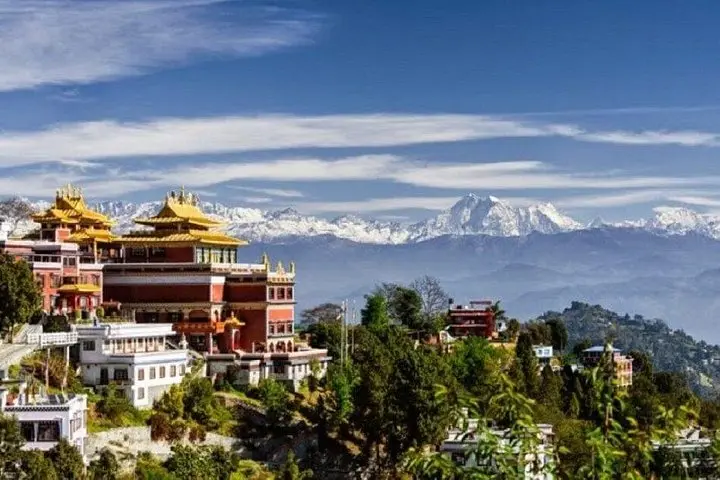
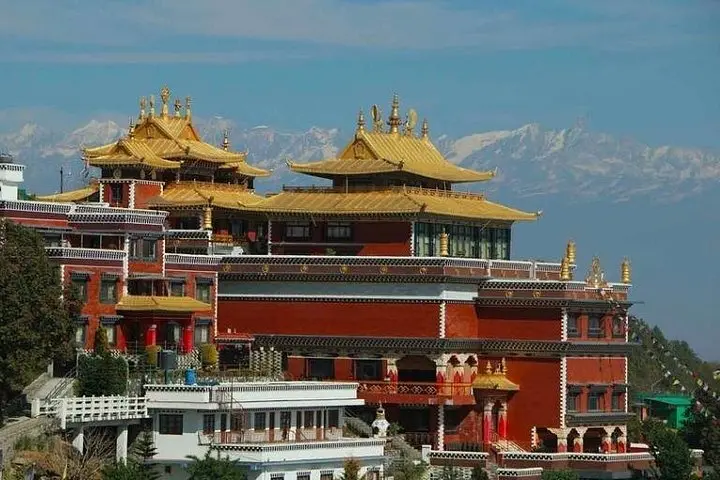
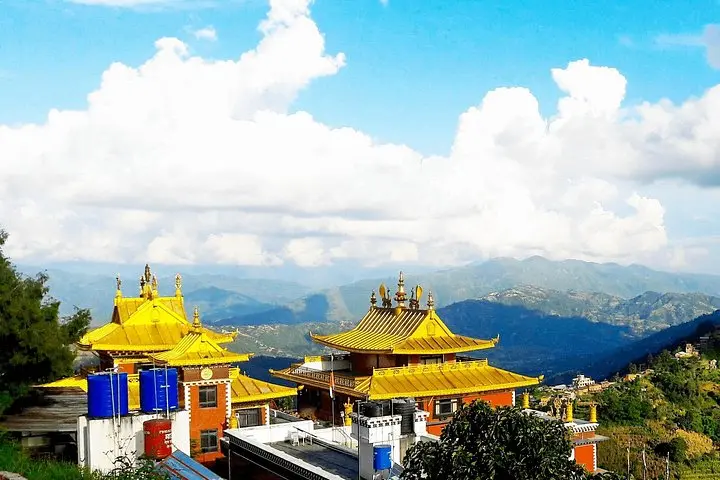
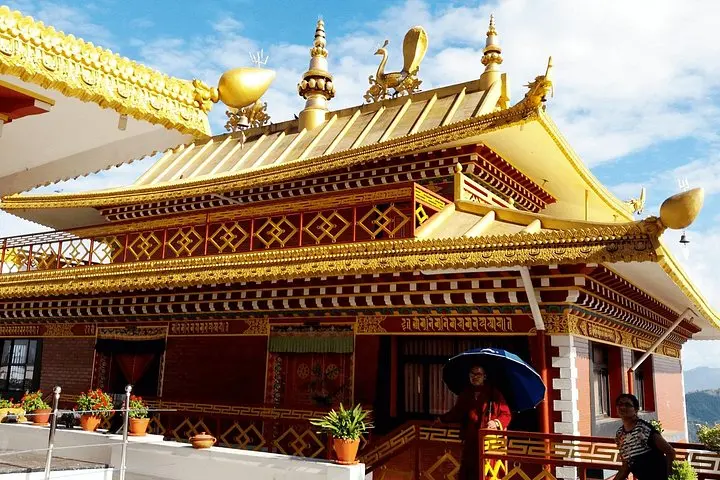
The area is part of the lower Himalayan foothills — gentle ridgelines, terraced fields and mixed forest — which have supported Newar and Tamang communities for centuries. Thrangu Tashi Yangtse Monastery is a modern Tibetan Buddhist center perched on a high knoll with painted halls and wide courtyards; nearby, the Kailashnath Mahadev statue rises on a different ridge, a 143-foot depiction of Shiva visible from miles away and a modern landmark in Nepal’s religious landscape.
Expect easy walking between viewpoints and courtyards, many steps at the monastery, and short village trails through Manegaun. The light in the late afternoon sharpens Himalayan silhouettes; on clear days the higher peaks cut into the horizon beyond the valley.
Practicalities: the half-day itinerary runs about 4–5 hours from Kathmandu by AC vehicle, suitable for most fitness levels but bring modest clothing for shrine etiquette. Carry water, small change for donations, and a camera with extra battery — some areas restrict flash or photography inside temples. Respect shoe rules at prayer halls, follow local guidance from guides, and plan for variable weather: layers and sun protection make the visit comfortable year-round.
The tour lasts about 4–5 hours door-to-door by air-conditioned vehicle depending on traffic and pickup location.
Most visits are free, though small donations or voluntary contributions to monasteries are customary and appreciated.
Yes—walking distances are short and the tour is rated easy, but there are steps at the monastery that may challenge those with limited mobility.
Photography is usually allowed in exterior areas; inside shrines or during rituals it may be restricted—always ask the guide or a monastery attendant first.
Travhill.com Pvt. Ltd. operates guided outdoor trips and adventures with an emphasis on safety, stewardship, and memorable experiences.
A narrow road climbs out of Kathmandu and, within an hour, the city’s noise thins into rolling hills and pine-scented air. At Namo Buddha the path opens onto a bluff where prayer flags snap like conversation across the valley; monks move with deliberate calm and the white stupa crowns the site where legend says a prince offered himself to a starving tigress.
A narrow road climbs out of Kathmandu and, within an hour, the city’s noise thins into rolling hills and pine-scented air. At Namo Buddha the path opens onto a bluff where prayer flags snap like conversation across the valley; monks move with deliberate calm and the white stupa crowns the site where legend says a prince offered himself to a starving tigress.
The area is part of the lower Himalayan foothills — gentle ridgelines, terraced fields and mixed forest — which have supported Newar and Tamang communities for centuries. Thrangu Tashi Yangtse Monastery is a modern Tibetan Buddhist center perched on a high knoll with painted halls and wide courtyards; nearby, the Kailashnath Mahadev statue rises on a different ridge, a 143-foot depiction of Shiva visible from miles away and a modern landmark in Nepal’s religious landscape.
Expect easy walking between viewpoints and courtyards, many steps at the monastery, and short village trails through Manegaun. The light in the late afternoon sharpens Himalayan silhouettes; on clear days the higher peaks cut into the horizon beyond the valley.
Practicalities: the half-day itinerary runs about 4–5 hours from Kathmandu by AC vehicle, suitable for most fitness levels but bring modest clothing for shrine etiquette. Carry water, small change for donations, and a camera with extra battery — some areas restrict flash or photography inside temples. Respect shoe rules at prayer halls, follow local guidance from guides, and plan for variable weather: layers and sun protection make the visit comfortable year-round.