THE ADVENTURE COLLECTIVE® · Independent discovery and booking for outdoor travel

Two weeks of high-mountain trekking from Fairy Meadows to Hunza link Nanga Parbat and Rakaposhi base camps. Expect meadow approaches, glacier-carved vistas, and culturally rich mountain villages—prepare for altitude, variable weather, and long jeep transfers.
Two weeks of high-mountain trekking from Fairy Meadows to Hunza link Nanga Parbat and Rakaposhi base camps. Expect meadow approaches, glacier-carved vistas, and culturally rich mountain villages—prepare for altitude, variable weather, and long jeep transfers.
A thin mountain light breaks over the Raikot Bridge as jeeps bite into switchbacks and the Karakoram Highway unspools toward high valleys. By late afternoon you hike into Fairy Meadows—a grassy bench at roughly 3,300 m—where Nanga Parbat’s north face towers like a challenge daring you to climb higher.
Verified experiences and guided adventures in the surrounding area.
Operated by North Pakistan Adventure · Gilgit, Gilgit-Baltistan
A thin mountain light breaks over the Raikot Bridge as jeeps bite into switchbacks and the Karakoram Highway unspools toward high valleys. By late afternoon you hike into Fairy Meadows—a grassy bench at roughly 3,300 m—where Nanga Parbat’s north face towers like a challenge daring you to climb higher.
This itinerary threads two great ranges: the western slopes of the Himalaya around Nanga Parbat and the Karakoram ridgelines near Rakaposhi. Centuries of trade and mountain day-to-day life left stone villages, terraced orchards with apple and apricot trees, and forts like Baltit and Altit in nearby Hunza. Geologically these valleys are active: glacial action carves U-shaped basins while uplift has stacked granite and metamorphic bands into knife-edged peaks.
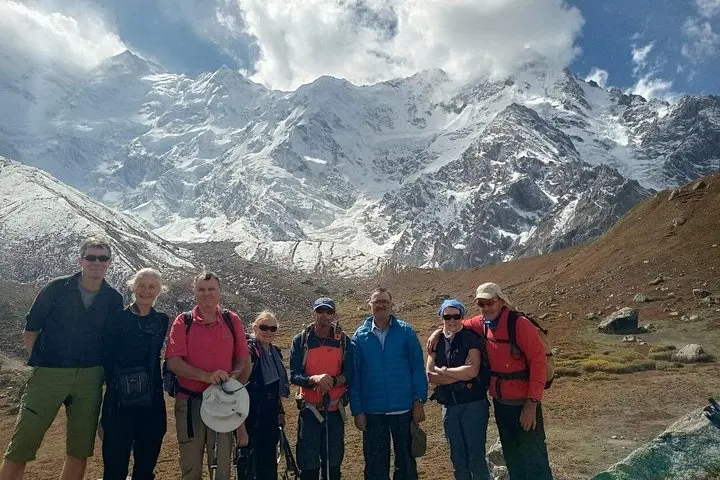
Culturally, expect warm hospitality, simple guesthouses, and local porters and muleteers who know the trails. Trek profiles are straightforward but demanding: a 2–3 hour ascent to Fairy Meadows, a 5–6 hour return trek to Nanga Parbat base camp at about 3,900 m, and shorter 2–4 hour approaches to Rakaposhi base areas (around 2,800–3,000 m).
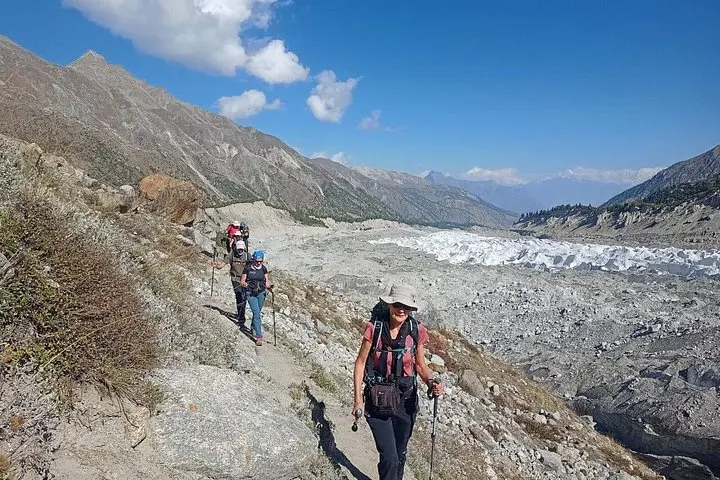
Practical guidance: pace your ascent, drink often to limit altitude effects, and pack layered clothing for strong sun and sudden storms. Footwear with firm ankle support and a flexible sole suits the mixed meadow, scree and moraine underfoot. Aim to hike early or late to avoid midday glare and use local guides for route-finding and culture briefings—this is an expedition of exposure, views and human-scale mountain life.
No technical climbing is required; trails are non-technical but can be steep and exposed—mountaineering experience is not necessary.
Highest sleeping elevations are roughly 3,300–3,900 m; altitude sickness is possible—pace yourself, hydrate, and inform guides of symptoms.
Yes—English-speaking guides accompany the trip and local porters/jeeps handle luggage on rugged road sections.
Foreign visitors must have a valid Pakistani visa; some restricted areas in Gilgit-Baltistan may require additional permits—confirm with your operator before travel.
North Pakistan Adventure operates guided outdoor trips and adventures with an emphasis on safety, stewardship, and memorable experiences.
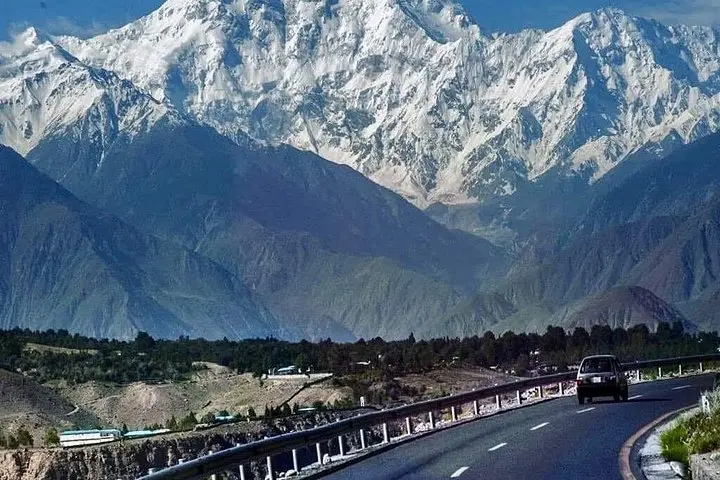
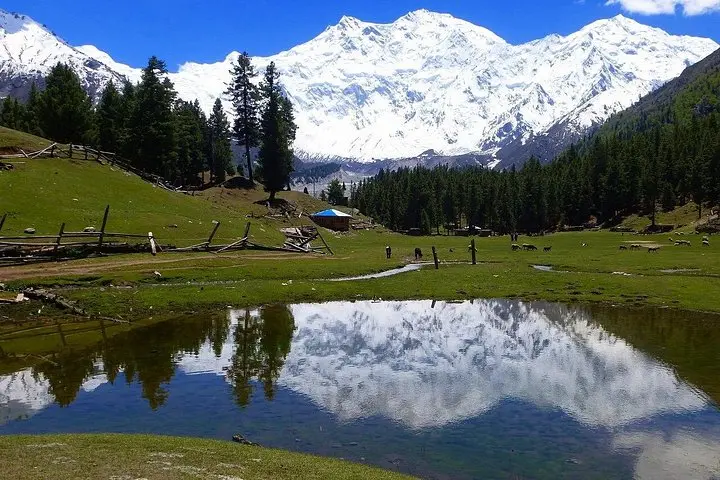
A thin mountain light breaks over the Raikot Bridge as jeeps bite into switchbacks and the Karakoram Highway unspools toward high valleys. By late afternoon you hike into Fairy Meadows—a grassy bench at roughly 3,300 m—where Nanga Parbat’s north face towers like a challenge daring you to climb higher.
A thin mountain light breaks over the Raikot Bridge as jeeps bite into switchbacks and the Karakoram Highway unspools toward high valleys. By late afternoon you hike into Fairy Meadows—a grassy bench at roughly 3,300 m—where Nanga Parbat’s north face towers like a challenge daring you to climb higher.
This itinerary threads two great ranges: the western slopes of the Himalaya around Nanga Parbat and the Karakoram ridgelines near Rakaposhi. Centuries of trade and mountain day-to-day life left stone villages, terraced orchards with apple and apricot trees, and forts like Baltit and Altit in nearby Hunza. Geologically these valleys are active: glacial action carves U-shaped basins while uplift has stacked granite and metamorphic bands into knife-edged peaks.
Culturally, expect warm hospitality, simple guesthouses, and local porters and muleteers who know the trails. Trek profiles are straightforward but demanding: a 2–3 hour ascent to Fairy Meadows, a 5–6 hour return trek to Nanga Parbat base camp at about 3,900 m, and shorter 2–4 hour approaches to Rakaposhi base areas (around 2,800–3,000 m).
Practical guidance: pace your ascent, drink often to limit altitude effects, and pack layered clothing for strong sun and sudden storms. Footwear with firm ankle support and a flexible sole suits the mixed meadow, scree and moraine underfoot. Aim to hike early or late to avoid midday glare and use local guides for route-finding and culture briefings—this is an expedition of exposure, views and human-scale mountain life.