THE ADVENTURE COLLECTIVE® · Independent discovery and booking for outdoor travel

Skip the crowds and let a local guide stitch together Nashville’s civic and musical past on this private two-hour walk. From Fort Nashborough to the Tennessee State Capitol, the route pairs live-music stops with architectural and political stories that bring downtown to life.
Skip the crowds and let a local guide stitch together Nashville’s civic and musical past on this private two-hour walk. From Fort Nashborough to the Tennessee State Capitol, the route pairs live-music stops with architectural and political stories that bring downtown to life.
The morning air on Lower Broadway tastes faintly of coffee and stage lights. You step out at the reconstructed stockade of Fort Nashborough, where wood posts once kept a handful of settlers warm against frontier nights, and the city hum begins to arrange itself like a slow chorus. A guide folds history into short, human stories—who marched through these streets, which storefronts turned into music rooms—and the sidewalks answer with the clack of shoes and the distant twang of a guitar.
Verified experiences and guided adventures in the surrounding area.
Operated by Opatrip.com USA · Nashville, Tennessee
The morning air on Lower Broadway tastes faintly of coffee and stage lights. You step out at the reconstructed stockade of Fort Nashborough, where wood posts once kept a handful of settlers warm against frontier nights, and the city hum begins to arrange itself like a slow chorus. A guide folds history into short, human stories—who marched through these streets, which storefronts turned into music rooms—and the sidewalks answer with the clack of shoes and the distant twang of a guitar.
As the tour moves from Fort Nashborough toward Printers Alley, the neighborhood sheds one era after another. Printers Alley still keeps a nightclub’s patience: the neon and narrow entrances are a map of Nashville’s after-hours life where printing presses gave way to late sets and local legends. The Downtown Presbyterian Church interrupts the music with an unexpected architectural note; its Egyptian Revival elements are a reminder that Nashville’s civic ambitions were as stylistic as they were political.
Geology here is subtle—this is river city topography, a gentle rise from the Cumberland that shaped settlement patterns and trade routes. The Tennessee State Capitol, which anchors the walk, sits on a modest elevation that made it both a literal and symbolic high point for the 19th-century town. William Strickland’s design and the surrounding marble steps carry civic stories: frontier governance, Civil War-era debates, and the long slow construction of state identity.
Culture begets sound: street performers that pop up along Broadway are part of a living audition, and the record shop stops—like the Ernest Tubb Record Shop—are living catalogs for anyone tracing the threads of country music. This private tour compresses downtown’s layers into two hours, giving space to listen to songs, stand in political shadow, and read architectural cues with a local voice.
Practical guide: meet at the Fort Nashborough entrance at 170 1st Ave N; the loop ends at the Tennessee State Capitol. Expect two hours of easy walking on mostly flat sidewalks with a few stair climbs at the Capitol. Wear comfortable shoes and bring a refillable water bottle—summer sun is direct and can be intense. Public transit and ride-shares drop you within a block; parking is available but metered.
Best for history buffs, first-time visitors, and anyone who wants a private, guided cut through Nashville’s downtown. Because the tour is private, you can ask about specific eras—Prohibition, the recording boom, or the city’s civic architecture—and linger where the music or the story draws you. Reserve morning or early evening slots to dodge midday heat and catch the city when street musicians are at their most unpredictable and compelling.
The tour lasts approximately two hours, covering Fort Nashborough, Printers Alley, Downtown Presbyterian Church, and the Tennessee State Capitol.
Meet at the entrance of Fort Nashborough (170 1st Ave N); the tour finishes at the Tennessee State Capitol.
Yes—this is an easy, low-impact walk suitable for children and seniors who can walk up to two hours with short breaks.
No—admissions to paid sites and food/drink purchases are not included; the tour fee covers the professional local guide.
Yes—because it’s private, you can request emphasis on music history, architecture, or specific local stories when you book.
For a full refund, cancel at least 24 hours before the scheduled departure; no refund within 24 hours of the tour start.
Opatrip.com USA operates guided outdoor trips and adventures with an emphasis on safety, stewardship, and memorable experiences.

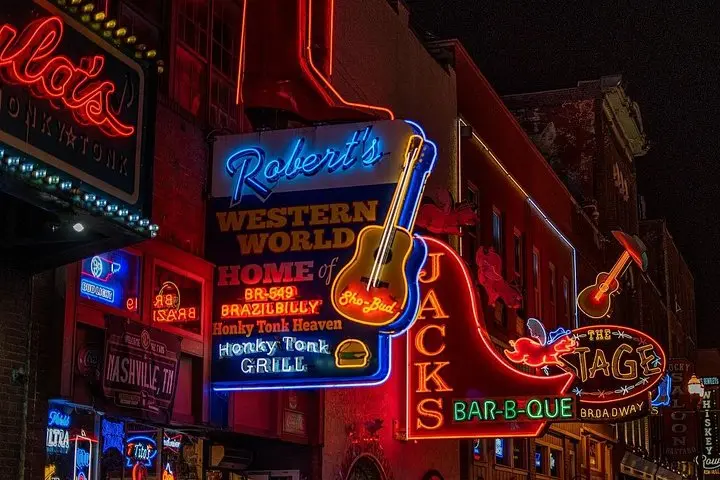


The morning air on Lower Broadway tastes faintly of coffee and stage lights. You step out at the reconstructed stockade of Fort Nashborough, where wood posts once kept a handful of settlers warm against frontier nights, and the city hum begins to arrange itself like a slow chorus. A guide folds history into short, human stories—who marched through these streets, which storefronts turned into music rooms—and the sidewalks answer with the clack of shoes and the distant twang of a guitar.
The morning air on Lower Broadway tastes faintly of coffee and stage lights. You step out at the reconstructed stockade of Fort Nashborough, where wood posts once kept a handful of settlers warm against frontier nights, and the city hum begins to arrange itself like a slow chorus. A guide folds history into short, human stories—who marched through these streets, which storefronts turned into music rooms—and the sidewalks answer with the clack of shoes and the distant twang of a guitar.
As the tour moves from Fort Nashborough toward Printers Alley, the neighborhood sheds one era after another. Printers Alley still keeps a nightclub’s patience: the neon and narrow entrances are a map of Nashville’s after-hours life where printing presses gave way to late sets and local legends. The Downtown Presbyterian Church interrupts the music with an unexpected architectural note; its Egyptian Revival elements are a reminder that Nashville’s civic ambitions were as stylistic as they were political.
Geology here is subtle—this is river city topography, a gentle rise from the Cumberland that shaped settlement patterns and trade routes. The Tennessee State Capitol, which anchors the walk, sits on a modest elevation that made it both a literal and symbolic high point for the 19th-century town. William Strickland’s design and the surrounding marble steps carry civic stories: frontier governance, Civil War-era debates, and the long slow construction of state identity.
Culture begets sound: street performers that pop up along Broadway are part of a living audition, and the record shop stops—like the Ernest Tubb Record Shop—are living catalogs for anyone tracing the threads of country music. This private tour compresses downtown’s layers into two hours, giving space to listen to songs, stand in political shadow, and read architectural cues with a local voice.
Practical guide: meet at the Fort Nashborough entrance at 170 1st Ave N; the loop ends at the Tennessee State Capitol. Expect two hours of easy walking on mostly flat sidewalks with a few stair climbs at the Capitol. Wear comfortable shoes and bring a refillable water bottle—summer sun is direct and can be intense. Public transit and ride-shares drop you within a block; parking is available but metered.
Best for history buffs, first-time visitors, and anyone who wants a private, guided cut through Nashville’s downtown. Because the tour is private, you can ask about specific eras—Prohibition, the recording boom, or the city’s civic architecture—and linger where the music or the story draws you. Reserve morning or early evening slots to dodge midday heat and catch the city when street musicians are at their most unpredictable and compelling.