THE ADVENTURE COLLECTIVE® · Independent discovery and booking for outdoor travel

Explore four floors of football history at Manchester’s National Football Museum — from the original Laws of the Game to interactive skills zones. This guide covers what to see, when to go, and practical tips for planning your visit.
Explore four floors of football history at Manchester’s National Football Museum — from the original Laws of the Game to interactive skills zones. This guide covers what to see, when to go, and practical tips for planning your visit.
A cold Manchester morning opens onto Cathedral Gardens and the squat, glass-faced museum that holds a century of English football memory. Inside, the air hums with recorded crowd noise and the humbler sounds of children booting a ball in the Play Gallery; trophies glint under focused lights and the Laws of the Game sit behind glass that has seen more debates than some referees.
Verified experiences and guided adventures in the surrounding area.
Operated by National Football Museum · Manchester, Greater Manchester
A cold Manchester morning opens onto Cathedral Gardens and the squat, glass-faced museum that holds a century of English football memory. Inside, the air hums with recorded crowd noise and the humbler sounds of children booting a ball in the Play Gallery; trophies glint under focused lights and the Laws of the Game sit behind glass that has seen more debates than some referees.
The museum sits at the heart of a city shaped by industry and spectatorship — Manchester’s Victorian mills and civic pride helped make football the working-class sport it is today. Galleries move from social history to match-day culture: the 1966 World Cup artifacts, early FA Cup silver, and community-driven displays that track how clubs anchored neighborhoods. The building itself stands amid late-20th-century urban renewal, a short walk from the Irwell and the red-brick warehouses that once governed trade rather than tackle rules.
Practical visitors should plan for 1–3 hours depending on interest: allow extra time for the interactive Play Gallery and special exhibitions in the Score Gallery. Five free guided tours run daily on a first-come basis; wheelchair access is comprehensive and family facilities are straightforward. Peak times are weekend afternoons and school holidays — early weekday visits will be quieter.
Wear comfortable shoes for four floors of galleries, bring a charged phone for photography (no flash), and pick up a map at the entrance to orient your visit. Whether you’re chasing a piece of football lore or testing your penalty skills, the museum delivers both artifacts and hands-on moments that connect sport to place.
Most visitors spend 1–3 hours; football fans or those exploring every exhibit and special exhibition should allow up to 4 hours.
Yes — the museum runs up to five free guided tours daily on a first-come basis; check the information desk when you arrive for times.
Yes — all public areas and surfaces are wheelchair accessible and transportation links nearby provide accessible options.
Yes — the Play Gallery and junior discovery zones are designed for children, with skills zones and hands-on games.
National Football Museum operates guided outdoor trips and adventures with an emphasis on safety, stewardship, and memorable experiences.
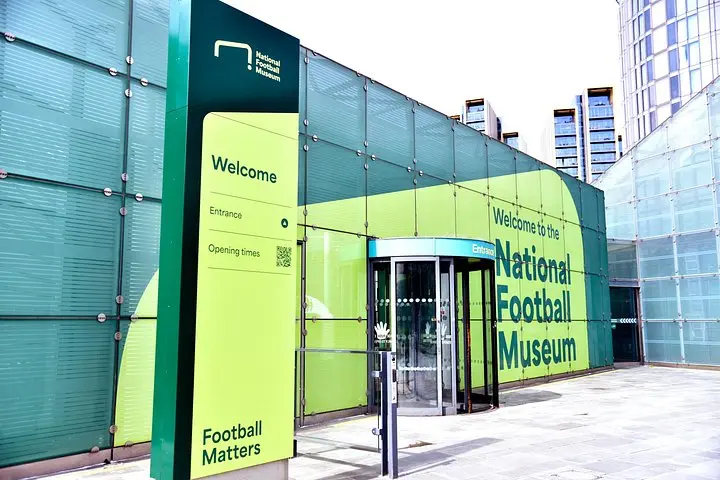



A cold Manchester morning opens onto Cathedral Gardens and the squat, glass-faced museum that holds a century of English football memory. Inside, the air hums with recorded crowd noise and the humbler sounds of children booting a ball in the Play Gallery; trophies glint under focused lights and the Laws of the Game sit behind glass that has seen more debates than some referees.
A cold Manchester morning opens onto Cathedral Gardens and the squat, glass-faced museum that holds a century of English football memory. Inside, the air hums with recorded crowd noise and the humbler sounds of children booting a ball in the Play Gallery; trophies glint under focused lights and the Laws of the Game sit behind glass that has seen more debates than some referees.
The museum sits at the heart of a city shaped by industry and spectatorship — Manchester’s Victorian mills and civic pride helped make football the working-class sport it is today. Galleries move from social history to match-day culture: the 1966 World Cup artifacts, early FA Cup silver, and community-driven displays that track how clubs anchored neighborhoods. The building itself stands amid late-20th-century urban renewal, a short walk from the Irwell and the red-brick warehouses that once governed trade rather than tackle rules.
Practical visitors should plan for 1–3 hours depending on interest: allow extra time for the interactive Play Gallery and special exhibitions in the Score Gallery. Five free guided tours run daily on a first-come basis; wheelchair access is comprehensive and family facilities are straightforward. Peak times are weekend afternoons and school holidays — early weekday visits will be quieter.
Wear comfortable shoes for four floors of galleries, bring a charged phone for photography (no flash), and pick up a map at the entrance to orient your visit. Whether you’re chasing a piece of football lore or testing your penalty skills, the museum delivers both artifacts and hands-on moments that connect sport to place.